
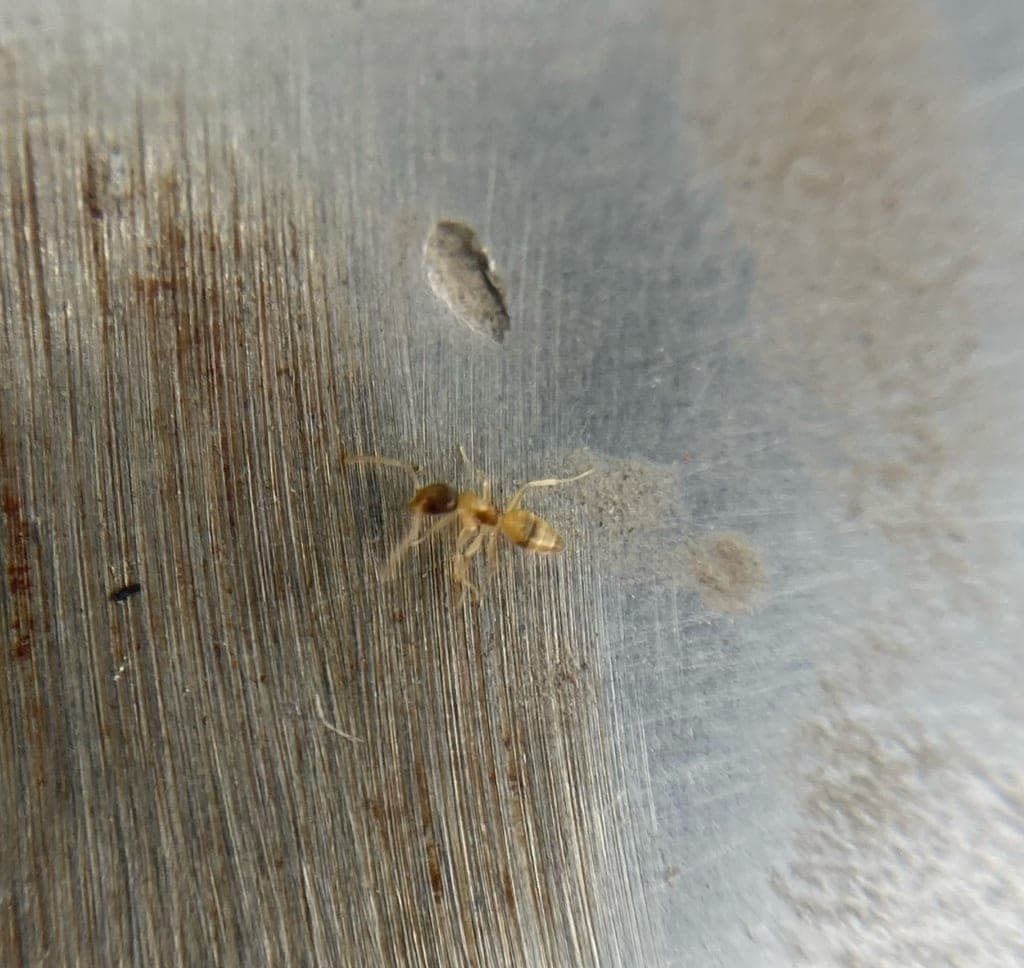
 Live photo
Species & care sheets
Ghost Ant
Tapinoma melanocephalum · มดผี
A tiny, translucent ant so pale it looks almost ghostly, moving fast and adapting to nearly any environment. A popular beginner choice for keeping a small indoor ant colony.
Overview
Temperature
24–28°C
Humidity
50–70%
Diet
Sugar · Insects
Nest type
Acrylic / Ytong / Test tube / 3D printed
Growth
Fast
Colony size
500–3,000 ตัว
- Difficulty — ขนาดตัวเล็กมาก หลุดรอดจากกล่องเลี้ยงง่าย และโตเร็วเกินไปจนควบคุมยาก
- Colony size — ขยายรังได้หลายหมื่นถึงหลายแสนตัวเนื่องจากมีนางพญาหลายตัว (Polygyne) และผสมพันธุ์ในรังได้
- How often it is found — มดที่มีข้อมูลบันทึกพบมากที่สุดในกลุ่ม เจอได้บ่อยตามธรรมชาติ — มีบันทึกยืนยันพบในไทยโดยตรงด้วย; เคยมีวางขายในร้านนักเลี้ยงมดต่างประเทศ (แต่ปัจจุบันหมด/ไม่พร้อมส่ง) · Records in Thailand 120 · Records worldwide 7,987 · Hobbyist market: Was sold, now out of stock
Derived from record counts in global databases (GBIF · AntWeb · iNaturalist), not from how common the ant is in Thailand. — น่าเชื่อถือสูง — มีบันทึกพิกัด/ตัวอย่างในไทยจริง (GBIF/AntWeb)
What it eats
Size
Body length by caste, and the ants drawn to scale on a credit card
Actual size against a credit card
Ants are drawn to scale on a standard card (85.6 × 54 mm) — hold a real card against the screen and move the slider until the card matches, and the ants are then life-size.
~1.4 mm
~2.8 mm
Behaviour & care
Defences
PeacefulRarely attacks — comfortable to keep close.
Colony profile
Queens
Several queens (polygyne)
Founding
Semi-claustral
Diapause
Not required
Growth
Fast
In depth
The Ghost Ant (Tapinoma melanocephalum) is an extremely tiny ant with a body so translucent it appears to fade like a ghost. It's found in homes across the tropics worldwide, including Thailand, and is known for how quickly it adapts and relocates its nest.
Appearance
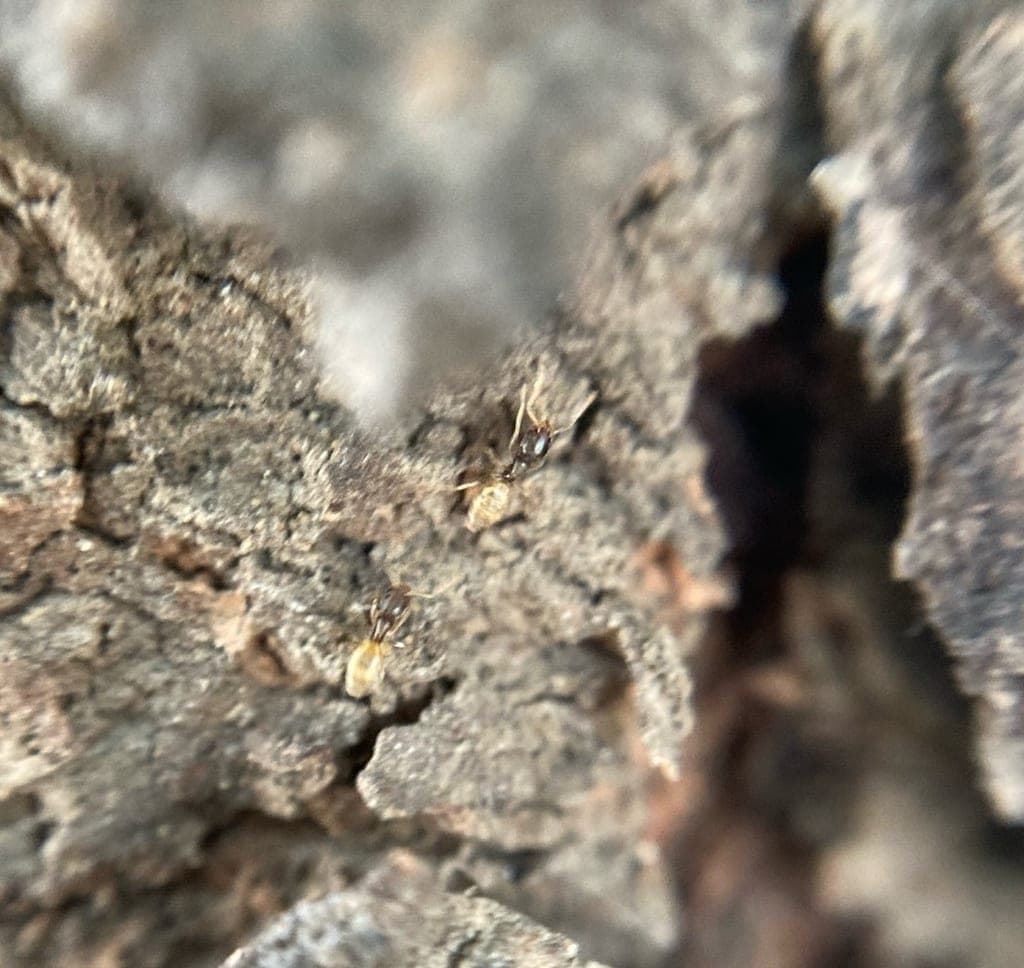
Where They're Found
Distributed throughout tropical and subtropical regions worldwide. It's commonly found in homes, kitchens, potted plants, or under damp debris. It nests easily and relocates frequently whenever conditions become unsuitable.
Notable Behavior: A Master of Relocation
Ghost ants are known for relocating their nests remarkably quickly when disturbed or when conditions change. A colony can split and re-establish itself elsewhere within a short time, which is part of why it's so difficult to eliminate as a household pest.
It's a generalist feeder, eating both sugary substances and dead insects, and forages almost constantly. When crushed, it releases a faint coconut-like odor as a defense mechanism.
This species is hardy and easy to keep overall, but the real challenge is its tiny size, which makes escapes from the enclosure very easy. The colony size listed (500–3,000 workers) reflects a typical size seen in captivity, though wild supercolonies can be considerably larger.
Good to Know
The ghost ant is one of the most common household pest ants worldwide and is often treated as a nuisance species. Within the ant-keeping hobby, however, it's popular among beginners for being easy to care for and readily available.
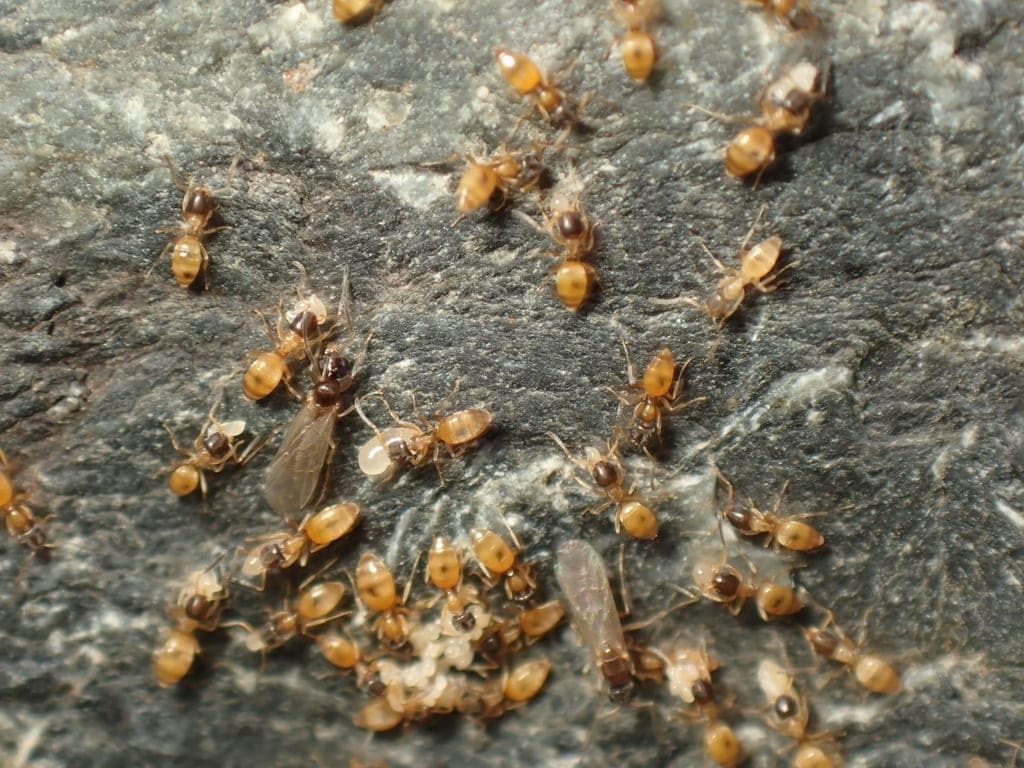
Keeping Them in Captivity
The ideal temperature range is 24–28°C, with moderate humidity of 50–70%. Because the workers are so tiny, extra care is needed to seal any gaps in the enclosure to prevent escapes. Feed with diluted sugar water alongside extremely small insect prey.
Gallery
Live photographs are by iNaturalist observers under CC BY-NC — every one carries its credit.
Sources
The Thai text is written from the facts in these sources, not copied from them. · Data confidence: สูง
This page is husbandry information only — live ants aren't sold on the site, for the animals' safety in transit.