
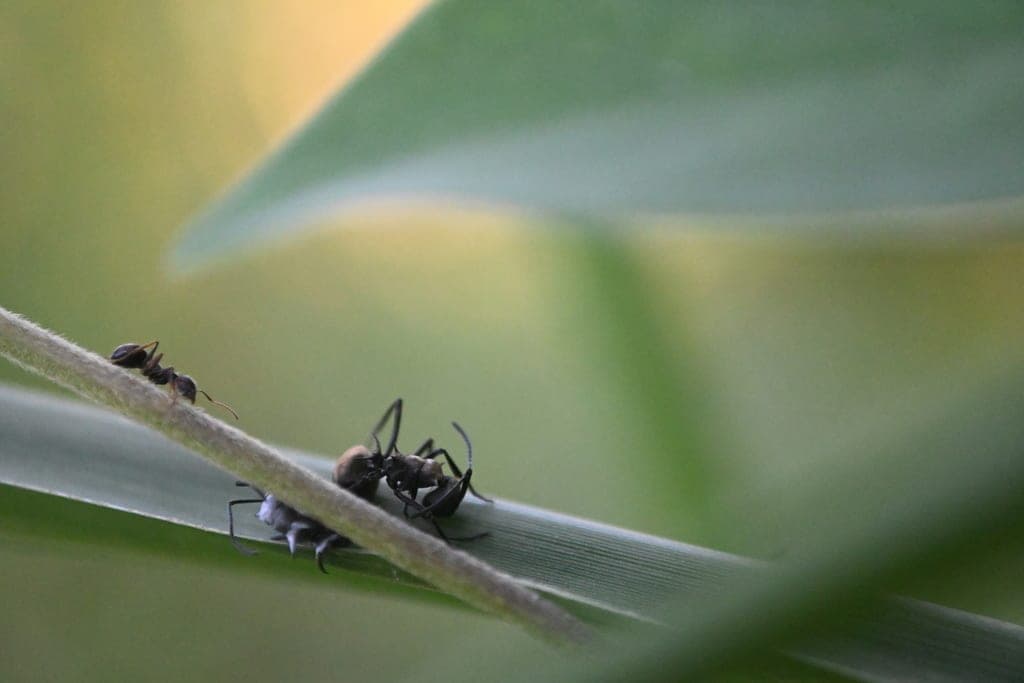
 Live photo
Species & care sheets
Golden Weaver Ant
Polyrhachis dives · มดหนามกระทิงขนทอง
Photo © Bryan Peacock · CC BY-NC
Silk-weaving nest builders, polygynous and fast-growing. Beautiful and very active.
อยู่ในสกุลย่อย Myrmhopla มดชนิดนี้มีการกระจายพันธุ์เป็นกว้างและอาจมีหลายชนิดย่อย (subspecies)
Overview
Temperature
25–30°C
Humidity
60–80%
Diet
Sugar · Insects
Nest type
weaver nest / naturalistic
Growth
Fast
Colony size
500–5,000 ตัว
- Difficulty — เป็นมดที่ขยายรังได้รวดเร็วและสร้างรังจากใยตัวอ่อน จึงต้องการพื้นที่กว้างและโครงสร้างสำหรับชักใย
- Colony size — ในธรรมชาติรังที่มีนางพญาหลายตัว (Polygynous) อาจมีประชากรมากกว่าหลักหมื่นตัว
- How often it is found — มดที่มีข้อมูลบันทึกพบมากที่สุดในกลุ่ม เจอได้บ่อยตามธรรมชาติ — มีบันทึกยืนยันพบในไทยโดยตรงด้วย; มีวางขายในตลาดนักเลี้ยงมดต่างประเทศ (มีสต๊อกจริง) · Records in Thailand 36 · Records worldwide 3,907 · Hobbyist market: Sold abroad
Derived from record counts in global databases (GBIF · AntWeb · iNaturalist), not from how common the ant is in Thailand. — น่าเชื่อถือสูง — มีบันทึกพิกัด/ตัวอย่างในไทยจริง (GBIF/AntWeb)
What it eats
Size
Body length by caste, and the ants drawn to scale on a credit card
Actual size against a credit card
Ants are drawn to scale on a standard card (85.6 × 54 mm) — hold a real card against the screen and move the slider until the card matches, and the ants are then life-size.
~7 mm
~11 mm
Behaviour & care
Defences
AggressiveAttacks when disturbed — handle with care.
Colony profile
Queens
Either
Founding
Claustral
Diapause
Not required
Growth
Fast
In depth
The Golden Weaver Ant (Polyrhachis dives), known in Thai as "มดหนามกระทิงขนทอง," is one of the most striking species in the spiny ant genus Polyrhachis. Beyond the sharp spines covering its thorax and waist, its body is coated in fine golden hairs that shimmer in the light — and remarkably, it weaves its nest from larval silk, just like the unrelated weaver ant Oecophylla.
Appearance
Workers are monomorphic (a single uniform size), measuring roughly 6–8 mm, with dark bodies and sharp spines projecting from the thorax and petiole, covered in fine silvery-gold hairs that give a metallic shimmer. Queens are larger at 10–12 mm and highly productive egg-layers. This species has no stinger; instead, it defends itself by spraying formic acid from the tip of its abdomen.
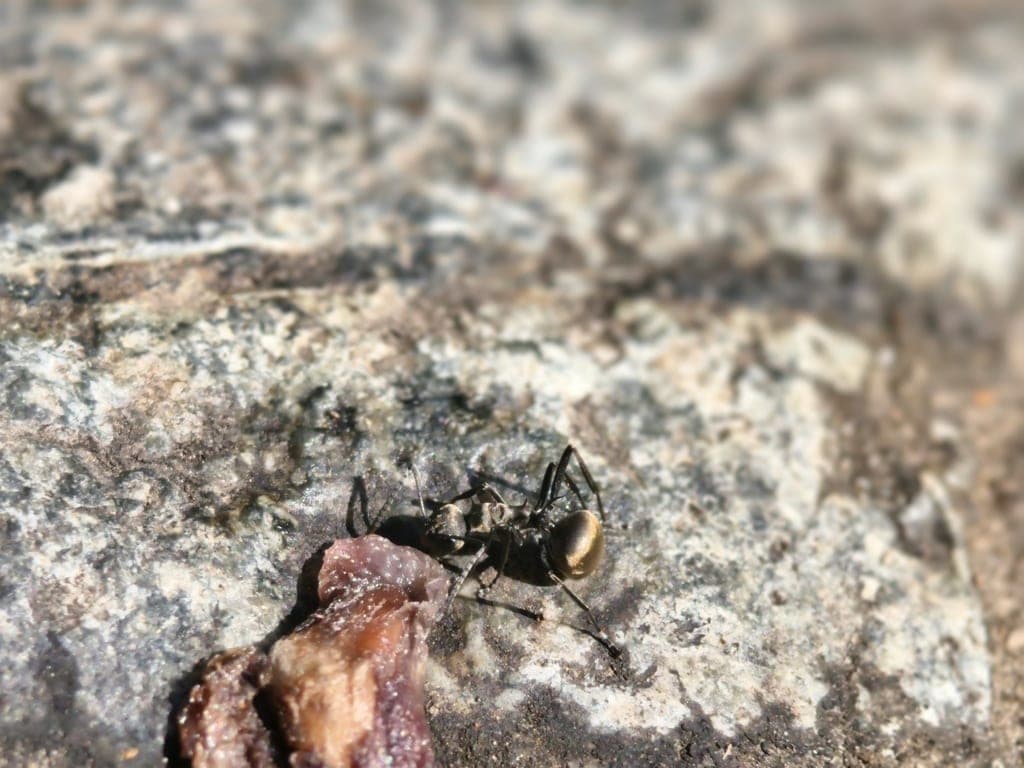
Photo © orientalstork · CC BY-NC
Where They're Found
Polyrhachis dives ranges widely from India and Thailand to the Philippines and northern Australia. It thrives across a remarkable range of habitats — tropical rainforest, mangroves, coastal scrubland, and even urban gardens. It is arboreal, building rounded nests from soil, bark, leaf litter, and other debris bound together with larval silk, mainly among branches and low shrubs.
The main challenge is speed and temperament — workers move very fast and readily spray formic acid when they feel threatened, so care is needed to prevent escapes during feeding or cleaning. As for colony size, the figure listed here (roughly 500–5,000 workers) reflects what's typically seen in captivity; in the wild, colonies with multiple egg-laying queens can grow into the tens of thousands.
Good to Know
Polyrhachis dives is a target for several specialized parasites, including eucharitid wasps, which lay eggs that hatch into larvae that consume ant grubs, and Ophiocordyceps unilateralis, the "zombie fungus" that manipulates infected ants into climbing to a high point before dying, helping the fungus spread its spores. Its "golden hair" name comes from the fine silvery-gold hairs covering its body, making it one of the most visually striking — and popular — spiny ants kept by hobbyists in Thailand.
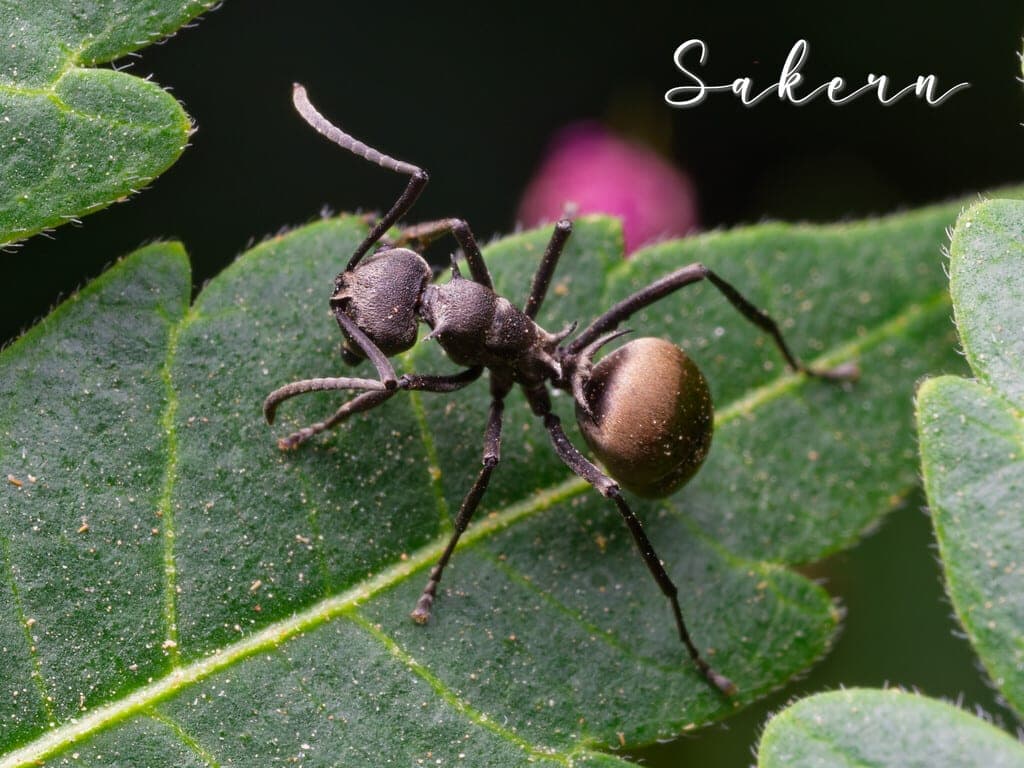
Photo © Sakern | 永隔一江水 · CC BY-NC
Behavior: Silk-Weaving, Just Like the Red Weaver Ant
Polyrhachis dives uses silk from its own larvae to stitch debris into a rounded nest — a weaving behavior that evolved independently in a genus completely unrelated to the red weaver ant.
Workers gather soil, wood fragments, and even animal droppings to build the nest's frame, then carry larvae nearing pupation and use them as living "glue tubes," prompting them to release silk that binds the structure together. This is a case of convergent evolution — two distantly related ant genera independently arriving at a similar nest-weaving trick. Colonies are typically polygynous, with several queens living together, and are fast-moving and defensive, foraging for both live prey and the sugary honeydew produced by plants and aphids.
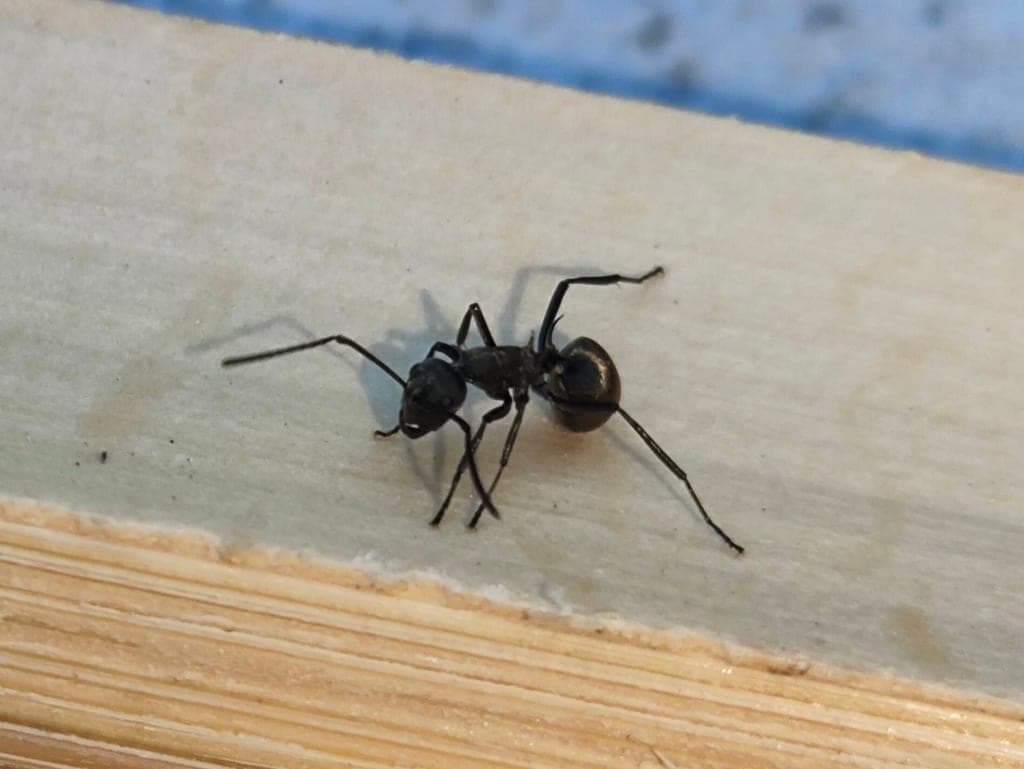
Keeping Them in Captivity
An omnivore with a strong sweet tooth, favoring diluted honey and sugar water alongside insect protein such as fruit flies, crickets, and roaches. Ideal temperature is 25–30°C with humidity of 60–80%. Brood takes about 6–8 weeks to reach adulthood at 26–28°C. Because this species nests above ground, its enclosure should include vertical space and real branches or materials it can weave into a nest.
Gallery
Photo © Bryan Peacock · CC BY-NC
Photo © orientalstork · CC BY-NC
Photo © Sakern | 永隔一江水 · CC BY-NC
Photo © 鐦鍆錒/锎钔锕(Man Hoimoon) · CC BY-NC
Live photographs are by iNaturalist observers under CC BY-NC — every one carries its credit.
Sources
The Thai text is written from the facts in these sources, not copied from them. · Data confidence: สูง
This page is husbandry information only — live ants aren't sold on the site, for the animals' safety in transit.