
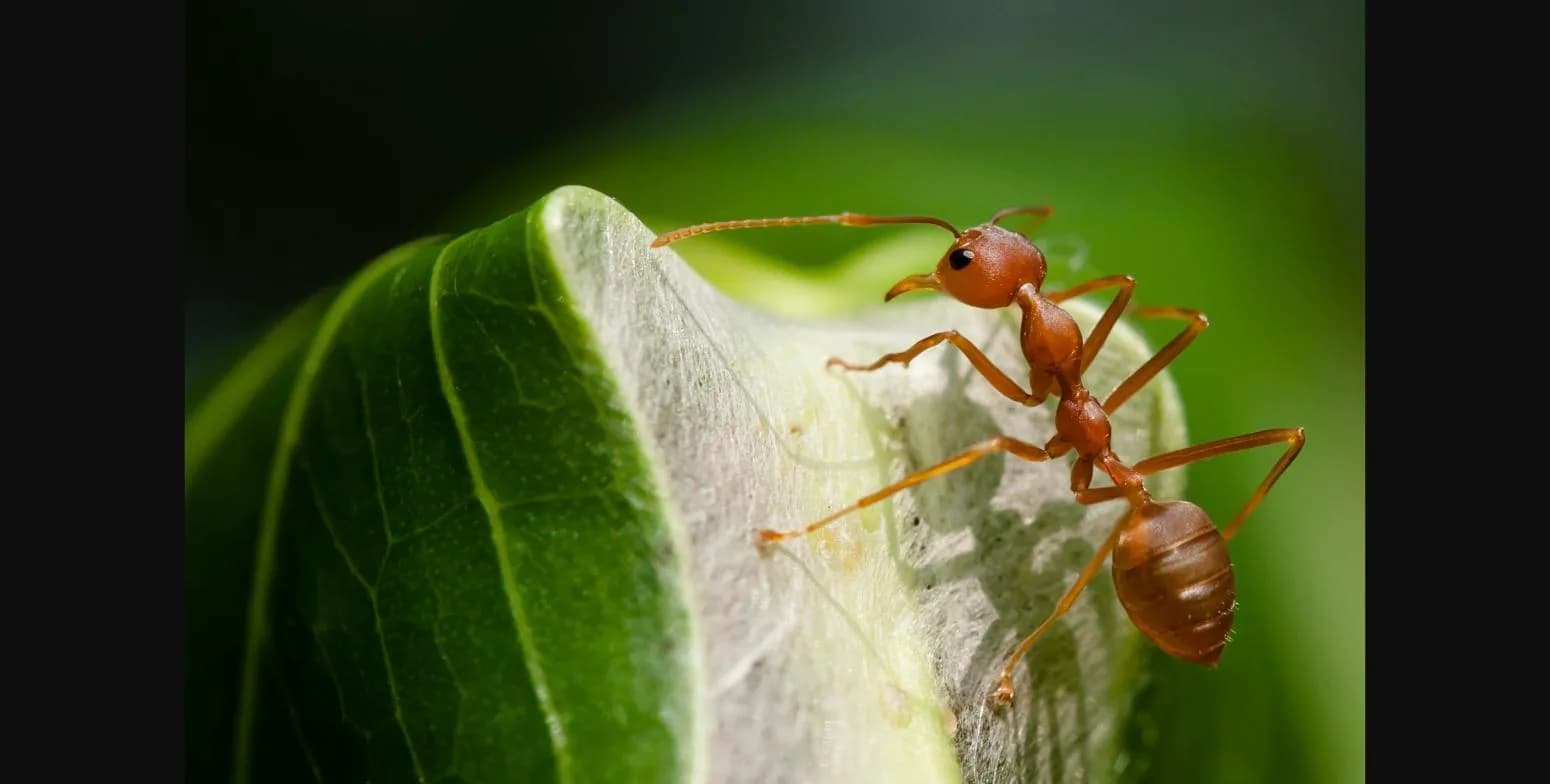
 Live photo
Species & care sheets
Asian Weaver Ant
Oecophylla smaragdina · มดแดง
The legendary Thai weaver ant. Arboreal leaf-nest builders — needs vertical space and live plants.
มดแดงสายพันธุ์นี้มีความแปรผันของสีในแต่ละภูมิภาค เช่น ในออสเตรเลียราชินีจะมีสีเขียว (Green tree ant)
Overview
Temperature
26–32°C
Humidity
70–90%
Diet
Sugar · Insects
Nest type
Living plant / Custom acrylic
Growth
Fast
Colony size
~50,000
- Difficulty — ต้องการพื้นที่ขนาดใหญ่ อาหารโปรตีนจำนวนมาก และการควบคุมสภาพแวดล้อมที่เหมาะสมต่อมดต้นไม้
- Colony size — รังขนาดใหญ่อาจมีจำนวนมดงานรวมกันได้มากกว่า 500,000 ตัวครอบคลุมต้นไม้หลายต้น
- How often it is found — มดที่มีข้อมูลบันทึกพบมากที่สุดในกลุ่ม เจอได้บ่อยตามธรรมชาติ — มีบันทึกยืนยันพบในไทยโดยตรงด้วย; มีวางขายในตลาดนักเลี้ยงมดต่างประเทศ (มีสต๊อกจริง) · Records in Thailand 2,641 · Records worldwide 34,106 · Hobbyist market: Sold abroad
Derived from record counts in global databases (GBIF · AntWeb · iNaturalist), not from how common the ant is in Thailand. — น่าเชื่อถือสูง — มีบันทึกพิกัด/ตัวอย่างในไทยจริง (GBIF/AntWeb)
What it eats
Size
Body length by caste, and the ants drawn to scale on a credit card
Actual size against a credit card
Ants are drawn to scale on a standard card (85.6 × 54 mm) — hold a real card against the screen and move the slider until the card matches, and the ants are then life-size.
~6 mm
~9 mm
~16.5 mm
Behaviour & care
Defences
AggressiveAttacks when disturbed — handle with care.
Colony profile
Queens
Single queen (monogyne)
Founding
Claustral
Diapause
Not required
Growth
Fast
In depth
The Weaver Ant (Oecophylla smaragdina) is probably the ant every Thai person already knows, even without realizing it — it's the source of "red ant eggs" (kai mod daeng), a prized ingredient in Isaan and Northern Thai cuisine. But to ant keepers, this species stands out for something else entirely: it's one of the very few ants on Earth that actually weaves its nest out of living leaves, using silk produced by its own larvae as glue.
Appearance
Workers are entirely orange-red and measure roughly 5–10 mm, split into two worker castes: smaller minor workers that tend the brood inside the nest, and larger major workers with stronger legs and mandibles built for foraging and nest expansion. Queens are much larger (20–25 mm) and greenish-brown in color — the source of the species name smaragdina, Latin for "emerald."
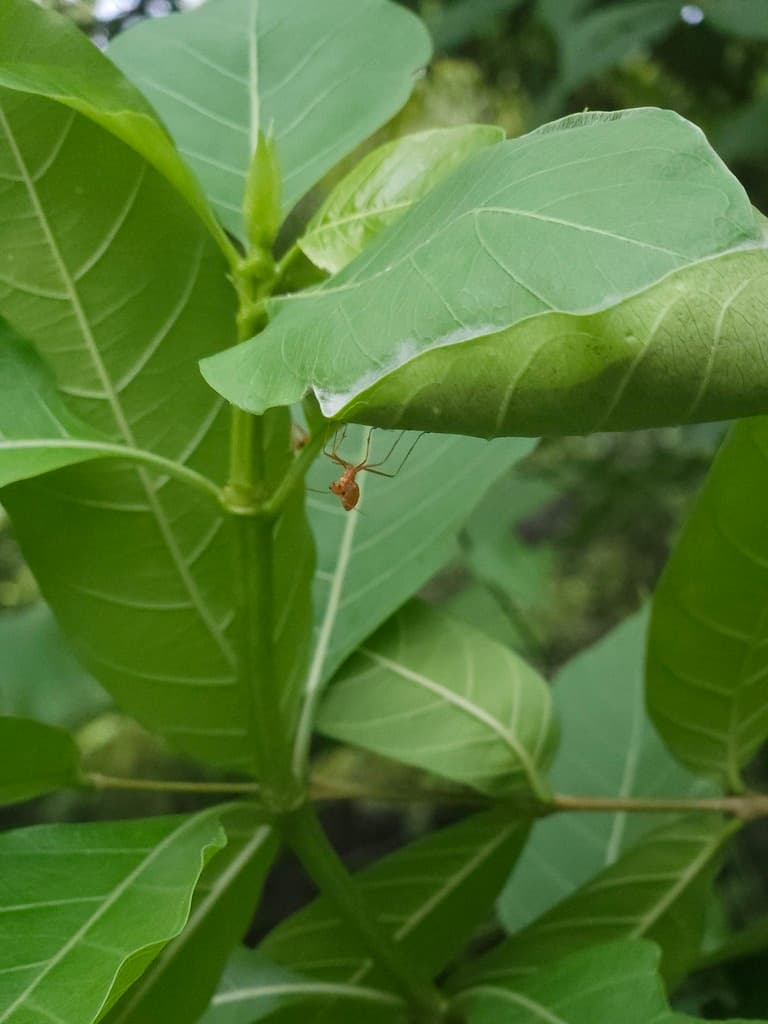
Where They're Found
Weaver ants range widely across tropical Asia into northern Australia — from India through Southeast Asia, Indonesia, and the Philippines, to Queensland. In Thailand they occur nationwide, thanks to how adaptable they are. Unlike most ants, they don't nest underground at all; they live entirely in trees (arboreal), most commonly in orchards, secondary forest, and farmland with large-canopy trees such as mango, cashew, coconut, and citrus — species with leaves large and tough enough to weave into a nest. A single colony rarely occupies just one nest; it typically spreads across many satellite nests on branches throughout one tree, or across several neighboring trees.
The real challenge with this species isn't diet or temperature — it's space and temperament. Major workers bite hard and can spray acid, so care is needed when opening or relocating a nest. The colony size figure listed on this page (around 50,000) refers to a typical, commonly seen single-nest colony, not a record maximum — weaver ants are unusual in that one colony can expand into many nests spread across multiple trees at once, and the combined population of that whole network can reach into the hundreds of thousands in the wild. That's an extreme case, though, not what a keeper should expect to see.
Good to Know
Humans have used weaver ants for thousands of years. Ancient Chinese farmers used them to control pests in citrus orchards as early as around 304 CE, making it one of the oldest documented forms of biological pest control in the world. The same principle is still used today in mango, cashew, and cocoa farming across the tropics. In Thailand, the species is best known for its eggs, a key ingredient in dishes like yam kai mod daeng and gaeng kai mod daeng in Isaan cuisine.
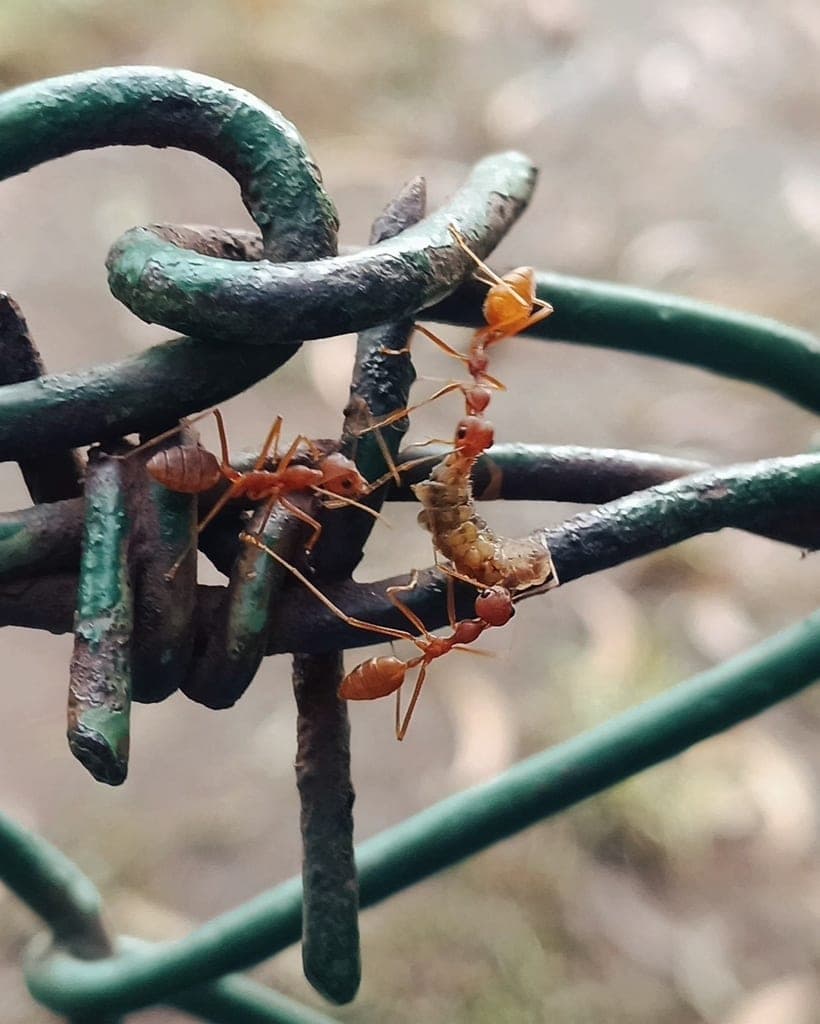
Photo © ARTI SINGH · CC BY-NC
Behavior
Weaver ants are highly territorial and more aggressive than most ants — workers bite and spray formic acid at anything they perceive as a threat almost instantly. Nest-building happens at night: workers form living chains, pulling the edges of two leaves together, then relay silk-producing larvae along the seam like a shuttle, using them to stitch the leaves shut. It's considered one of the most complex examples of cooperative construction in the ant world.
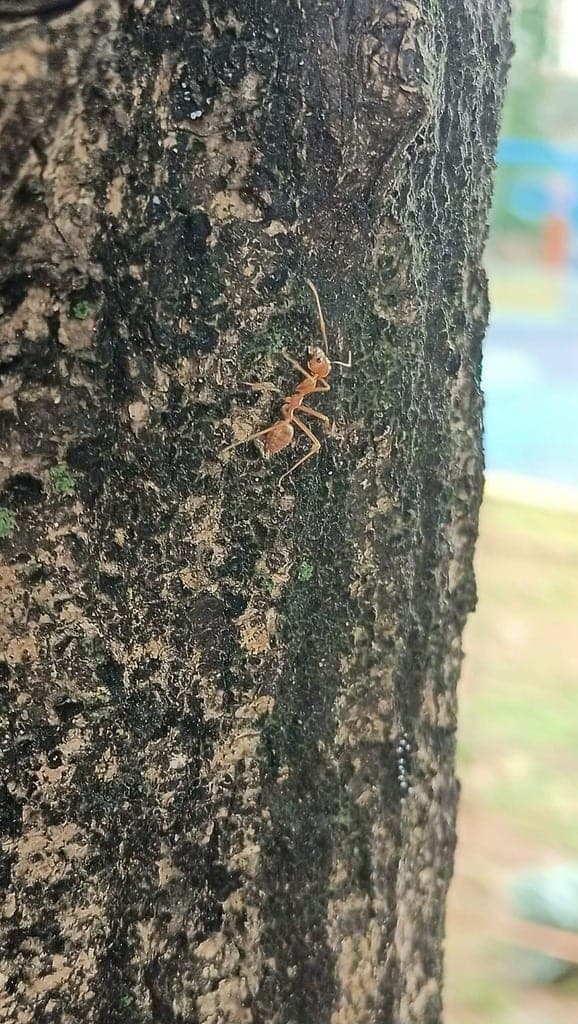
Keeping Them in Captivity
Before deciding to keep this species, know that weaver ants need vertical space and live branches or plants to weave their nest on — not the acrylic formicariums most keepers are used to. Ideal temperature runs around 26–32°C with fairly high humidity, 70–90%, reflecting their native humid tropical forest habitat. For food, they take both insect protein (crickets, mealworms, flies) and sugars from diluted honey or aphid honeydew, much like most other ant species.
Gallery
Photo © ARTI SINGH · CC BY-NC
Photo © Rahul Tripathi · CC BY-NC
Photo © Russell Cumming · CC BY-NC
Photo © Reynante Martinez · CC BY
Photo © Alain Roujas · CC BY-NC
Photo © Pranav Prabhu · CC BY-NC
Live photographs are by iNaturalist observers under CC BY-NC — every one carries its credit.
Sources
The Thai text is written from the facts in these sources, not copied from them. · Data confidence: สูง
This page is husbandry information only — live ants aren't sold on the site, for the animals' safety in transit.