
 Live photo
Species & care sheets
Common Oriental Trap-jaw Ant
Odontomachus simillimus · มดกระโดดบ้าน
Photo © Iniego Fernandez · CC BY-NC
Overview
Temperature
25–28°C
Humidity
70–85%
Diet
Sugar · Insects
Nest type
Soil / Ytong / Acrylic
Growth
Medium
Colony size
50–120 ตัว
- Difficulty — นางรังใหม่เป็นแบบ Semi-claustral ต้องให้อาหารระหว่างตั้งรัง และมดมีเหล็กในที่ต่อยเจ็บรวมถึงเขี้ยวที่สับแรง
- Colony size — รังขนาดใหญ่มักมีประชากรไม่เกิน 1,000 ตัว
- How often it is found — มดที่มีข้อมูลบันทึกพบมากที่สุดในกลุ่ม เจอได้บ่อยตามธรรมชาติ — มีบันทึกยืนยันพบในไทยโดยตรงด้วย; เคยมีวางขายในร้านนักเลี้ยงมดต่างประเทศ (แต่ปัจจุบันหมด/ไม่พร้อมส่ง) · Records in Thailand 89 · Records worldwide 2,876 · Hobbyist market: Was sold, now out of stock
Derived from record counts in global databases (GBIF · AntWeb · iNaturalist), not from how common the ant is in Thailand. — น่าเชื่อถือสูง — มีบันทึกพิกัด/ตัวอย่างในไทยจริง (GBIF/AntWeb)
What it eats
Size
Body length by caste, and the ants drawn to scale on a credit card
Actual size against a credit card
Ants are drawn to scale on a standard card (85.6 × 54 mm) — hold a real card against the screen and move the slider until the card matches, and the ants are then life-size.
~12 mm
~14 mm
Behaviour & care
Defences
AggressiveAttacks when disturbed — handle with care.
Colony profile
Queens
Single queen (monogyne)
Founding
Semi-claustral
Diapause
Not required
Growth
Medium
In depth
The Common Oriental Trap-jaw Ant (Odontomachus simillimus), known in Thai as "มดกระโดดบ้าน" (house jumping ant), has one of the fastest-acting mandibles in the insect world. Its trap-like jaws can snap shut on prey in a fraction of a second, and it can even use the recoil from slamming them into the ground to catapult itself away from danger — the source of its Thai "jumping ant" name.
Appearance
The body is dark brown to nearly black, with fine striations across the head and thorax. Workers measure 7–11 mm, and queens reach up to about 10 mm. Its most distinctive feature is a pair of long, V-shaped mandibles that can open to nearly 180 degrees, with tiny trigger hairs inside the mouth. When those hairs touch prey, the jaws snap shut automatically, faster than the ant itself could consciously control.
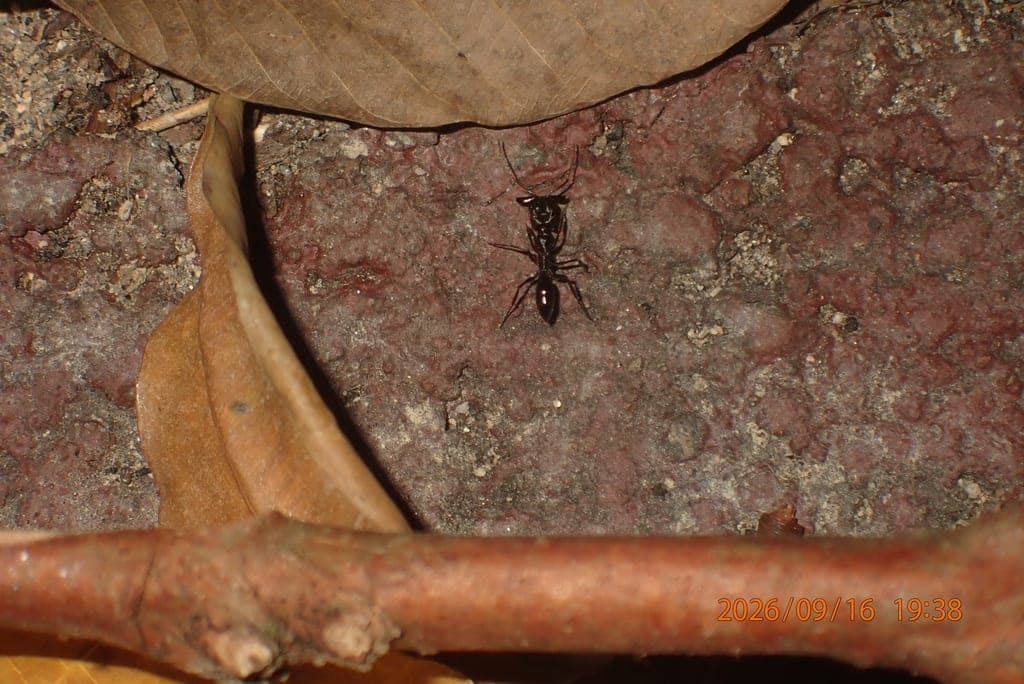
Photo © Chee Koi Jun · CC BY-NC
Where They're Found
Widely distributed across the Indo-Pacific, from India to Polynesia, and now recorded in more than 15 countries — in some regions, such as the Caribbean, it has become an invasive species. Unlike many of its relatives that prefer dense forest, this species favors open or disturbed habitats such as gardens, coconut groves, and lawns. It nests in soil near the base of trees, under rotting stumps, logs, or rocks, and is found from sea level up to about 900 m elevation.
The main challenges are speed and a genuinely painful sting delivered when the ant feels threatened, combined with its jumping escape behavior, which makes it harder to handle or contain than most ants — care is needed to prevent escapes when opening the nest or feeding. Colonies grow fairly slowly and don't get very large; the figure given here (50–120 workers) reflects a typical mature colony, not a maximum.
Good to Know
Because it's easy to find and commonly sold in Thailand, this species is often one of the first predatory ants beginners try after starting with easier, more forgiving species. The species name "simillimus" comes from Latin, meaning "most similar" — the superlative form of similis ("similar") — reflecting how closely it resembles other species in the genus Odontomachus that taxonomists referenced when naming it.
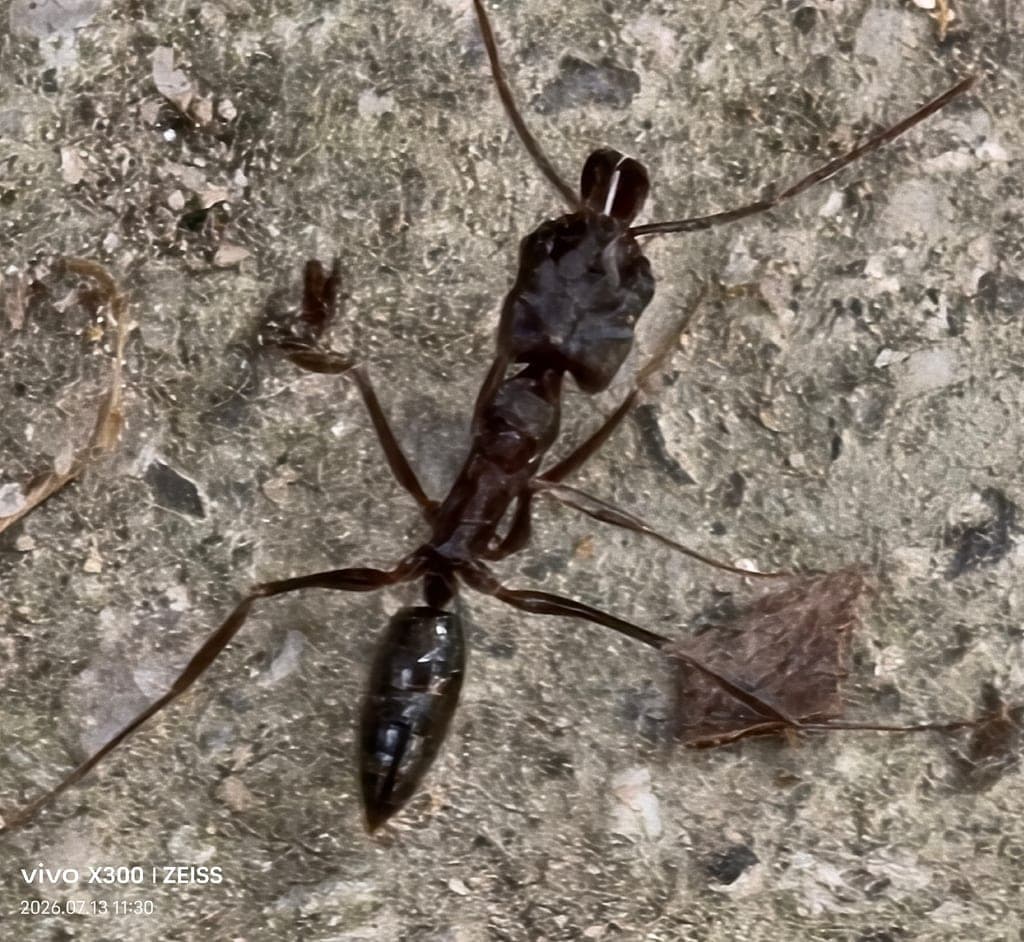
Photo © coleoptera132 · CC BY-NC
Behavior: The Fastest Trap-jaws in the Insect World
Odontomachus simillimus snaps its mandibles shut so fast that it can use the recoil from striking the ground to launch itself away from danger — jumping powered by its jaws, not its legs.
This mandible-powered jump serves two purposes: snapping directly onto prey to hunt or defend the nest, or striking the ground to catapult itself out of danger when threatened. This is a different mechanism from other "jumping ants" like Harpegnathos, which jump using their legs. Workers can also lay unfertilized trophic eggs as supplemental food for the queen at certain times.
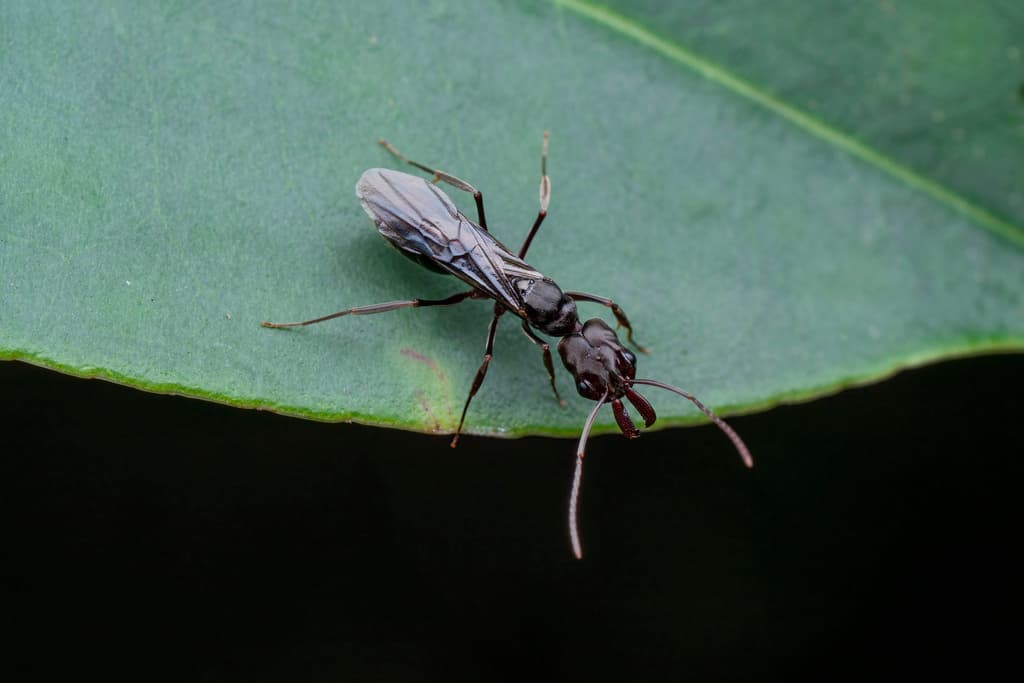
Keeping Them in Captivity
A dedicated predator whose diet should be small insects and other arthropods, fed live or freshly killed 2–3 times a week; in the wild, termites are a major prey item. Ideal temperature is around 25–28°C, and it shouldn't be allowed to sit below 22°C for long. Humidity should be fairly high, at 70–85%, with nesting material kept consistently moist but never waterlogged. Colonies are monogynous (single queen) — putting multiple queens together usually ends in fighting.
Gallery
Photo © Iniego Fernandez · CC BY-NC
Photo © Chee Koi Jun · CC BY-NC
Photo © coleoptera132 · CC BY-NC
Photo © colorado_river · CC BY-NC
Photo © aidanformistudio · CC BY-NC
Photo © Sean Guzman · CC BY-NC
Live photographs are by iNaturalist observers under CC BY-NC — every one carries its credit.
Sources
The Thai text is written from the facts in these sources, not copied from them. · Data confidence: สูง
This page is husbandry information only — live ants aren't sold on the site, for the animals' safety in transit.