
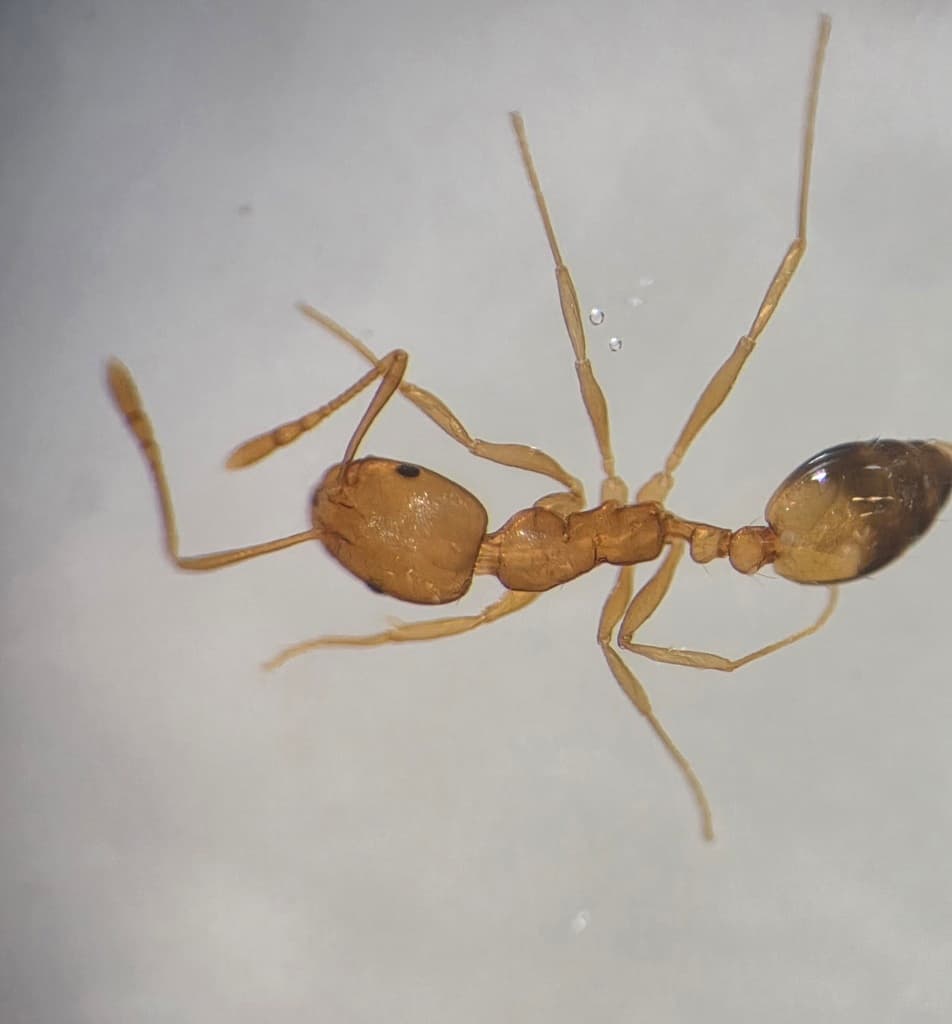
 Live photo
Species & care sheets
Pharaoh Ant
Monomorium pharaonis · มดละเอียดบ้าน
Photo © Thilina Hettiarachchi · CC BY-NC
A tiny yellow-brown ant with a highly complex multi-queen society, expanding colonies remarkably fast through budding. Found in homes across the tropics worldwide.
Overview
Temperature
27–30°C
Humidity
60–80%
Diet
Sugar · Insects
Nest type
Acrylic / Test tube / Ytong
Growth
Fast
Colony size
1,000–3,000 ตัว
- Difficulty — เป็นมดขนาดเล็กจิ๋วที่หลบหนีเก่งมาก ขยายพันธุ์และขยายรังอย่างรวดเร็วโดยการแยกมดควีน (Budding) จนควบคุมยากในบ้านเรือน
- Colony size — สามารถมีมดงานได้มากกว่า 300,000 ตัว และมีมดควีนหลายร้อยตัวในรังเดียว
- How often it is found — มดที่มีข้อมูลบันทึกพบมากที่สุดในกลุ่ม เจอได้บ่อยตามธรรมชาติ — มีบันทึกยืนยันพบในไทยโดยตรงด้วย; เคยมีวางขายในร้านนักเลี้ยงมดต่างประเทศ (แต่ปัจจุบันหมด/ไม่พร้อมส่ง) · Records in Thailand 23 · Records worldwide 3,483 · Hobbyist market: Was sold, now out of stock
Derived from record counts in global databases (GBIF · AntWeb · iNaturalist), not from how common the ant is in Thailand. — น่าเชื่อถือสูง — มีบันทึกพิกัด/ตัวอย่างในไทยจริง (GBIF/AntWeb)
What it eats
Size
Body length by caste, and the ants drawn to scale on a credit card
Actual size against a credit card
Ants are drawn to scale on a standard card (85.6 × 54 mm) — hold a real card against the screen and move the slider until the card matches, and the ants are then life-size.
~1.8 mm
~4 mm
Behaviour & care
Defences
AggressiveAttacks when disturbed — handle with care.
Colony profile
Queens
Several queens (polygyne)
Diapause
Not required
Growth
Fast
In depth
The Pharaoh Ant (Monomorium pharaonis) is a tiny yellow-brown ant found in homes across the tropics worldwide. It has a highly complex multi-queen society and can expand its colonies remarkably fast, making it a popular species for keepers studying social ant behavior.
Appearance
Workers are extremely small, only 1.5–2 mm long. The body is pale yellow-brown to reddish-brown, with the last abdominal segments slightly darker. The overall shape is smooth, without spines or prominent projections.
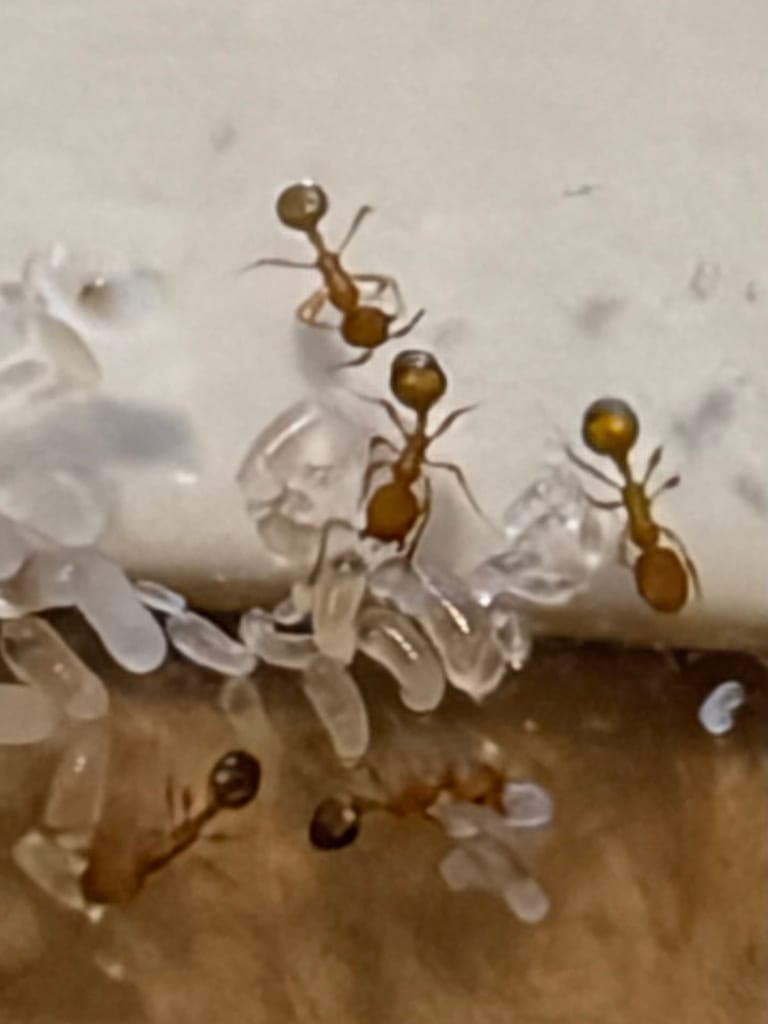
Photo © Thomas Dean · CC BY-NC
Where They're Found
Believed to be native to tropical Asia, this species has now spread to more than 25 countries worldwide. It can live inside warm buildings, in wall voids, plumbing, or even inside electrical equipment.
Notable Behavior: A Complex Multi-Queen Society
The Pharaoh ant forms polygynous and polydomous societies — multiple queens across multiple connected nest sites within a single colony. This allows it to reproduce and establish new nests rapidly through budding, without needing to wait for a nuptial flight; a queen and a handful of workers splitting off is enough to start a new nest.
It's a generalist feeder, eating both sweets and protein. It lays clear pheromone trails to food and forages around the clock. Workers show no aggression between different nests, so colonies from different sites can merge freely.
This is a moderate species overall — easy to keep, but it reproduces so fast that colony size needs careful management. The colony size listed (1,000–3,000 workers) reflects a typical size in captivity, though uncontrolled infestations in the wild can reach into the millions.
Good to Know
The Pharaoh ant is considered one of the world's most difficult household pests to eliminate and can carry certain pathogens. In science and the ant-keeping hobby, however, it's a popular species for studying complex multi-queen social behavior.
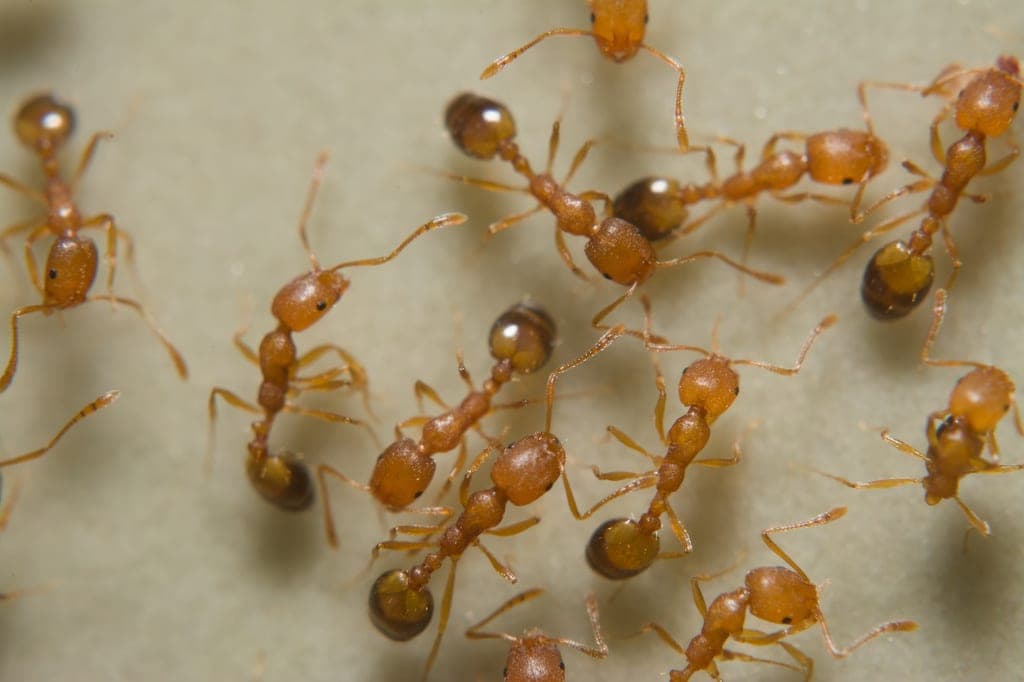
Photo © Steele Xia · CC BY-NC
Keeping Them in Captivity
The ideal temperature range is 27–30°C — this species loves warmth and cannot tolerate cold. Moderate to high humidity of 60–80% is recommended. Feed with protein such as crickets or boiled egg, alongside a steady supply of sugar water or honey.
Gallery
Photo © Thilina Hettiarachchi · CC BY-NC
Photo © Thomas Dean · CC BY-NC
Photo © Steele Xia · CC BY-NC
Photo © Siuyeung Ho · CC BY-NC-ND
Photo © Siuyeung Ho · CC BY-NC-ND
Photo © jknishikawa · CC BY-NC
Live photographs are by iNaturalist observers under CC BY-NC — every one carries its credit.
Sources
The Thai text is written from the facts in these sources, not copied from them. · Data confidence: สูง
This page is husbandry information only — live ants aren't sold on the site, for the animals' safety in transit.