
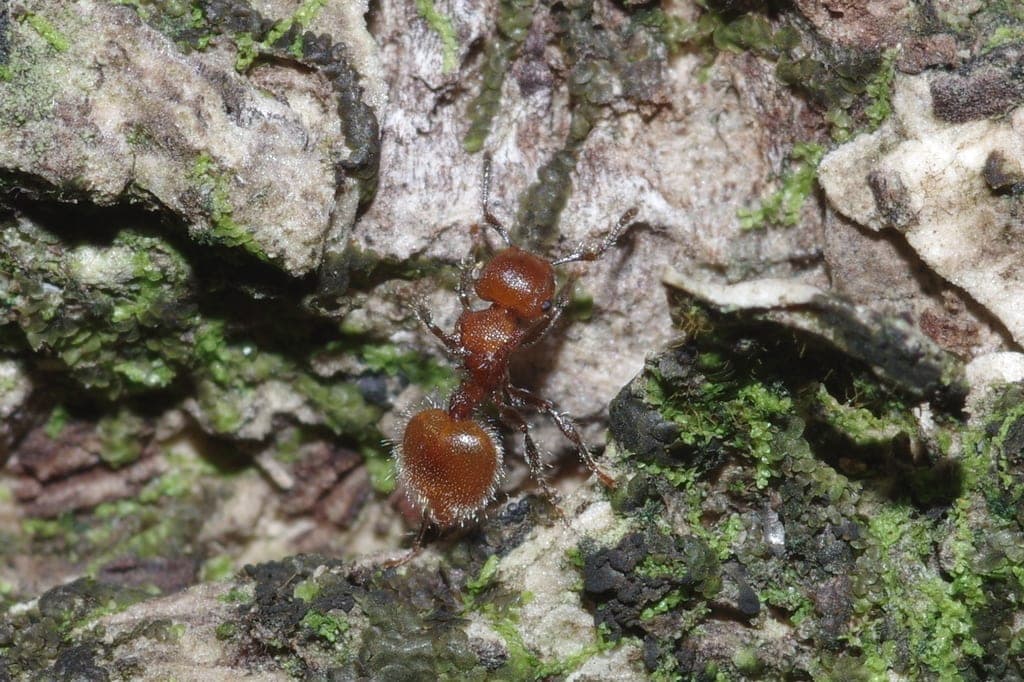
 Live photo
Species & care sheets
Chestnut Shield Ant
Meranoplus castaneus · มดโล่เกาลัด
A small greyish-brown shield ant that lives high in the rainforest canopy. Found across Southeast Asia including Thailand, calm and non-aggressive.
Overview
Temperature
24-28°C
Humidity
60-80% (ชื้นสูงสม่ำเสมอ)
Diet
Sugar · Insects · Seeds
Nest type
Soil / Ytong / Acrylic / 3D printed
Growth
Slow
Colony size
300-800 ตัว (ประมาณการ)
- Difficulty — เป็นมดที่เติบโตช้ามากและต้องการความชื้นที่เหมาะสมในการสร้างรัง
- Colony size — ขยายขนาดรังได้ช้า รังที่สมบูรณ์มีขนาดปานกลาง
- How often it is found — มีข้อมูลบันทึกพบค่อนข้างน้อย ไม่ใช่มดที่เจอกันบ่อยๆ — มีบันทึกยืนยันพบในไทยโดยตรงด้วย · Records in Thailand 3 · Records worldwide 45 · Hobbyist market: Not listed
Derived from record counts in global databases (GBIF · AntWeb · iNaturalist), not from how common the ant is in Thailand. — น่าเชื่อถือสูง — มีบันทึกพิกัด/ตัวอย่างในไทยจริง (GBIF/AntWeb)
What it eats
Size
Body length by caste, and the ants drawn to scale on a credit card
Actual size against a credit card
Ants are drawn to scale on a standard card (85.6 × 54 mm) — hold a real card against the screen and move the slider until the card matches, and the ants are then life-size.
~3 mm
~5.5 mm
Behaviour & care
Defences
PeacefulRarely attacks — comfortable to keep close.
Colony profile
Queens
Single queen (monogyne)
Founding
Claustral
Diapause
Not required
Growth
Slow
In depth
แผ่นเกราะแข็งบนหลังและขนหนาแน่นช่วยป้องกันตัวจากมดชนิดอื่น และใช้ดักจับฝุ่นดินเพื่อพรางตัวให้เข้ากับพื้นดิน
Appearance
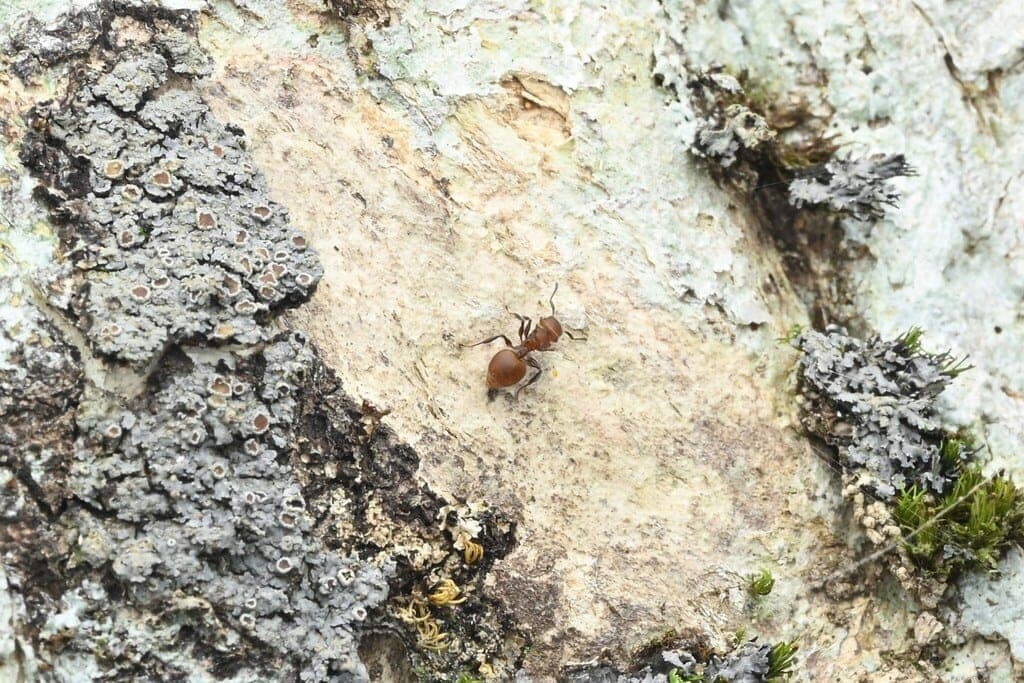
A small ant species displaying a rich chestnut-brown coloration, characterized by a broad protective promesonotal shield and dense hairs covering its body.
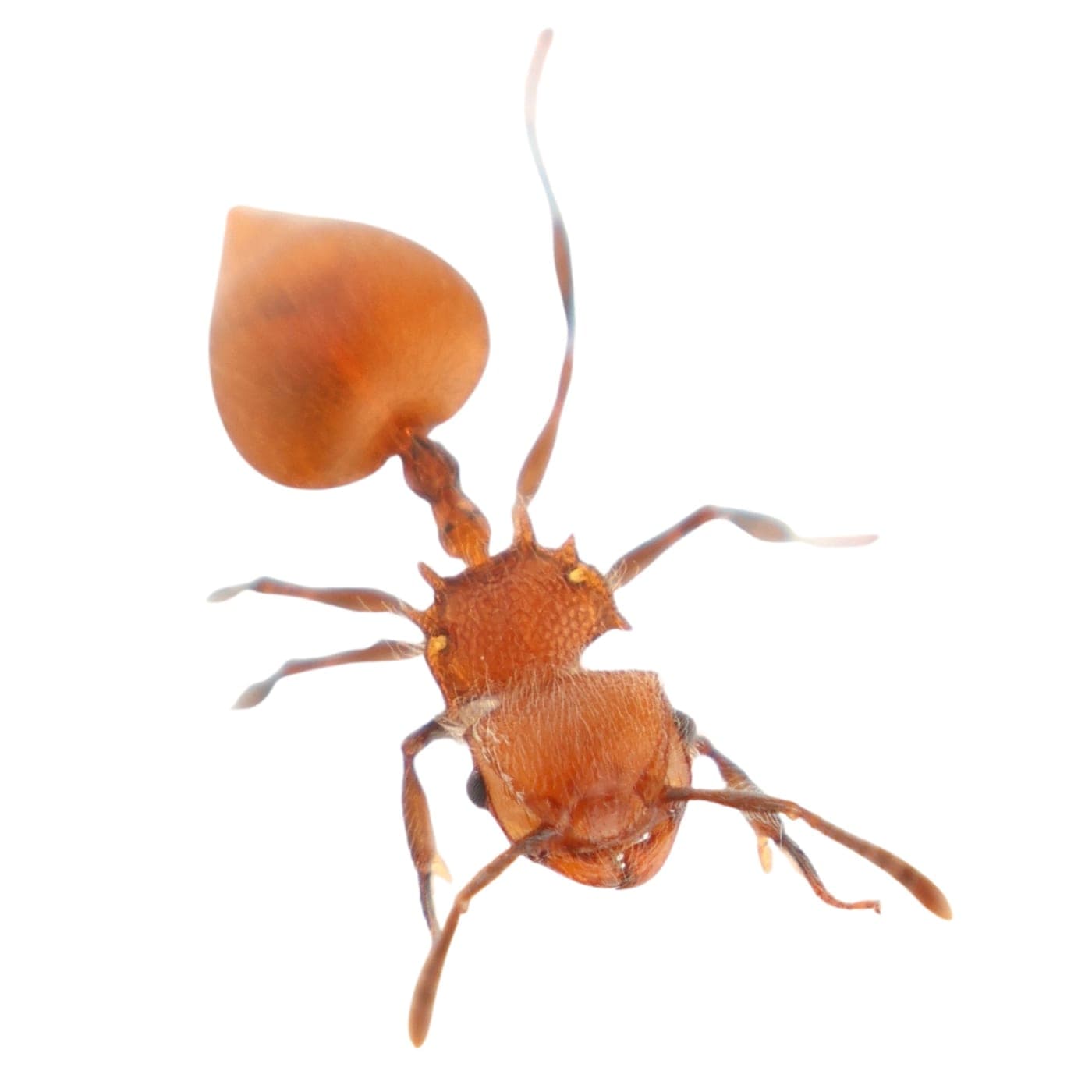
Photo © Santiago Monroy · CC BY-NC
Where it lives
Widespread across Southeast Asia, typically nesting in leaf litter, topsoil, or beneath the forest floor in tropical rainforests.
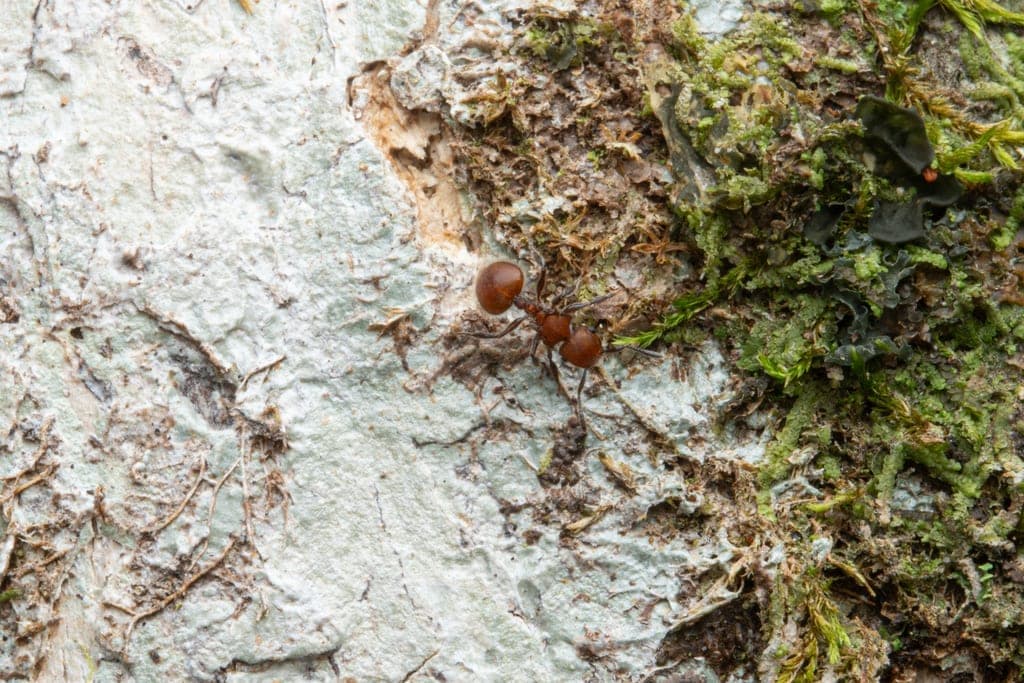
Photo © Huang Baochen | 黄宝臣 · CC BY-NC
Behaviour
When threatened, workers engage in feigning death (thanatosis) by tucking their legs and antennae beneath their armored shield and curling up into an impenetrable ball.
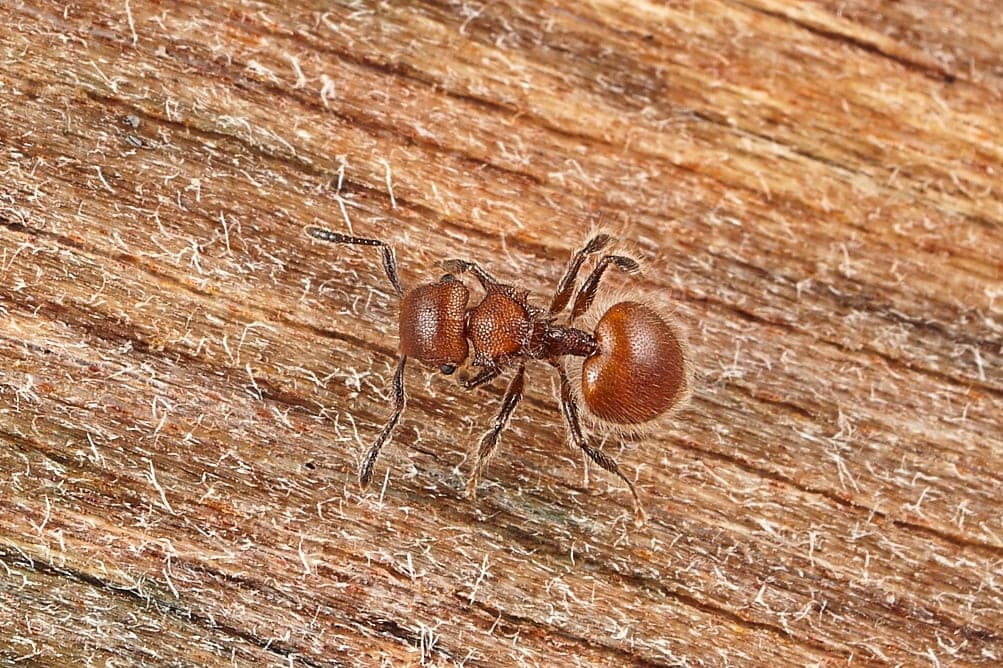
Photo © Nikolai Vladimirov · CC BY-NC
Keeping it
Thrives in soil setups, acrylic, or Ytong nests with high moisture retention (60-80% humidity). Their diet consists of liquid sugars, small feeder insects, and occasional small seeds.
Where the difficulty is
Growth rate is noticeably slow, requiring patience during the early founding stage until the worker population stabilizes.
Gallery
Photo © Santiago Monroy · CC BY-NC
Photo © Huang Baochen | 黄宝臣 · CC BY-NC
Photo © Nikolai Vladimirov · CC BY-NC
Photo © Santiago Monroy · CC BY-NC
Live photographs are by iNaturalist observers under CC BY-NC — every one carries its credit.
Sources
The Thai text is written from the facts in these sources, not copied from them. · Data confidence: ปานกลาง
This page is husbandry information only — live ants aren't sold on the site, for the animals' safety in transit.