
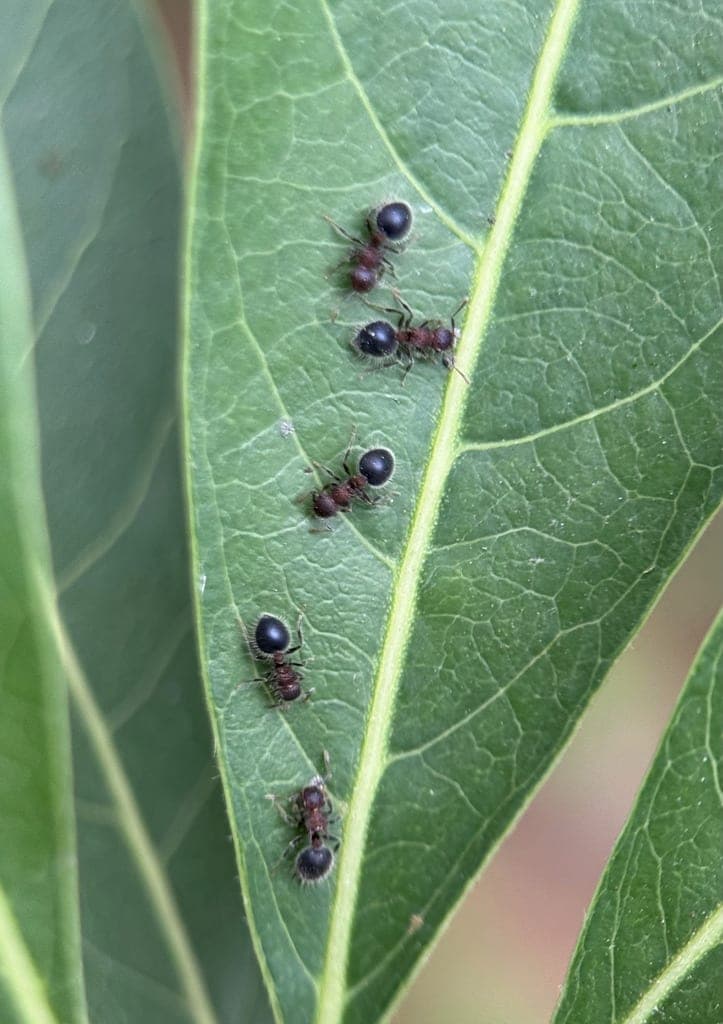
 Live photo
Species & care sheets
Bicolored Shield Ant
Meranoplus bicolor · มดโล่บ้าน
The Bicolored Shield Ant (Meranoplus bicolor), or "มดโล่บ้าน" in Thai, is instantly recognizable for the hard, shield-like plate covering its entire thorax like a suit of armor. A shy, slow-moving, docile species found across much of Asia, it's an easy-care ant for beginners that tolerates a wide diet and simple captive setups.
Overview
Temperature
24–29°C
Humidity
55–70%
Diet
Sugar · Insects · Seeds
Nest type
Soil / Ytong / gypsum / 3D printed
Growth
Slow
Colony size
150–1,000 ตัว
- Difficulty — เลี้ยงง่าย เดินช้า ไม่สร้างความเดือดร้อน แต่การเจริญเติบโตของรังเป็นไปอย่างช้าๆ
- Colony size — ขนาดรังปานกลาง ไม่ขยายขนาดจนใหญ่เกินไป
- How often it is found — มดที่มีข้อมูลบันทึกพบมากที่สุดในกลุ่ม เจอได้บ่อยตามธรรมชาติ — มีบันทึกยืนยันพบในไทยโดยตรงด้วย; มีวางขายในตลาดนักเลี้ยงมดต่างประเทศ (มีสต๊อกจริง) · Records in Thailand 64 · Records worldwide 1,417 · Hobbyist market: Sold abroad
Derived from record counts in global databases (GBIF · AntWeb · iNaturalist), not from how common the ant is in Thailand. — น่าเชื่อถือสูง — มีบันทึกพิกัด/ตัวอย่างในไทยจริง (GBIF/AntWeb)
What it eats
Size
Body length by caste, and the ants drawn to scale on a credit card
Actual size against a credit card
Ants are drawn to scale on a standard card (85.6 × 54 mm) — hold a real card against the screen and move the slider until the card matches, and the ants are then life-size.
~4 mm
~7 mm
Behaviour & care
Defences
PeacefulRarely attacks — comfortable to keep close.
Colony profile
Queens
Either
Founding
Claustral
Diapause
Not required
Growth
Slow
In depth
The Bicolored Shield Ant (Meranoplus bicolor), known in Thai as "มดโล่บ้าน" (house shield ant), is one of the oddest-looking small ants in the Thai hobby — its entire thorax is covered by a hard, shield-like plate. When it tucks in to hide, it looks like a tiny ant wearing armor, which is exactly where its Thai and English names come from.
Appearance
Workers are small, measuring about 3–5 mm, while queens are much larger at 8–9 mm. As the name "bicolor" suggests, the body shows two-toned coloring, covered in dense, long, upright hairs. Its most distinctive feature is a hard shield-like plate covering almost the entire thorax (pronotum), acting like a suit of armor — a hallmark of the genus Meranoplus that makes it easy to tell apart from other small ants.
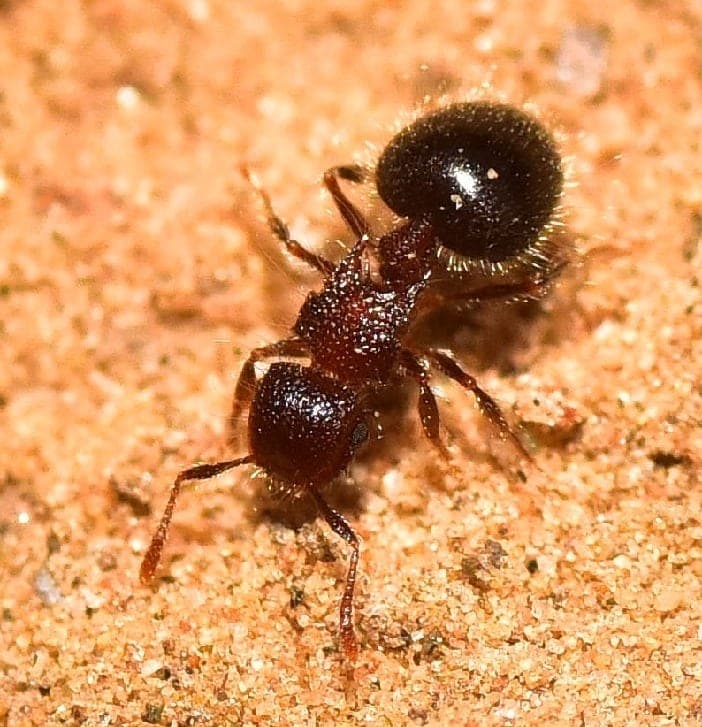
Photo © Shambhavi Chavan · CC BY-NC
Where They're Found
This species has an exceptionally wide distribution across Asia, ranging from Pakistan, India, Nepal, Bangladesh, Bhutan, and Tibet through southern China, Taiwan, Myanmar, Thailand, Laos, and Vietnam, down to Malaysia, Sumatra, Java, Sri Lanka, and the Philippines. It is also found in Borneo and Singapore, and has been introduced to New Zealand and the state of Louisiana in the USA. It lives in habitats ranging from open grassland to open-canopy forest, favoring dry, seasonally warm areas, and builds simple nests in the soil at the base of trees, sometimes with multiple entrances.
This is a moderately easy species to keep, docile with a very mild sting and bite. The main challenge is maintaining a consistently warm temperature year-round, since it has poor cold tolerance. The colony size figure listed (150–1,000 ants) reflects the typical size commonly seen; some especially thriving colonies in certain sources have been reported to reach as many as 5,000, but that represents an extreme upper case rather than a typical average.
Good to Know
The genus Meranoplus contains more than 90 species worldwide, found mostly in the tropics of Asia and Africa, and nearly all of them share this distinctive shield-like plate covering the thorax. The shield is believed to help protect against predators and may also help reduce water loss in the dry climates where these ants typically live.
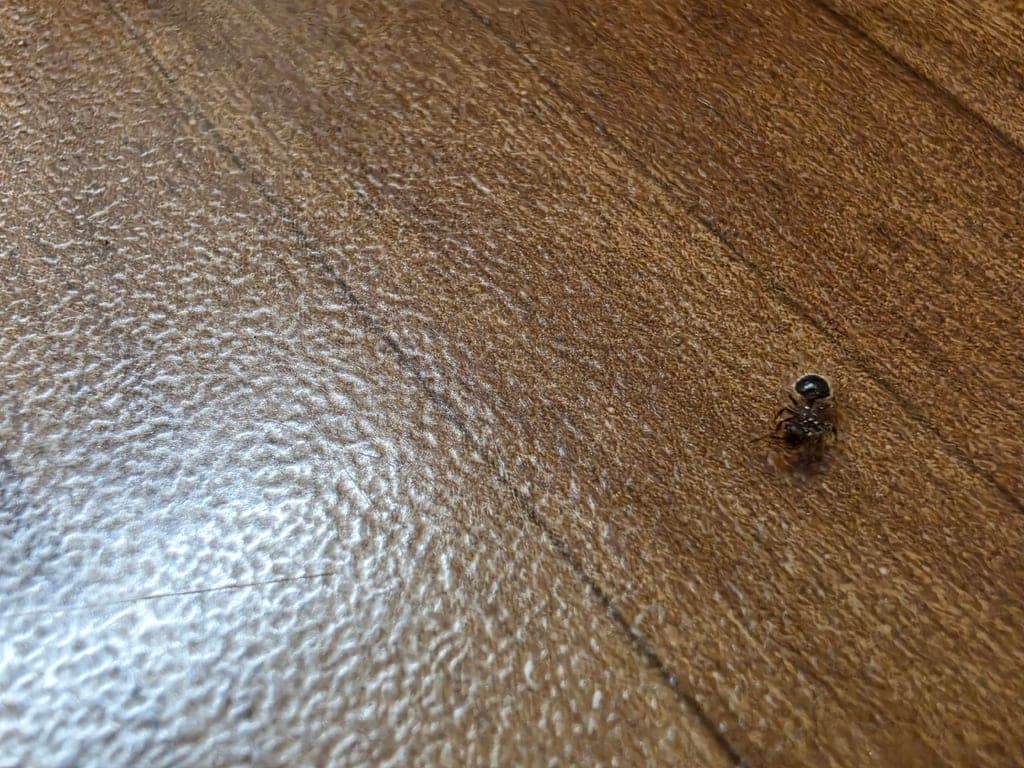
Behavior: Shy and Slow-Moving
Unlike most ants that scurry about frantically, the House Shield Ant moves slowly and cautiously. This shy behavior gives it a distinctive, almost charming character to watch in a formicarium.
Workers forage both on the ground and up onto plants, feeding on nectar from extrafloral nectaries, and they also tend aphids for honeydew like many other ant species. Rather than foraging in long, organized trails, House Shield Ants tend to forage individually, each worker going its own way, and they are active throughout the day rather than being strictly nocturnal or diurnal.
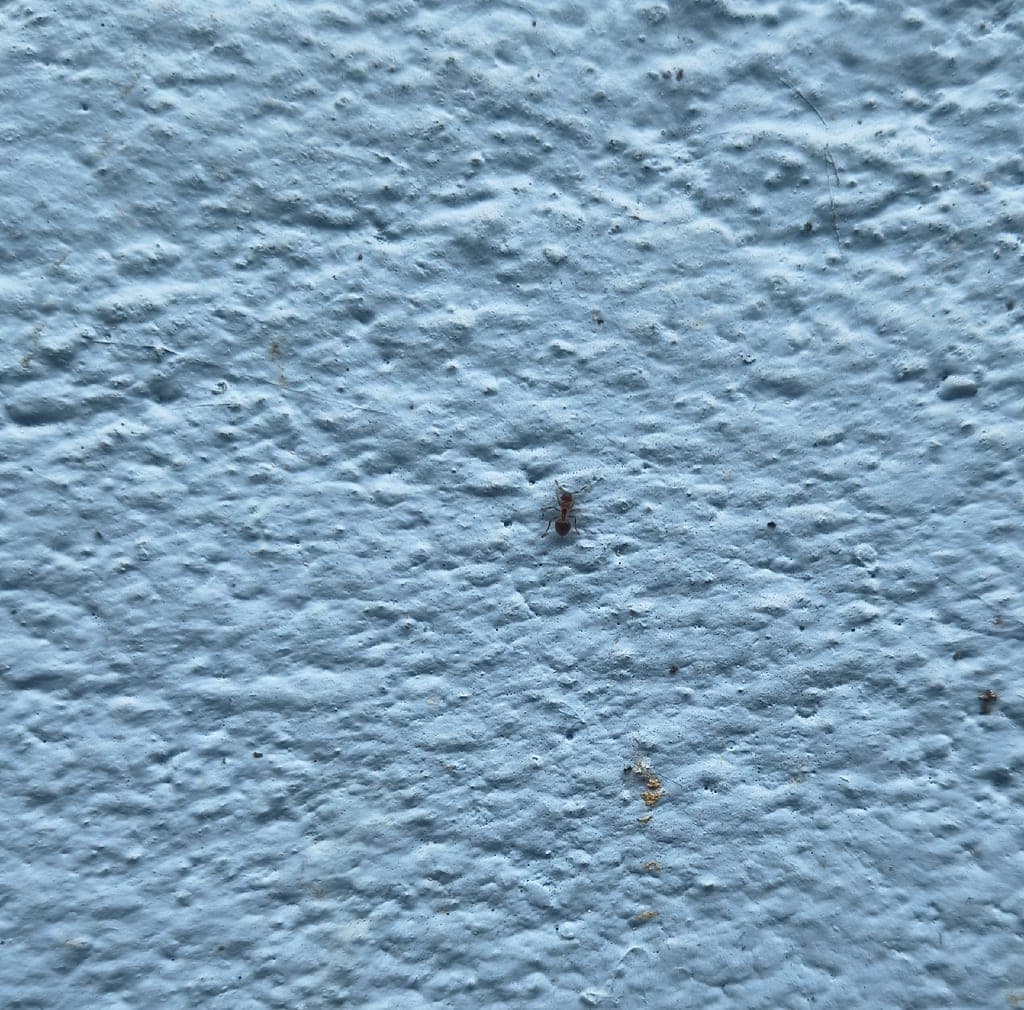
Photo © Atreyee Sarkar · CC BY-NC
Keeping Them in Captivity
An easy eater, accepting sweets like diluted honey and sugar water alongside protein from small insects such as crickets and fruit flies. The ideal temperature is around 24–29°C, with nest humidity of 55–70%. No hibernation period is needed since this is a tropical species. Queens are fully claustral founders, meaning they do not need to forage while raising their first batch of workers. Eggs take roughly 6–10 weeks to develop into workers, and queens can live as long as 15 years.
Gallery
Photo © Shambhavi Chavan · CC BY-NC
Photo © Atreyee Sarkar · CC BY-NC
Photo © Sagarika Gupta · CC BY-NC
Photo © Harsha Jayaramaiah · CC BY
Photo © Foo Chuan Wei · CC BY-NC
Live photographs are by iNaturalist observers under CC BY-NC — every one carries its credit.
Sources
The Thai text is written from the facts in these sources, not copied from them. · Data confidence: สูง
This page is husbandry information only — live ants aren't sold on the site, for the animals' safety in transit.