
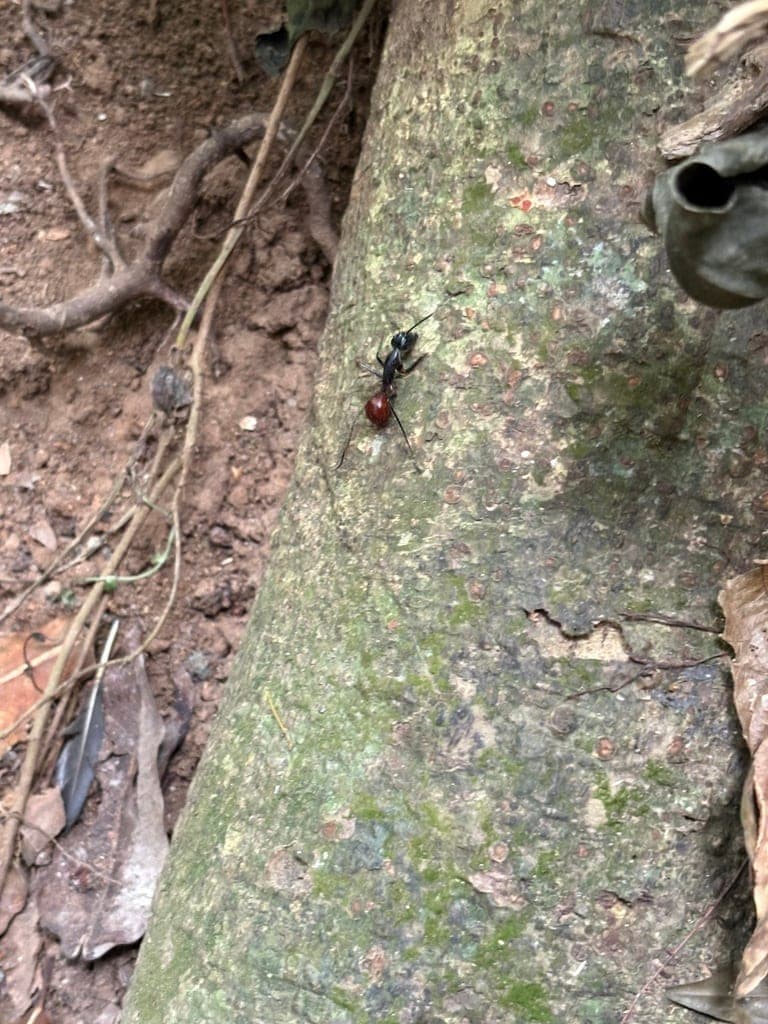
 Live photo
Species & care sheets
Giant Forest Ant
Dinomyrmex gigas · มดตะลานยักษ์ปักษ์ใต้
Photo © CabbageHinjabi · CC BY-NC
Thailand's largest ant, with soldiers nearly 3 cm long, was only recently confirmed living in a Songkhla forest. A master-level species that needs serious space and humidity.
เคยถูกจัดอยู่ในสกุล Camponotus (Camponotus gigas)
Overview
Temperature
22–26°C
Humidity
70–80%
Diet
Sugar · Insects
Nest type
natural/dirt / Ytong / Acrylic / Wood
Growth
Slow
Colony size
500–3,000 ตัว
- Difficulty — ต้องการพื้นที่ขนาดใหญ่มาก ควบคุมอุณหภูมิและความชื้นให้เย็นชื้นสม่ำเสมอ และโตช้ามากในระยะตั้งรัง
- Colony size — รังธรรมชาติขนาดใหญ่สุดอาจมีประชากรได้ประมาณ 7,000 ตัว
- How often it is found — มีข้อมูลบันทึกพบค่อนข้างมาก เจอได้ไม่ยากนัก — เคยมีวางขายในร้านนักเลี้ยงมดต่างประเทศ (แต่ปัจจุบันหมด/ไม่พร้อมส่ง) · Records in Thailand 0 · Records worldwide 3,552 · Hobbyist market: Was sold, now out of stock
Derived from record counts in global databases (GBIF · AntWeb · iNaturalist), not from how common the ant is in Thailand. — น่าเชื่อถือ — AntWiki ระบุพิสัยกระจายครอบคลุม Indomalaya (เอเชียตะวันออกเฉียงใต้)
What it eats
Size
Body length by caste, and the ants drawn to scale on a credit card
Actual size against a credit card
Ants are drawn to scale on a standard card (85.6 × 54 mm) — hold a real card against the screen and move the slider until the card matches, and the ants are then life-size.
~24 mm
~29 mm
~30.5 mm
Behaviour & care
Defences
AggressiveAttacks when disturbed — handle with care.
Colony profile
Queens
Single queen (monogyne)
Founding
Claustral
Diapause
Not required
Growth
Slow
In depth
มดชนิดนี้มีการต่อสู้แย่งชิงอาณาเขตในตอนกลางคืนด้วยการ "มวยปล้ำ" แบบมีรูปแบบเฉพาะ เพื่อวัดความแข็งแกร่งโดยไม่ทำให้มดทั้งสองฝ่ายบาดเจ็บถึงชีวิต
Appearance
Where it lives
Native to the tropical rainforests of Southeast Asia, including Thailand, Malaysia, Indonesia, and Borneo. They typically build large subterranean nests around the root systems of massive rainforest trees.
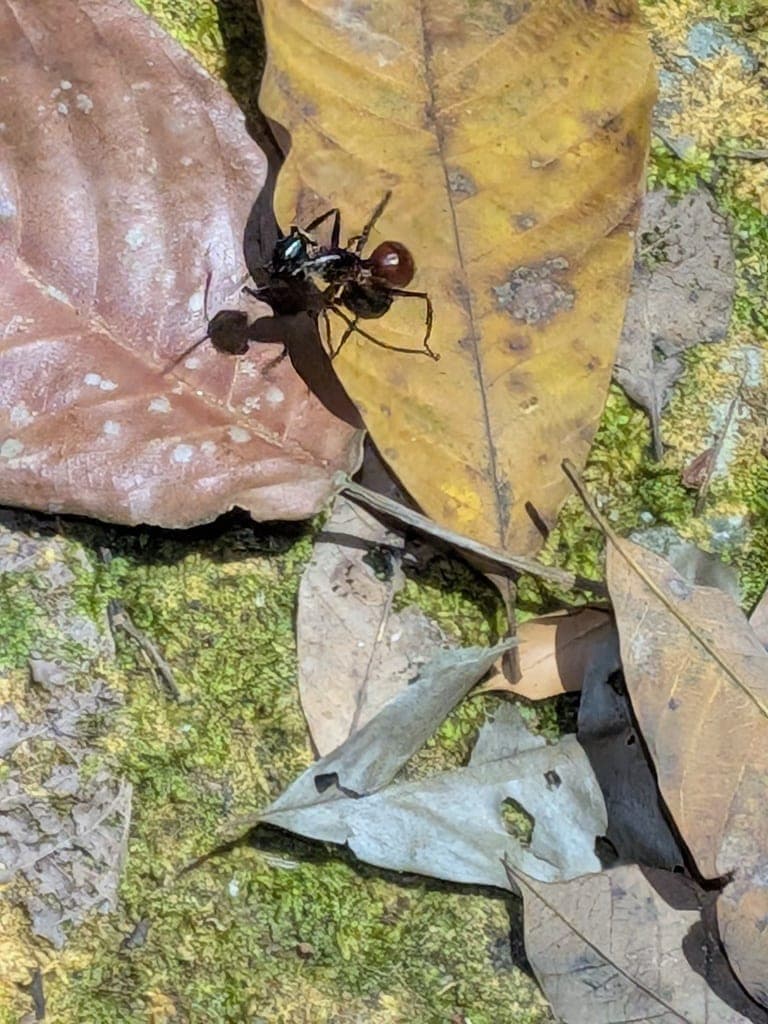
Photo © Michael Geiser · CC BY-NC
Behaviour
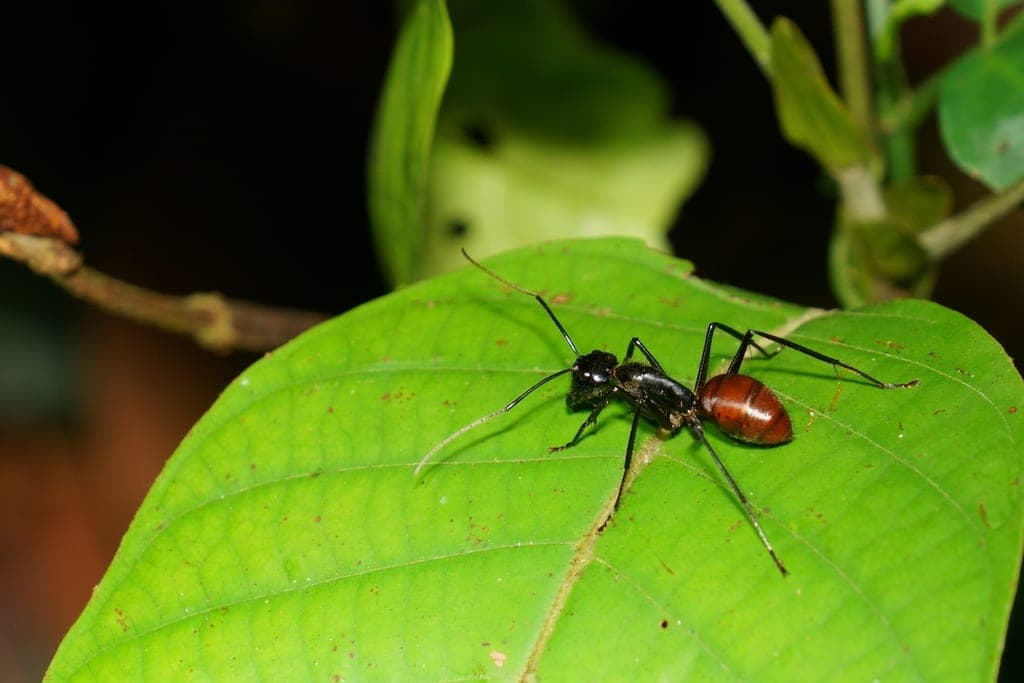
Keeping it
Requires a massive setup with superior ventilation, high humidity (75-90%), and cool temperatures (22-26°C). Natural dirt setups or highly moisture-retentive Ytong nests work best. Feed high-quality sugar liquids and fresh feeder insects.
Where the difficulty is
Extremely challenging to establish from a single queen; colony growth is slow, and they are highly sensitive to heat spikes above 28°C and low humidity.
Fun fact
Formerly classified as Camponotus gigas, it was placed into its own genus Dinomyrmex. The species name "gigas" stems from Latin, meaning "giant."
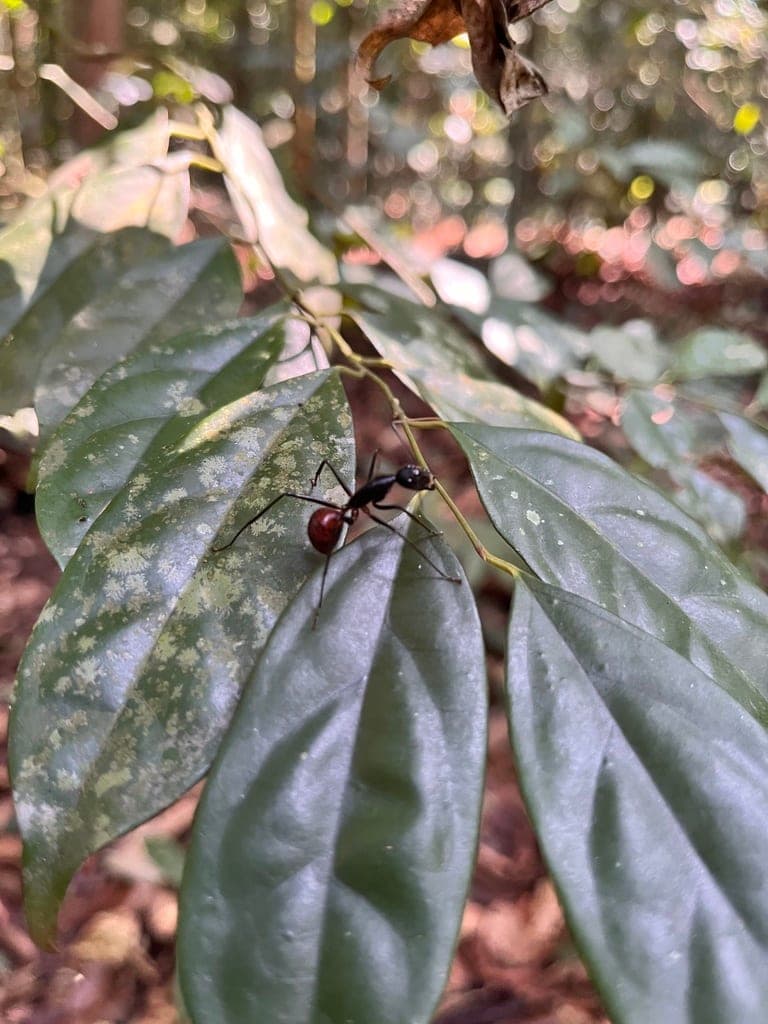
Photo © mazalina2207 · CC BY-NC
Gallery
Photo © CabbageHinjabi · CC BY-NC
Photo © Michael Geiser · CC BY-NC
Photo © mazalina2207 · CC BY-NC
Photo © Jonghyun Park · CC BY
Photo © Jonghyun Park · CC BY
Photo © Jonghyun Park · CC BY
Live photographs are by iNaturalist observers under CC BY-NC — every one carries its credit.
Sources
The Thai text is written from the facts in these sources, not copied from them. · Data confidence: สูง
This page is husbandry information only — live ants aren't sold on the site, for the animals' safety in transit.