
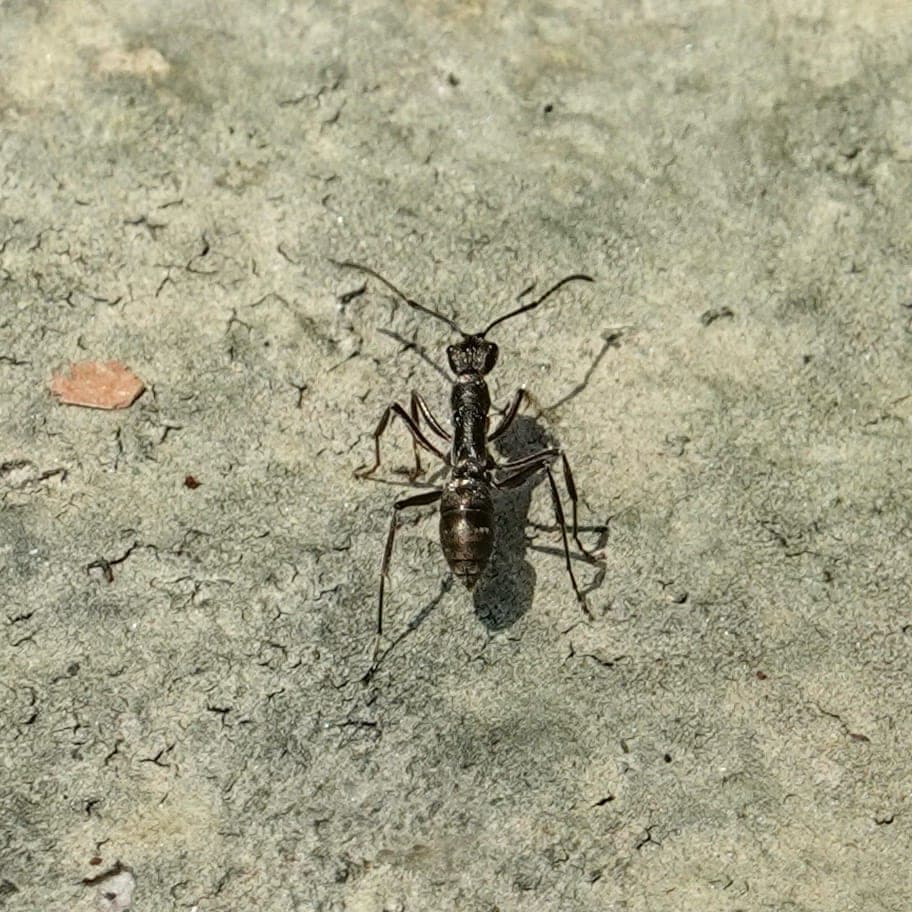
 Live photo
Species & care sheets
Bornean Queenless Ant
Diacamma rugosum · มดหนามคู่สีเทา
Photo © Vic Cheung · CC BY-NC
No true queen (gamergate system). Small colonies with fascinating hunting behavior.
สกุล Diacamma ไม่มีนางพญาจริง (Morphological queen) แต่ใช้มดงานสืบพันธุ์แทน
Overview
Temperature
24–29°C
Humidity
60–80%
Diet
Sugar · Insects
Nest type
Soil / Ytong / Plaster / Acrylic
Growth
Medium
Colony size
50–300 ตัว
- Difficulty — ต้องระวังการทำลาย Gemmae (ติ่งอก) ซึ่งส่งผลต่อการสืบพันธุ์ของรัง และต้องการโปรตีนสดอย่างสม่ำเสมอ
- Colony size — ขนาดรังมักหยุดอยู่เพียงหลักร้อยเนื่องจากจำกัดด้วยอัตราการไข่ของ Gamergate ตัวเดียว
- How often it is found — มดที่มีข้อมูลบันทึกพบมากที่สุดในกลุ่ม เจอได้บ่อยตามธรรมชาติ — มีบันทึกยืนยันพบในไทยโดยตรงด้วย; มีวางขายในตลาดนักเลี้ยงมดต่างประเทศ (มีสต๊อกจริง) · Records in Thailand 9 · Records worldwide 1,468 · Hobbyist market: Sold abroad
Derived from record counts in global databases (GBIF · AntWeb · iNaturalist), not from how common the ant is in Thailand. — น่าเชื่อถือสูง — มีบันทึกพิกัด/ตัวอย่างในไทยจริง (GBIF/AntWeb)
What it eats
Size
Body length by caste, and the ants drawn to scale on a credit card
Actual size against a credit card
Ants are drawn to scale on a standard card (85.6 × 54 mm) — hold a real card against the screen and move the slider until the card matches, and the ants are then life-size.
~11 mm
This species has no queen caste — a mated worker lays the eggs instead.
Behaviour & care
Defences
AggressiveAttacks when disturbed — handle with care.
Colony profile
Queens
Single queen (monogyne)
Founding
Semi-claustral
Diapause
Not required
Growth
Medium
In depth
Diacamma rugosum, known in Thai as "มดหนามคู่สีเทา" (grey twin-spine ant), belongs to the ant subfamily Ponerinae and has one of the most remarkable social systems in the ant world: colonies never have a true queen at all. Every colony is instead run by a single mated worker called a gamergate.
Appearance
Workers are matt black and measure roughly 9–13 mm long, with a distinctly ridged, sculpted body surface — the source of the species name "rugosum," Latin for "wrinkled" or "ridged." The most telling feature is a pair of small bumps on the mesosoma called gemmae, vestigial remnants of wings. Every worker is born with these gemmae, because the species has no separate winged queen caste at all.
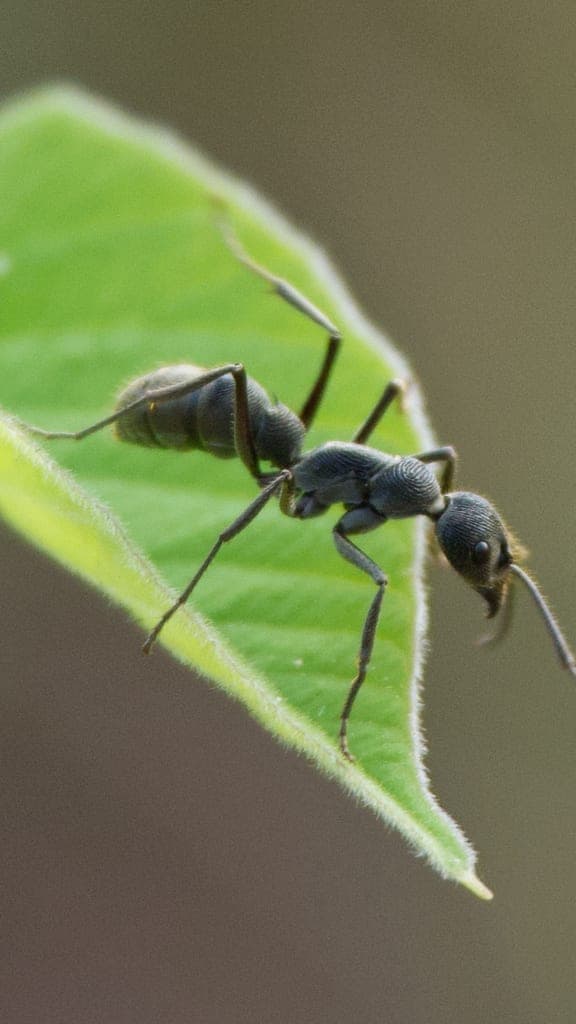
Photo © Yohanes Bayu Christianto · CC BY-NC
Where They're Found
The genus Diacamma ranges broadly from India to Australia, covering nearly all of Southeast Asia including Thailand, and is split into roughly 20 regional subspecies. Diacamma rugosum itself is most established across Sundaland (Borneo and neighboring islands), living on the floor of humid tropical forest. Colonies nest in soil, under rotting logs, or at the base of trees, and workers forage mainly on the ground (epigaeic), hunting through leaf litter and decaying wood.
The main challenge is temperament — this species is defensive and carries a ponerine sting strong enough to be genuinely painful, used both for hunting and self-defense, so care is needed when opening the nest or feeding. Because there's no separate queen caste, keepers also need to understand that any worker carries the potential to become the next gamergate, which makes colony management a little different from species with a conventional queen. Better suited to keepers with some prior experience than to total beginners.
Good to Know
The English common name for this ant group, "queenless ant" (or "Bornean queenless ant"), describes its social system literally. Myrmecologists use Diacamma as a model system for studying the evolution of caste and social hierarchy in insects, since every worker starts out with equal genetic potential to become the colony's sole reproductive — unlike most ants, where queen and worker castes are fixed from the larval stage.
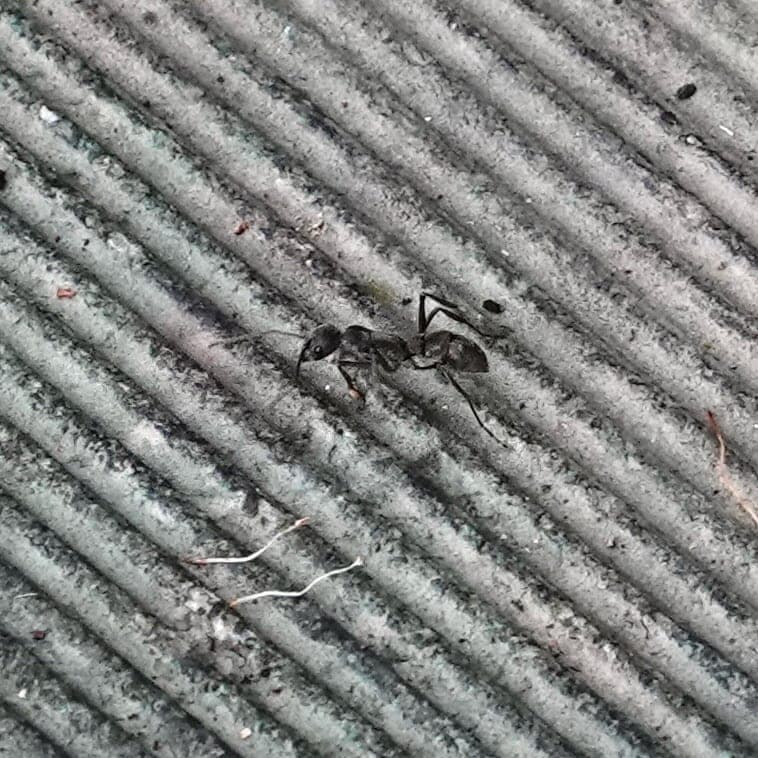
Photo © Vic Cheung · CC BY-NC
Behavior: The Ant World's Most Elaborate Queenless System
Diacamma rugosum has never had a queen — every colony is ruled by a single mated worker called a gamergate.
With no queen caste, colony reproduction falls entirely to one gamergate: the first worker to successfully mate with a male. Mating happens right beside the nest, with no nuptial flight at all. Once she becomes the gamergate, she maintains her monopoly by biting off the gemmae of her rival workers, permanently disqualifying them from ever mating. The gamergate title only changes hands when she dies of natural causes — at which point the remaining workers settle the succession through ritualized antennal duels.
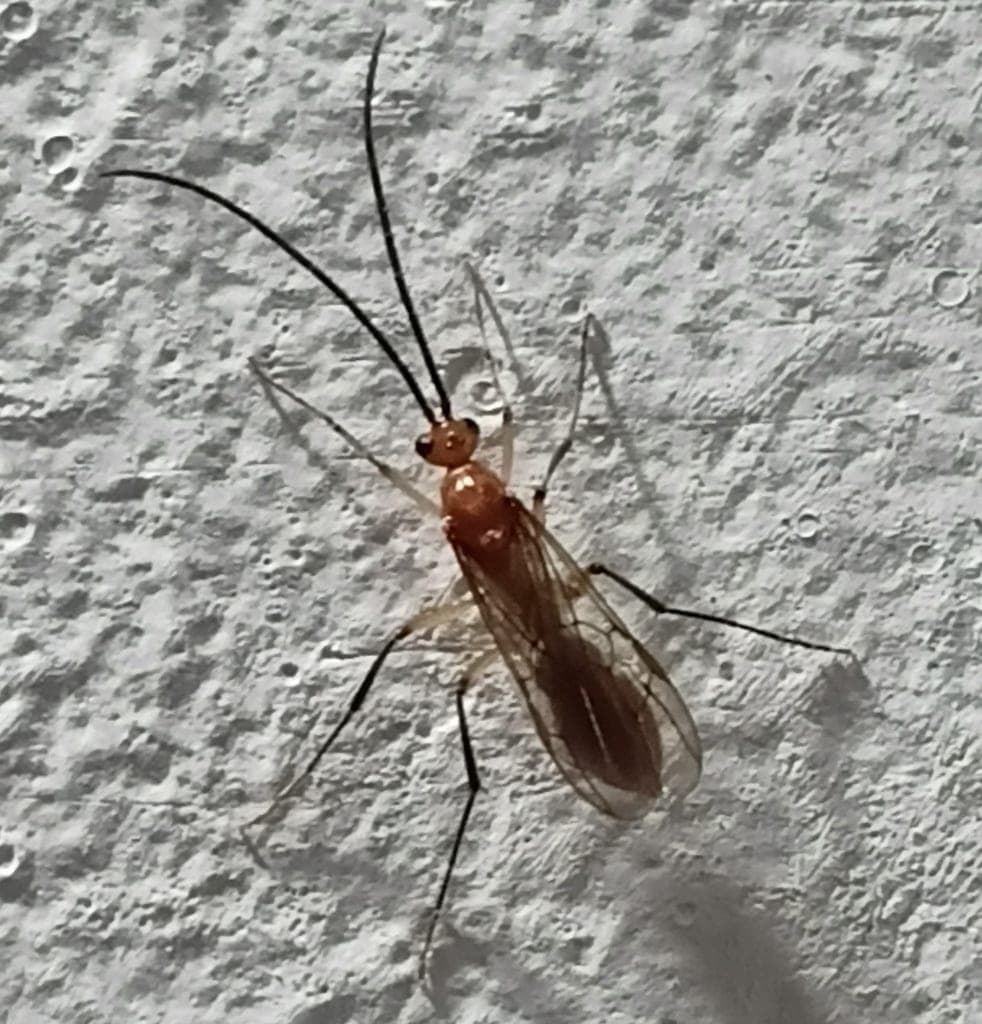
Photo © udhansenila · CC BY-NC
Keeping Them in Captivity
D. rugosum is a committed predator. Its diet should center on live or freshly killed insects — crickets, roaches, fruit flies — supplemented with diluted honey or sugar water. Ideal temperature is around 24–29°C with humidity of 60–80%. Colony founding is semi-claustral: the founding worker forages for herself while raising the first brood, rather than sealing herself away and starving like many other ant species. Growth is fairly slow, and mature colonies typically stay modest in size, at around 50–300 workers — a normal, commonly seen size, not a maximum.
Gallery
Photo © Vic Cheung · CC BY-NC
Photo © Yohanes Bayu Christianto · CC BY-NC
Photo © Vic Cheung · CC BY-NC
Photo © udhansenila · CC BY-NC
Photo © Hsiu Hing Wo, Ivan · CC BY-NC
Live photographs are by iNaturalist observers under CC BY-NC — every one carries its credit.
Sources
The Thai text is written from the facts in these sources, not copied from them. · Data confidence: สูง
This page is husbandry information only — live ants aren't sold on the site, for the animals' safety in transit.