
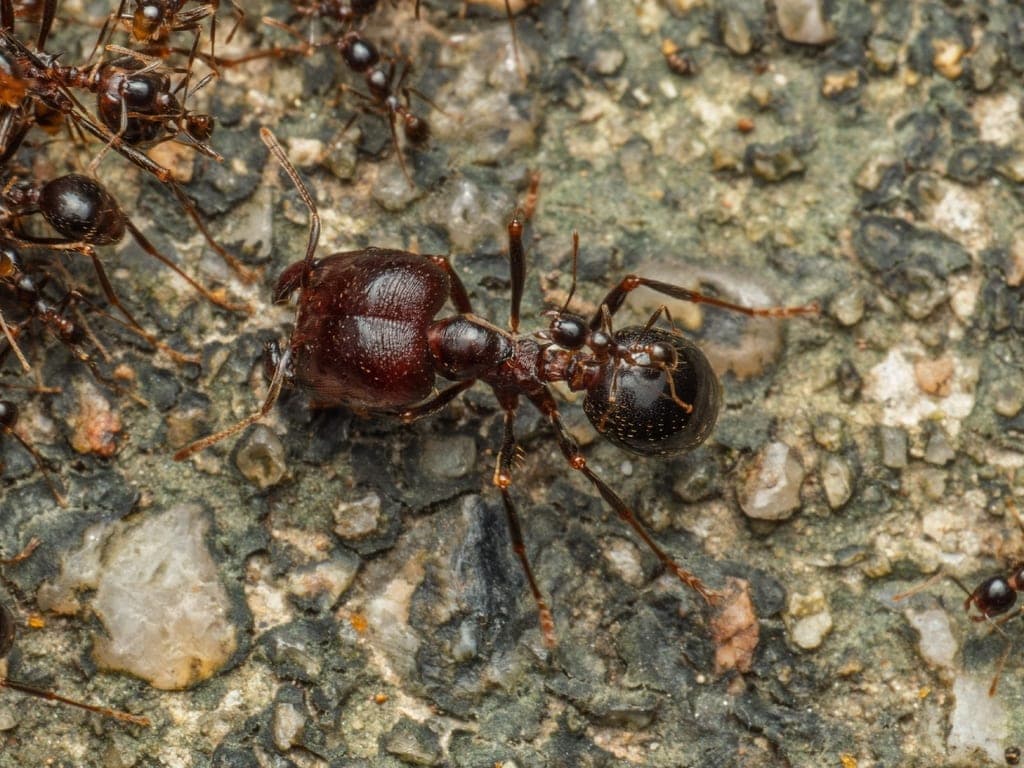
 Live photo
Species & care sheets
Asian Marauder Ant
Carebara diversa · มดง่ามทุ่ง
Supermajors 100× the size of minors. Explosive growth — plan for huge numbers.
เดิมชื่อ Pheidologeton diversus มีความแปรผันของวรรณะทหารสูงมาก
Overview
Temperature
26–30°C
Humidity
70–90%
Diet
Sugar · Insects · Seeds
Nest type
Soil / Ytong / Plaster
Growth
Fast
Colony size
10,000–50,000 ตัว
- Difficulty — ความต้องการอาหารมหาศาล รังโตไวมาก และต้องการความชื้นสูง หากรังแห้งมดจะตายยกมดอย่างรวดเร็ว
- Colony size — รังขนาดใหญ่อาจมีประชากรมากกว่า 500,000 ตัวและมีมดควีนหลายตัว
- How often it is found — มดที่มีข้อมูลบันทึกพบมากที่สุดในกลุ่ม เจอได้บ่อยตามธรรมชาติ — มีบันทึกยืนยันพบในไทยโดยตรงด้วย; มีวางขายในตลาดนักเลี้ยงมดต่างประเทศ (มีสต๊อกจริง) · Records in Thailand 73 · Records worldwide 1,827 · Hobbyist market: Sold abroad
Derived from record counts in global databases (GBIF · AntWeb · iNaturalist), not from how common the ant is in Thailand. — น่าเชื่อถือสูง — มีบันทึกพิกัด/ตัวอย่างในไทยจริง (GBIF/AntWeb)
What it eats
Size
Body length by caste, and the ants drawn to scale on a credit card
Actual size against a credit card
Ants are drawn to scale on a standard card (85.6 × 54 mm) — hold a real card against the screen and move the slider until the card matches, and the ants are then life-size.
~1.9 mm
~9.5 mm
~23 mm
Behaviour & care
Defences
AggressiveAttacks when disturbed — handle with care.
Colony profile
Queens
Either
Founding
Claustral
Diapause
Not required
Growth
Fast
In depth
The Asian Marauder Ant (Carebara diversa), known in Thai as "มดง่ามทุ่ง," is famous for having one of the most extreme size differences between workers of any ant species on Earth. The smallest and largest workers in the same nest can differ in weight by hundreds of times, despite hatching from identical eggs.
Appearance
The standout trait is extreme worker polymorphism. Minor workers measure just 1.3–2.5 mm, are yellowish reddish-brown, and have rectangular heads. Major workers (soldiers), by contrast, have heads roughly 12 times larger than the minors, with dry body weight differing by as much as 550-fold. Majors are reddish-brown to black, with nearly square heads and large triangular mandibles. Between these two extremes lies a continuous range of intermediate worker sizes.
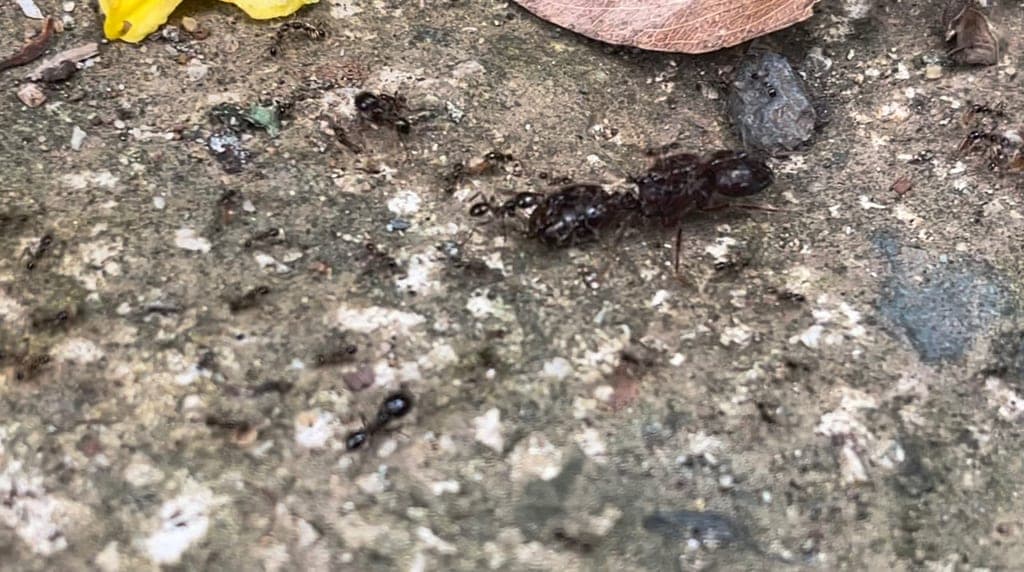
Where They're Found
Widely distributed across Asia, from India and Sri Lanka through Southeast Asia to southern China and Indonesia. It lives in soil or under rocks, typically in open fields or agricultural land. Colonies build permanent, structurally complex underground nests. Unlike true army ants, Carebara diversa doesn't relocate constantly — instead, workers build covered soil-particle tunnels along their foraging routes between the nest and food sources.
The main challenges are the very high humidity requirement and the sheer amount of food a growing colony demands, since major workers eat far more than minors — plan enclosure space and feeding budget well in advance. The colony size figure given here (10,000–50,000 workers) reflects a large but commonly seen mature colony, not a maximum; the six-figure or million-worker numbers sometimes cited elsewhere describe extreme, very large wild colonies, not what's typical in a kept colony.
Good to Know
The English name "Marauder Ant" comes from its long foraging columns, reminiscent of true army ants, even though it doesn't relocate its nest constantly the way army ants do. The extreme worker-size variation in this species makes Carebara a go-to example for myrmecologists studying allometric division of labor — how insect societies assign tasks based on body size.
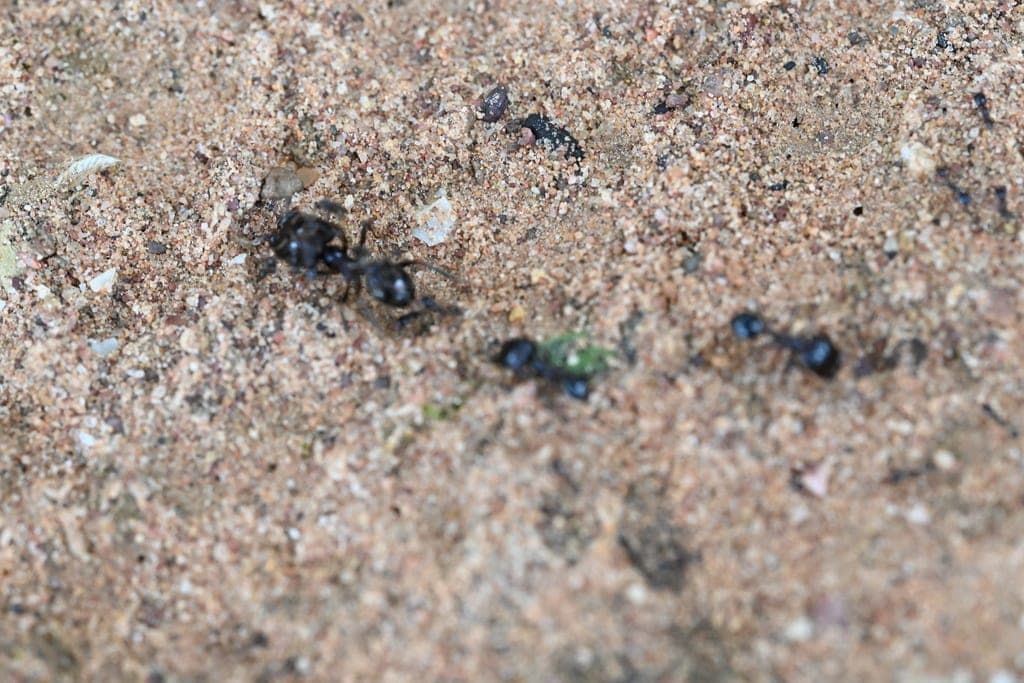
Photo © mathias_dezetter · CC BY-NC
Behavior: Majors as Living Transport for Minors
Minor workers of Carebara diversa are often seen "hitchhiking" on the backs of much larger major workers during long foraging trips — one of the strangest sights in any ant foraging column.
Colonies forage in long columns along pheromone trails, hunting small insects while also collecting sugary honeydew from aphids. One study found that over 94% of workers failed to cross an obstacle on their first attempt, though the column eventually found a way around it. Young minor workers typically start out on brood care before moving on to other roles. A single colony can host as many as 16 queens living together.
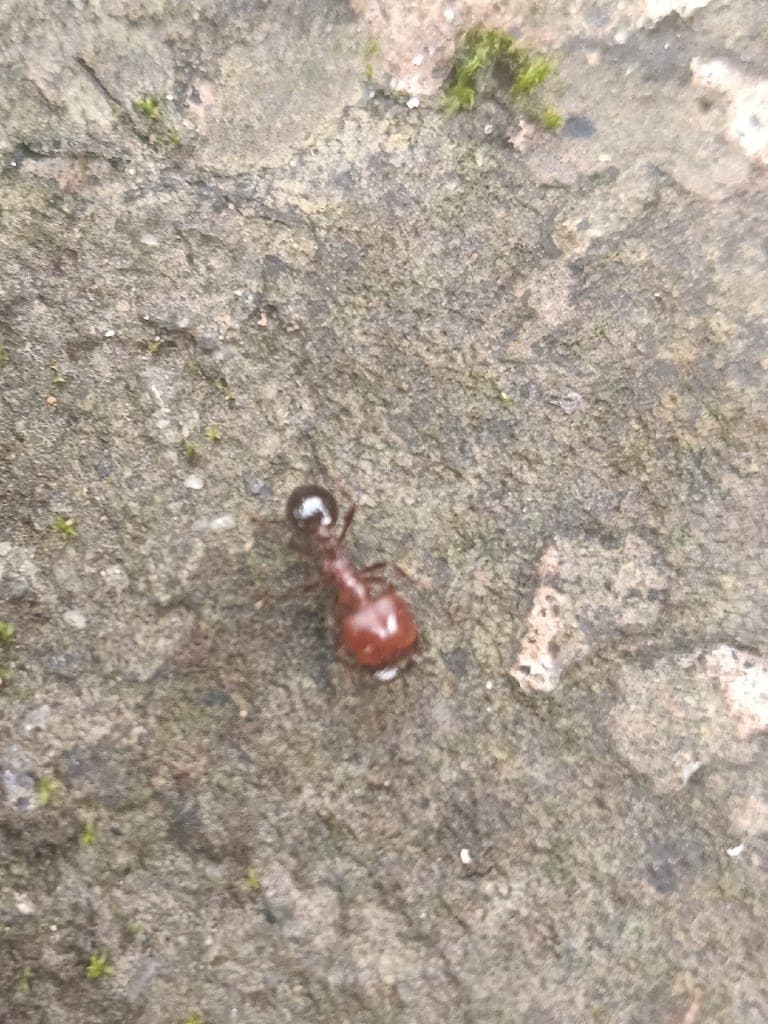
Keeping Them in Captivity
An aggressive, cooperative group hunter, feeding mainly on insects such as crickets and roaches. Feed consistently every day — food scarcity stresses the colony and can lead to brood cannibalism. Ideal temperature is 26–30°C and shouldn't drop below that, since this species has no dormancy period. Humidity needs to stay very high, at 70–90%, with good ventilation. Eggs develop into minor workers in just 3–4 weeks, driving rapid colony growth.
Gallery
Photo © mathias_dezetter · CC BY-NC
Photo © 11G - Claveria, Victor Ivan M. · CC BY-NC
Photo © Max Hsieh(雁子) · CC BY-NC
Photo © Max Hsieh(雁子) · CC BY-NC
Live photographs are by iNaturalist observers under CC BY-NC — every one carries its credit.
Sources
The Thai text is written from the facts in these sources, not copied from them. · Data confidence: สูง
This page is husbandry information only — live ants aren't sold on the site, for the animals' safety in transit.