
 Live photo
Species & care sheets
Red-Headed Giant Carpenter Ant
Camponotus singularis · มดตะลานป่าหัวแดง
A large carpenter ant with a striking bright red head against a dark body, admired by keepers worldwide for its size and bold, ever-alert temperament.
อยู่ในสกุลย่อย Myrmosphincta มีลักษณะหัวสีแดงเข้มโดดเด่นตัดกับลำตัวสีดำ
Overview
Temperature
24–30°C
Humidity
55–75%
Diet
Sugar · Insects
Nest type
Ytong / Wood / Acrylic / Soil
Growth
Slow
Colony size
1,000–3,000 ตัว
- Difficulty — เติบโตค่อนข้างช้าในระยะแรก และไวต่อความเครียดหรือความชื้นที่ไม่เหมาะสม
- Colony size — รังที่เจริญเติบโตเต็มที่ในธรรมชาติอาจมีประชากรได้มากกว่า 3,000 ตัว
- How often it is found — มดที่มีข้อมูลบันทึกพบมากที่สุดในกลุ่ม เจอได้บ่อยตามธรรมชาติ — มีบันทึกยืนยันพบในไทยโดยตรงด้วย; มีวางขายในตลาดนักเลี้ยงมดต่างประเทศ (มีสต๊อกจริง) · Records in Thailand 60 · Records worldwide 575 · Hobbyist market: Sold abroad
Derived from record counts in global databases (GBIF · AntWeb · iNaturalist), not from how common the ant is in Thailand. — น่าเชื่อถือสูง — มีบันทึกพิกัด/ตัวอย่างในไทยจริง (GBIF/AntWeb)
What it eats
Size
Body length by caste, and the ants drawn to scale on a credit card
Actual size against a credit card
Ants are drawn to scale on a standard card (85.6 × 54 mm) — hold a real card against the screen and move the slider until the card matches, and the ants are then life-size.
~12.5 mm
~17 mm
~19.5 mm
Behaviour & care
Defences
DefensiveBites or stings when disturbed — mind the nest when opening it.
Colony profile
Queens
Single queen (monogyne)
Founding
Claustral
Diapause
Not required
Growth
Slow
In depth
The Red-Headed Giant Carpenter Ant (Camponotus singularis) is a large carpenter ant species easily recognized by its bright red head contrasting with a dark body. It's one of the carpenter ants most sought after by keepers worldwide for its impressive size and bold, ever-alert nature.
Appearance
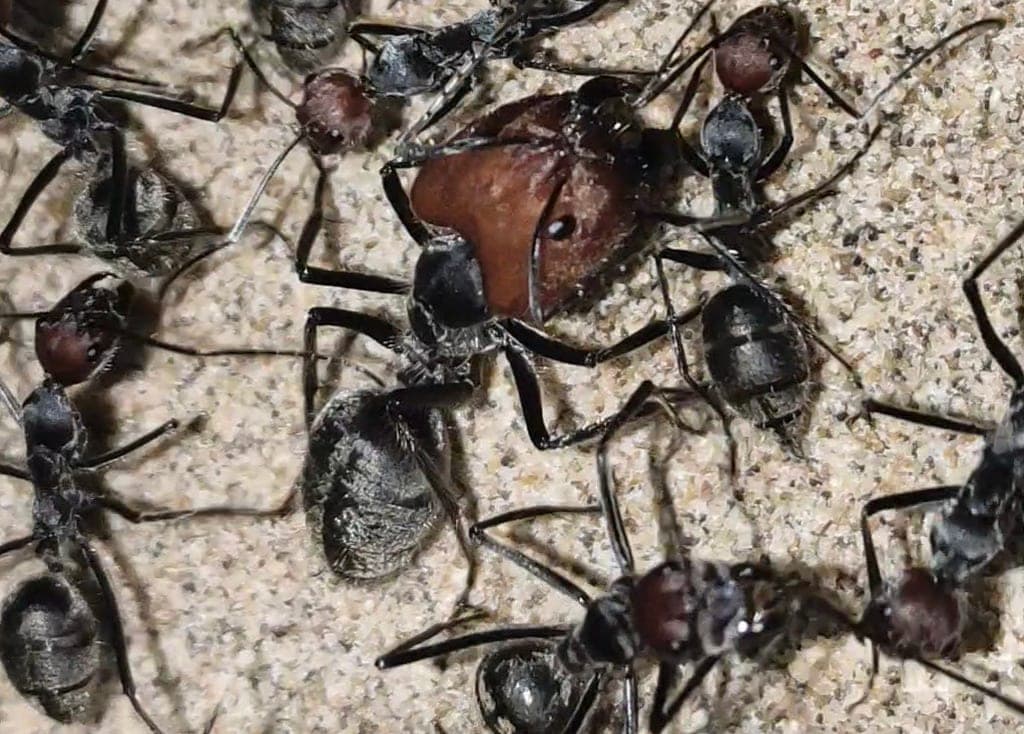
This species shows high worker polymorphism, with body lengths ranging from 8–18 mm. Its most distinctive feature is the vivid red head set against a dark body, which makes it easy to tell apart from other carpenter ants and is the source of the "red-headed" name in both Thai and English.
Where They're Found
Found in the tropical forests of Southeast Asia, particularly Vietnam, Thailand, and Malaysia. It lives in humid primary forest, nesting inside tree hollows or under sections of loose bark.
Notable Behavior: A Bold Forager
The Red-Headed Giant Carpenter Ant is known for its boldness and constant alertness while foraging, showing curious behavior and working efficiently together both when gathering food and tending brood in the nest.
It's omnivorous, with a strong preference for sugary liquids alongside protein from insects. Larger workers typically defend the nest and retrieve bigger food items, while smaller workers care for the brood and handle tasks inside the nest.
This is a moderate-to-advanced species to keep, as it's sensitive to dry conditions and low temperatures, requiring a consistently warm and humid setup year-round. The colony size listed (1,000–3,000 workers) reflects a typical size for a fairly large, mature colony rather than an extreme maximum.
Good to Know
The Red-Headed Giant Carpenter Ant is one of the most popular Southeast Asian carpenter ant species in the international ant-keeping hobby, prized for the striking contrast between its red head and dark body, making it highly sought after by collectors around the world.
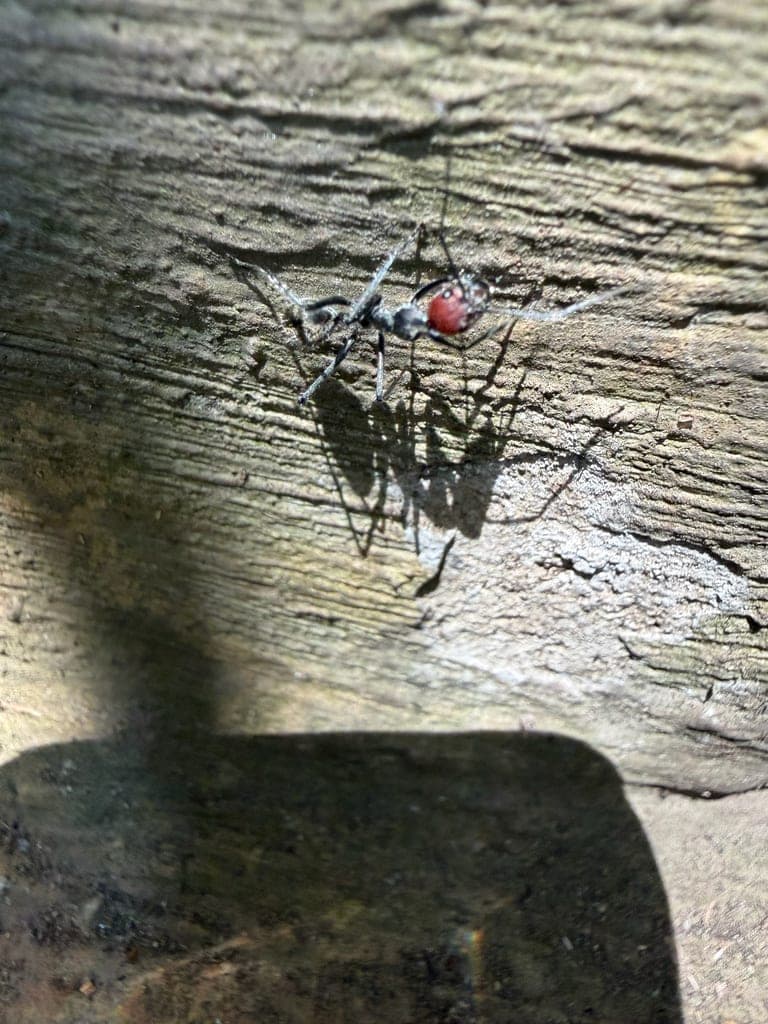
Photo © ramakartika · CC BY-NC
Keeping Them in Captivity
The ideal temperature range is 24–30°C, and it needs consistent warmth year-round. Moderate to high humidity of 55–75% is important since this species is sensitive to dryness and cold. Colonies are monogyne, with a single queen. Their main diet is a steady supply of sugar water or honey, paired with protein such as crickets, roaches, or mealworms.
Gallery
Photo © ramakartika · CC BY-NC
Photo © Shiwan Lu · CC BY-NC-SA
Photo © Jonghyun Park · CC BY
Photo © Khaizuran Abqari · CC BY-NC
Live photographs are by iNaturalist observers under CC BY-NC — every one carries its credit.
Sources
The Thai text is written from the facts in these sources, not copied from them. · Data confidence: สูง
This page is husbandry information only — live ants aren't sold on the site, for the animals' safety in transit.