
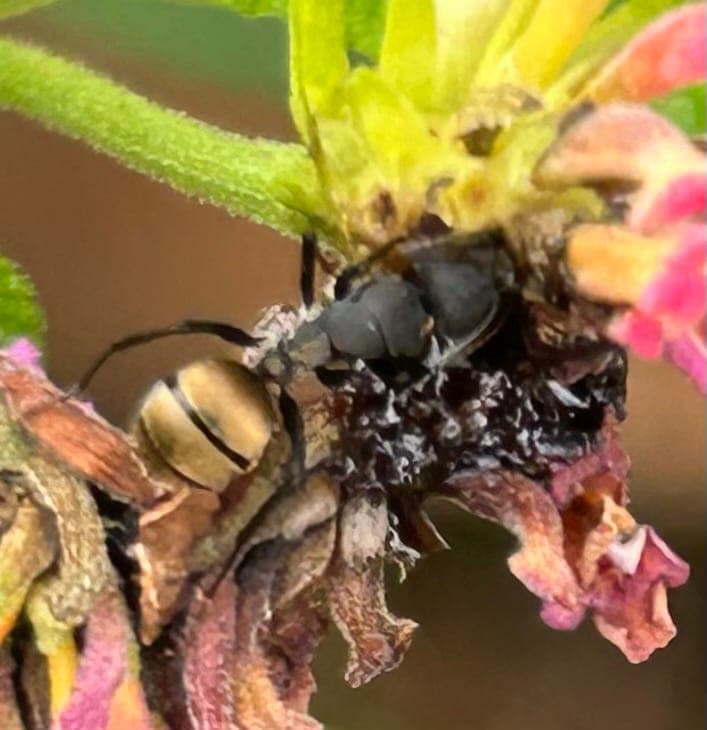
 Live photo
Species & care sheets
Silky Carpenter Ant
Camponotus sericeus · มดตะลานเสรี
Photo © Jahnvi Kumar · CC BY-NC
Unlike most carpenter ants, this species forages in broad daylight. Its body is covered in shimmering golden hair, and it thrives in dry, semi-arid habitats across Africa and Asia.
อยู่ในสกุลย่อย Orthonotomyrmex มีลักษณะเด่นคือขนประกายทองทองคำคลุมส่วนท้องอย่างแน่นหนา
Overview
Temperature
25–32°C
Humidity
40–60%
Diet
Sugar · Insects
Nest type
Ytong / Acrylic / Soil
Growth
Slow
Colony size
150–400 ตัว
- Difficulty — เลี้ยงง่าย ปรับตัวเก่ง แข็งแรง แต่เจริญเติบโตค่อนข้างช้าในระยะเริ่มต้น
- Colony size — รังขนาดใหญ่เต็มที่อาจมีมดงานได้ถึงหลายพันตัว
- How often it is found — มีข้อมูลบันทึกพบค่อนข้างมาก เจอได้ไม่ยากนัก — เคยมีวางขายในร้านนักเลี้ยงมดต่างประเทศ (แต่ปัจจุบันหมด/ไม่พร้อมส่ง) · Records in Thailand 2 · Records worldwide 1,506 · Hobbyist market: Was sold, now out of stock
Derived from record counts in global databases (GBIF · AntWeb · iNaturalist), not from how common the ant is in Thailand. — น่าเชื่อถือสูง — มีบันทึกพิกัด/ตัวอย่างในไทยจริง (GBIF/AntWeb)
What it eats
Size
Body length by caste, and the ants drawn to scale on a credit card
Actual size against a credit card
Ants are drawn to scale on a standard card (85.6 × 54 mm) — hold a real card against the screen and move the slider until the card matches, and the ants are then life-size.
~7 mm
~10.5 mm
~14 mm
Behaviour & care
Defences
DefensiveBites or stings when disturbed — mind the nest when opening it.
Colony profile
Queens
Single queen (monogyne)
Founding
Claustral
Diapause
Not required
Growth
Slow
In depth
The Silky Carpenter Ant (Camponotus sericeus) stands out from most carpenter ants by foraging during the day instead of at night. Its body is covered in shimmering golden hair, and it's found across both Africa and Asia, including Thailand.
Appearance
Workers measure 7–11 mm, with a broad, robust head and mesosoma. The body surface is coarsely sculptured, and the gaster is densely covered in fine golden, silk-like pubescence that gives it a glossy sheen in the light.
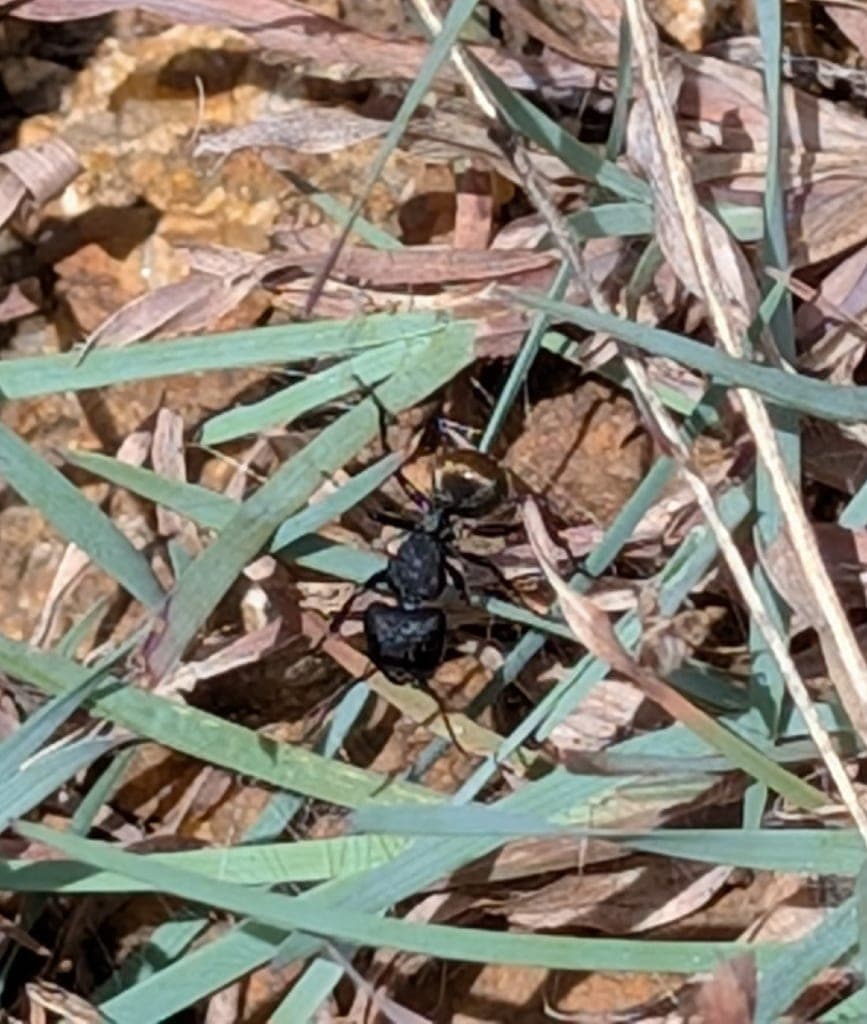
Photo © Akanksha S · CC BY-NC
Where They're Found
Widely distributed from Africa through South and Southeast Asia, including Thailand. It favors dry, semi-arid habitats, orchards, riverbank zones, and acacia trees, nesting under stones in dry soil.
Notable Behavior: A Daytime Forager
Unlike most large carpenter ants, which are typically nocturnal, the Silky Carpenter Ant forages throughout the day despite its large, conspicuous size. It uses tandem running for recruitment — one ant leads another to a food source through continuous physical contact.
It's a generalist feeder, taking both plant nectar and small insects. Average colony size is modest compared to many other carpenter ant species.
This is a moderate species to keep, requiring drier conditions than most rainforest carpenter ants. The colony size listed (150–400 workers) reflects a typical mature colony size, which is fairly modest compared to other carpenter ants.
Good to Know
The Silky Carpenter Ant is one of the few large carpenter ants that tolerates sunlight and stays active throughout the day, making it a species of interest to behavioral researchers and keepers who want to observe ant activity in daylight.
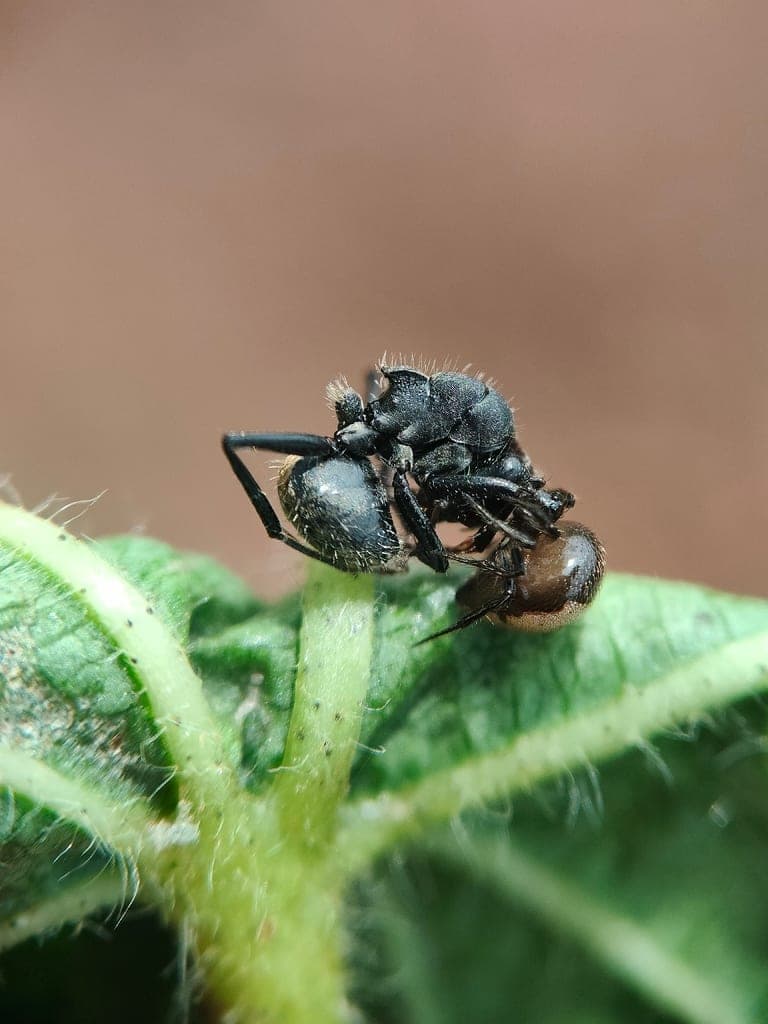
Photo © Manjunath Badiger · CC BY-NC
Keeping Them in Captivity
The ideal temperature range is 25–32°C, reflecting its adaptation to dry conditions. Humidity should stay low to moderate at 40–60% — avoid excess moisture, which can encourage mold. Feed with sugar water alongside small insects.
Gallery
Photo © Jahnvi Kumar · CC BY-NC
Photo © Akanksha S · CC BY-NC
Photo © Manjunath Badiger · CC BY-NC
Photo © Krishna Kumar Gupta · CC BY-NC
Photo © Adedotun Ajibade · CC BY-NC
Photo © Adedotun Ajibade · CC BY-NC
Photo © priyank kapadi · CC BY-NC
Photo © Vishwa Wishtohelp · CC BY-NC
Live photographs are by iNaturalist observers under CC BY-NC — every one carries its credit.
Sources
The Thai text is written from the facts in these sources, not copied from them. · Data confidence: สูง
This page is husbandry information only — live ants aren't sold on the site, for the animals' safety in transit.