
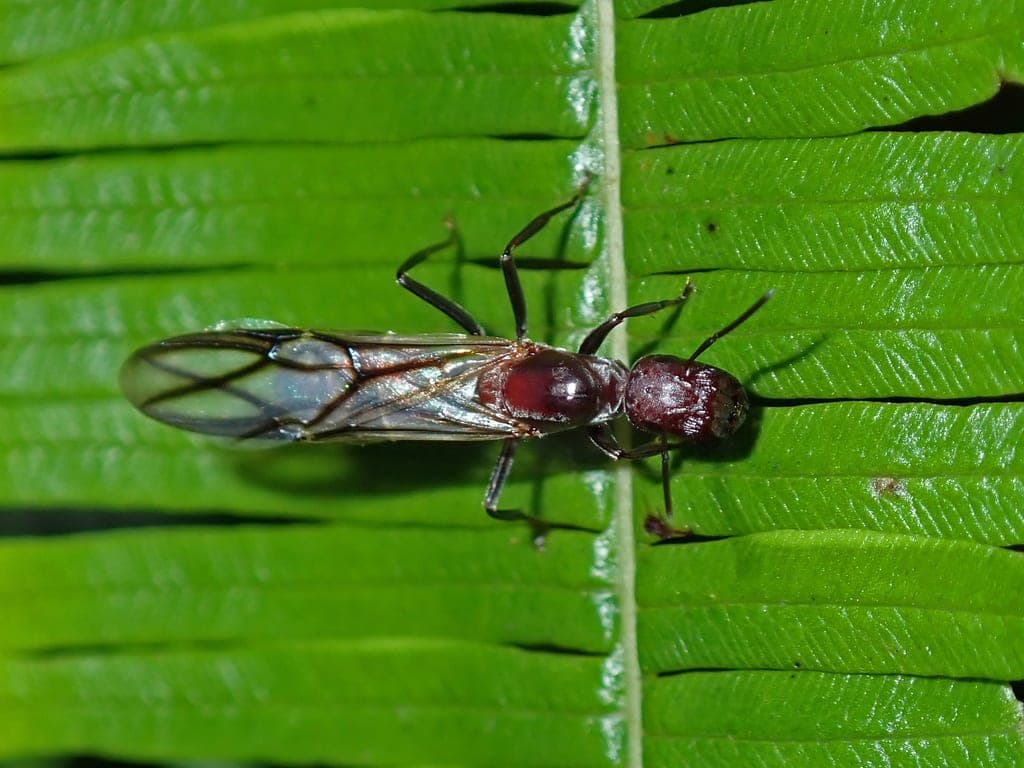
 Live photo
Species & care sheets
Malaysian Exploding Ant
Colobopsis saundersi · มดตะลานแดง
Photo © Premala Arulampalam · CC BY-NC
A carpenter ant with an extraordinary defense: it can rupture its own abdomen to spray sticky toxins on enemies to protect the colony. One of the most famous ants in the world among keepers.
ปัจจุบันจัดอยู่ในสกุลย่อย Colobopsis (หรือบางครั้งถูกยกเป็น Colobopsis saundersi)
Overview
Temperature
24–28°C
Humidity
70–85%
Diet
Sugar · Insects
Nest type
Arboreal / Wood
Growth
Medium
Colony size
300–700 ตัว
- Difficulty — เลี้ยงยากมากในสภาพการเลี้ยงเนื่องจากเป็นมดต้นไม้ที่ต้องการความชื้นสูงและมีกลไกป้องกันตัวที่ทำให้มดงานสูญเสียชีวิตได้ง่าย
- Colony size — ประเมินจากมดตะลานอาศัยบนต้นไม้ทั่วไป ข้อมูลในระบอบการเลี้ยงยังมีจำกัด
What it eats
Behaviour & care
Defences
DefensiveBites or stings when disturbed — mind the nest when opening it.
Colony profile
Queens
Single queen (monogyne)
Founding
Claustral
Diapause
Not required
Growth
Medium
In depth
The Malaysian Exploding Ant (Camponotus saundersi) is a carpenter ant world-famous for its extreme colony-defense behavior: rupturing its own body to spray sticky toxins onto enemies. It's one of the most sought-after species among ant keepers worldwide.
Appearance
Workers range from reddish-brown to deep orange with a medium-sized body. Their most striking feature is a pair of massively enlarged mandibular glands that run the length of the body — the key organ behind their extreme defense mechanism.
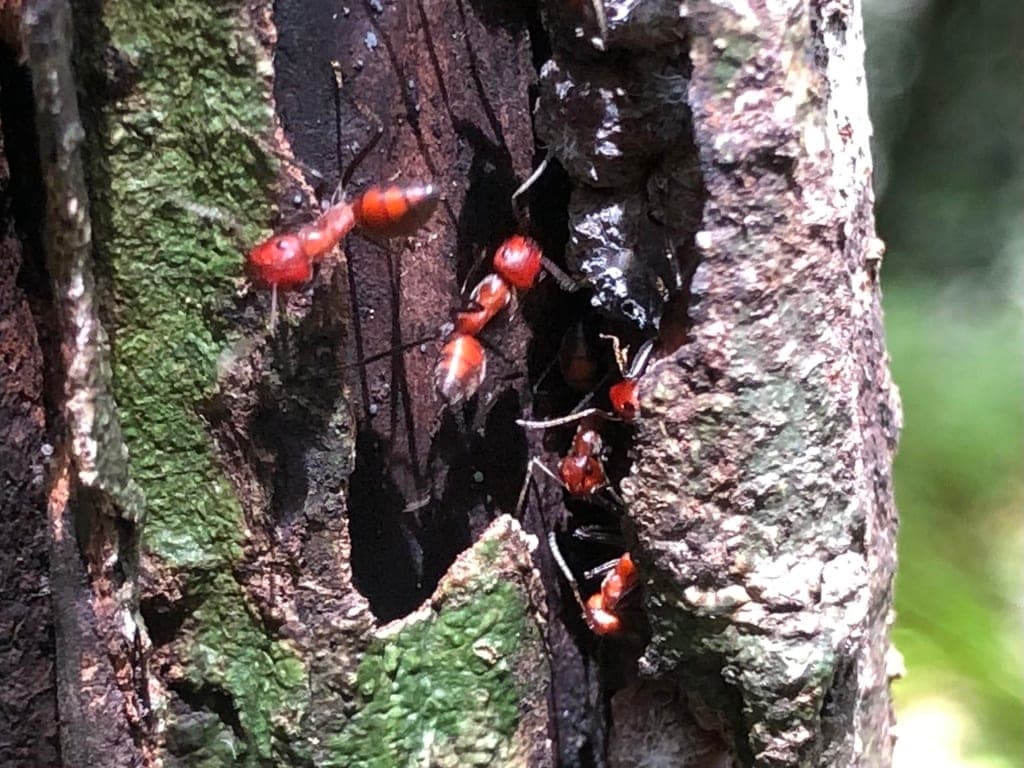
Photo © Woraphot Bunkhwamdi · CC BY-NC
Where They're Found
Found in tropical rainforests of Southeast Asia, including Thailand, Malaysia, Myanmar, and Indonesia (Sumatra and Borneo). It nests in rotting wood hollows or hollow branches high in the rainforest canopy.
Notable Behavior: Self-Sacrifice for the Colony (Autothysis)
This species is known for an extreme defense behavior called autothysis. When severely threatened, a worker contracts its abdominal muscles until its body wall ruptures, releasing a sticky yellow toxin that disables the enemy — the worker dies in the process, sacrificing itself to protect the colony.
Beyond this defense, it normally feeds on honeydew from sap-sucking insects and hunts small insects for protein. The exploding behavior only occurs under genuinely severe threat, not during ordinary handling.
This is a moderate-to-advanced species, requiring consistently high humidity and extra care when handling or moving the colony to avoid triggering self-destruction. The colony size listed (300–700 workers) reflects a typical size for a single-queen colony.
Good to Know
This group is globally known in science and media as the "exploding ant." Wild-caught individuals also carry a risk of infection from a zombie-ant fungus (Ophiocordyceps), so any wild-caught colony should be quarantined before being introduced to other colonies.
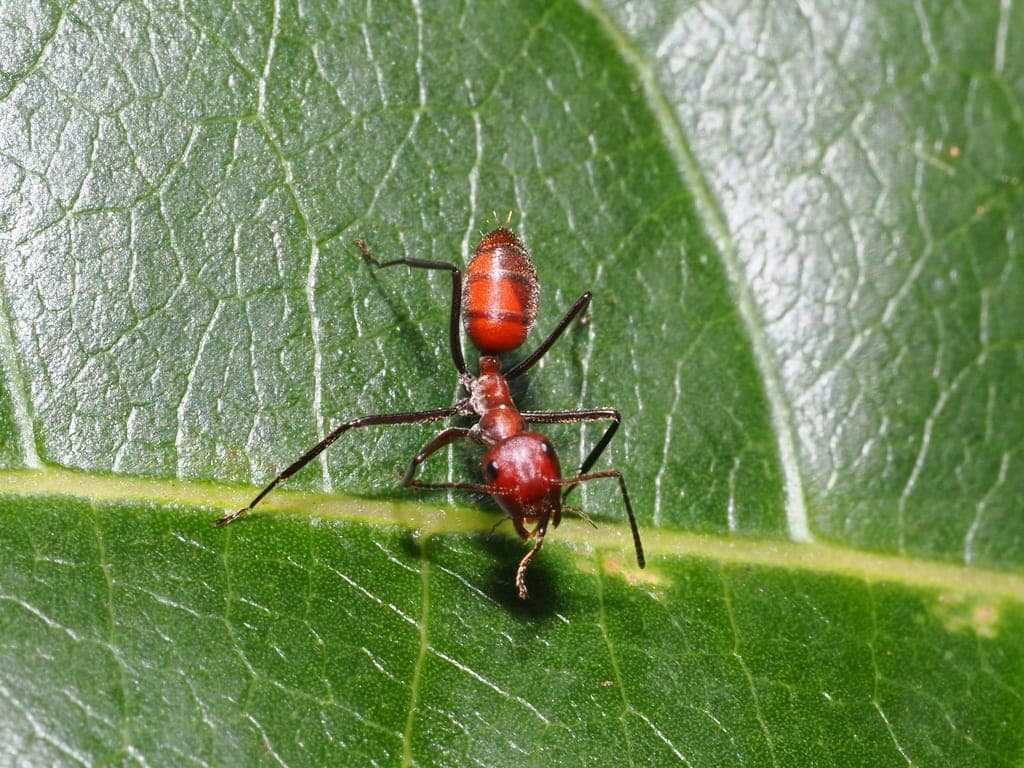
Photo © finger_snail · CC BY-NC
Keeping Them in Captivity
The ideal temperature range is 24–28°C year-round, with high humidity of 70–85% since this rainforest species is sensitive to dryness. Feed with diluted sugar water alongside small insects. Handle the ants gently and avoid stressing them, as stress can trigger the exploding defense.
Gallery
Photo © Premala Arulampalam · CC BY-NC
Photo © Woraphot Bunkhwamdi · CC BY-NC
Photo © finger_snail · CC BY-NC
Live photographs are by iNaturalist observers under CC BY-NC — every one carries its credit.
Sources
The Thai text is written from the facts in these sources, not copied from them. · Data confidence: ต่ำ
This page is husbandry information only — live ants aren't sold on the site, for the animals' safety in transit.