
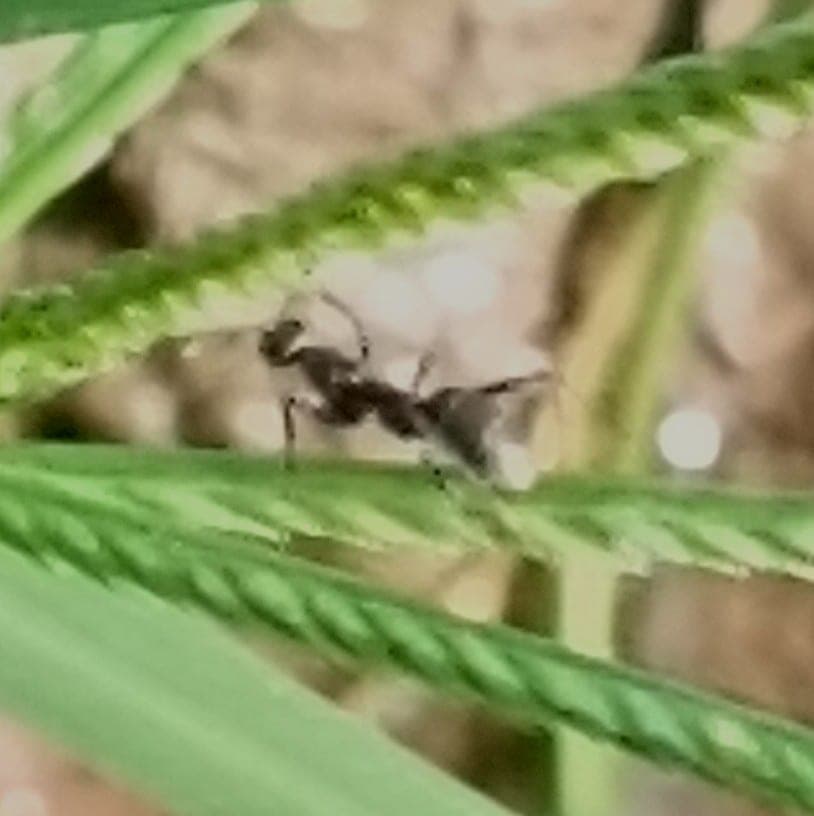
 Live photo
Species & care sheets
Black Carpenter Ant
Camponotus parius · มดไม้ดำ
Photo © Akrati Kushwaha · CC BY-NC
Large, easy to observe, slow-growing but extremely hardy. The most forgiving first species.
อยู่ในสกุลย่อย Tanaemyrmex หรือ Myrmosericus (ขึ้นอยู่กับการจัดจำแนกใหม่) มีลักษณะขนสีทองประกายเงางามชัดเจน
Overview
Temperature
24–28°C
Humidity
50–60%
Diet
Sugar · Insects
Nest type
Ytong / 3D printed / Acrylic / Soil
Growth
Fast
Colony size
2,000–5,000 ตัว
- Difficulty — เป็นมดที่ปรับตัวง่าย เติบโตเร็ว และทนทาน เหมาะสำหรับผู้เลี้ยงระดับเริ่มต้นถึงปานกลาง
- Colony size — รังที่สมบูรณ์เต็มที่อาจมีประชากรมากกว่า 5,000 ตัว
- How often it is found — มดที่มีข้อมูลบันทึกพบมากที่สุดในกลุ่ม เจอได้บ่อยตามธรรมชาติ — มีบันทึกยืนยันพบในไทยโดยตรงด้วย; มีวางขายในตลาดนักเลี้ยงมดต่างประเทศ (มีสต๊อกจริง) · Records in Thailand 14 · Records worldwide 1,459 · Hobbyist market: Sold abroad
Derived from record counts in global databases (GBIF · AntWeb · iNaturalist), not from how common the ant is in Thailand. — น่าเชื่อถือสูง — มีบันทึกพิกัด/ตัวอย่างในไทยจริง (GBIF/AntWeb)
What it eats
Size
Body length by caste, and the ants drawn to scale on a credit card
Actual size against a credit card
Ants are drawn to scale on a standard card (85.6 × 54 mm) — hold a real card against the screen and move the slider until the card matches, and the ants are then life-size.
~7.5 mm
~11.5 mm
~14 mm
Behaviour & care
Defences
AggressiveAttacks when disturbed — handle with care.
Colony profile
Queens
Single queen (monogyne)
Founding
Claustral
Diapause
Not required
Growth
Fast
In depth
The Black Carpenter Ant (Camponotus parius), known in Thai as "มดไม้ดำ," is widely considered the ant every beginner should start with. It's large, easy to observe, moves at a manageable pace, and forgives rookie mistakes far better than most other species.
Appearance
This species has clearly differentiated worker sizes. Standard workers measure 5–9 mm, while major workers reach 8–12 mm with larger heads and stronger mandibles used for chewing wood and defending the nest. Queens are the largest at 13–16 mm. The glossy black body, thick thorax, and large head are typical of the genus Camponotus as a whole.
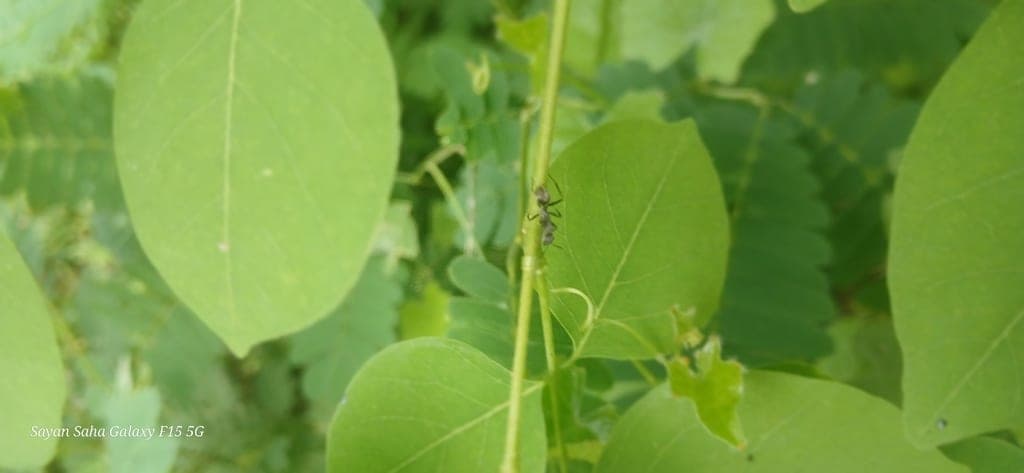
Photo © Sayan Saha · CC BY-NC
Where They're Found
Native to Burma and the broader South-to-Southeast Asian region, this is a tropical species with no need for winter dormancy. Like most Camponotus, it nests inside decaying wood, tree hollows, or rotting logs — it doesn't chew through sound, healthy timber the way termites do, but hollows out sections that are already soft or damp.
Native to Burma and the broader South-to-Southeast Asian region, this is a tropical species with no need for winter dormancy. Like most Camponotus, it nests inside decaying wood, tree hollows, or rotting logs — it doesn't chew through sound, healthy timber the way termites do, but hollows out sections that are already soft or damp.
This is one of the most forgiving species for beginners — no stinger, a mild bite, non-aggressive temperament, and generally easier care than predatory ants or species needing very high humidity. The colony size listed here (roughly 2,000–5,000 workers) reflects a typical mature colony, not a maximum. A great first species for anyone new to ant keeping.
Good to Know
The genus name Camponotus comes from Greek for "curved back," referring to the distinctively arched thorax shared across the genus. Camponotus species have nuptial flights in spring, and the genus is one of the most species-rich in the ant world, with more than 1,000 described species worldwide.
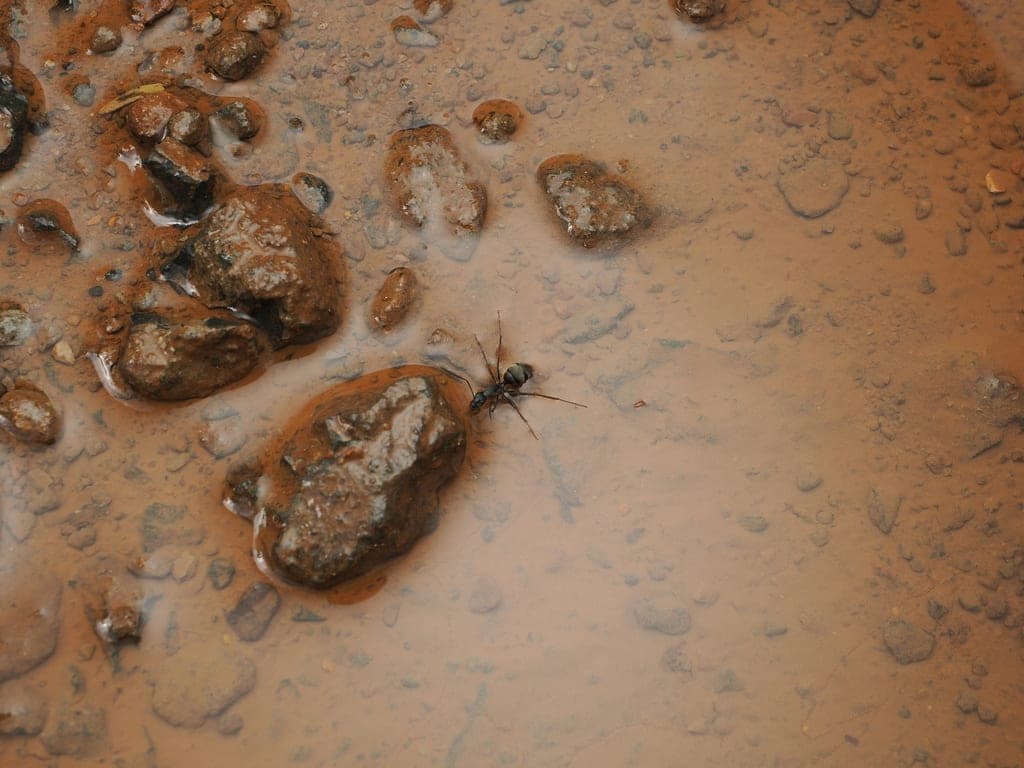
Behavior: Multiple Worker Sizes in a Single Nest
Camponotus parius produces up to three distinct worker sizes within one colony, from small minors to large majors that use their mandibles to defend the nest.
A colony begins with a single queen founding it in complete claustral isolation — she doesn't leave the nest to forage at all until her first workers are old enough to take over. Those first workers are small, and as the colony matures it gradually produces progressively larger workers. Like most Camponotus, black carpenter ants are primarily active at dusk and at night, which helps them avoid many daytime predators.
Camponotus parius produces up to three distinct worker sizes within one colony, from small minors to large majors that use their mandibles to defend the nest.
A colony begins with a single queen founding it in complete claustral isolation — she doesn't leave the nest to forage at all until her first workers are old enough to take over. Those first workers are small, and as the colony matures it gradually produces progressively larger workers. Like most Camponotus, black carpenter ants are primarily active at dusk and at night, which helps them avoid many daytime predators.
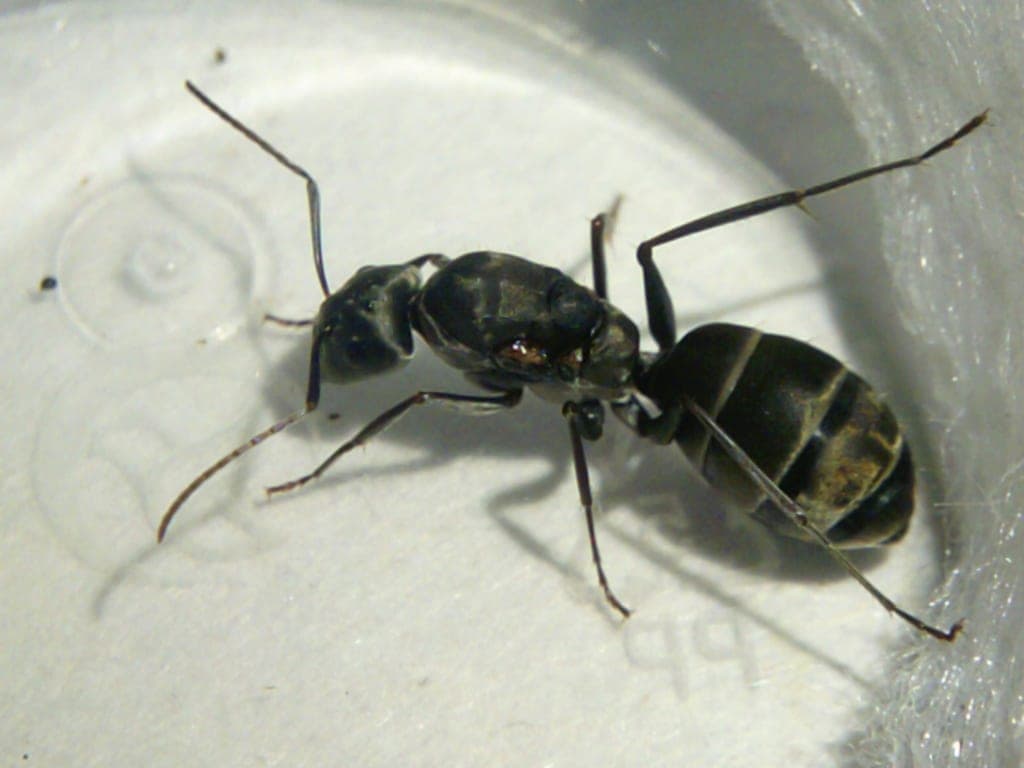
Keeping Them in Captivity
An omnivore that thrives on diluted honey or sugar water and sugar-based gel as its main energy source, alongside insect protein such as crickets, roaches, and fruit flies to fuel brood production. It doesn't eat seeds. Ideal temperature is around 24–28°C with nest humidity of 50–60%. Use moisture-retentive nesting material such as aerated concrete (Ytong) or a hybrid setup. Eggs take about 4–7 weeks to hatch into the first workers, and queens can live 10–20 years.
Gallery
Photo © Akrati Kushwaha · CC BY-NC
Photo © Sayan Saha · CC BY-NC
Photo © xieminnicki · CC BY-NC
Photo © Satish Nikam · CC BY-NC-SA
Photo © Satish Nikam · CC BY-NC-SA
Photo © Pranav Prabhu · CC BY-NC
Live photographs are by iNaturalist observers under CC BY-NC — every one carries its credit.
Sources
The Thai text is written from the facts in these sources, not copied from them. · Data confidence: สูง
This page is husbandry information only — live ants aren't sold on the site, for the animals' safety in transit.