
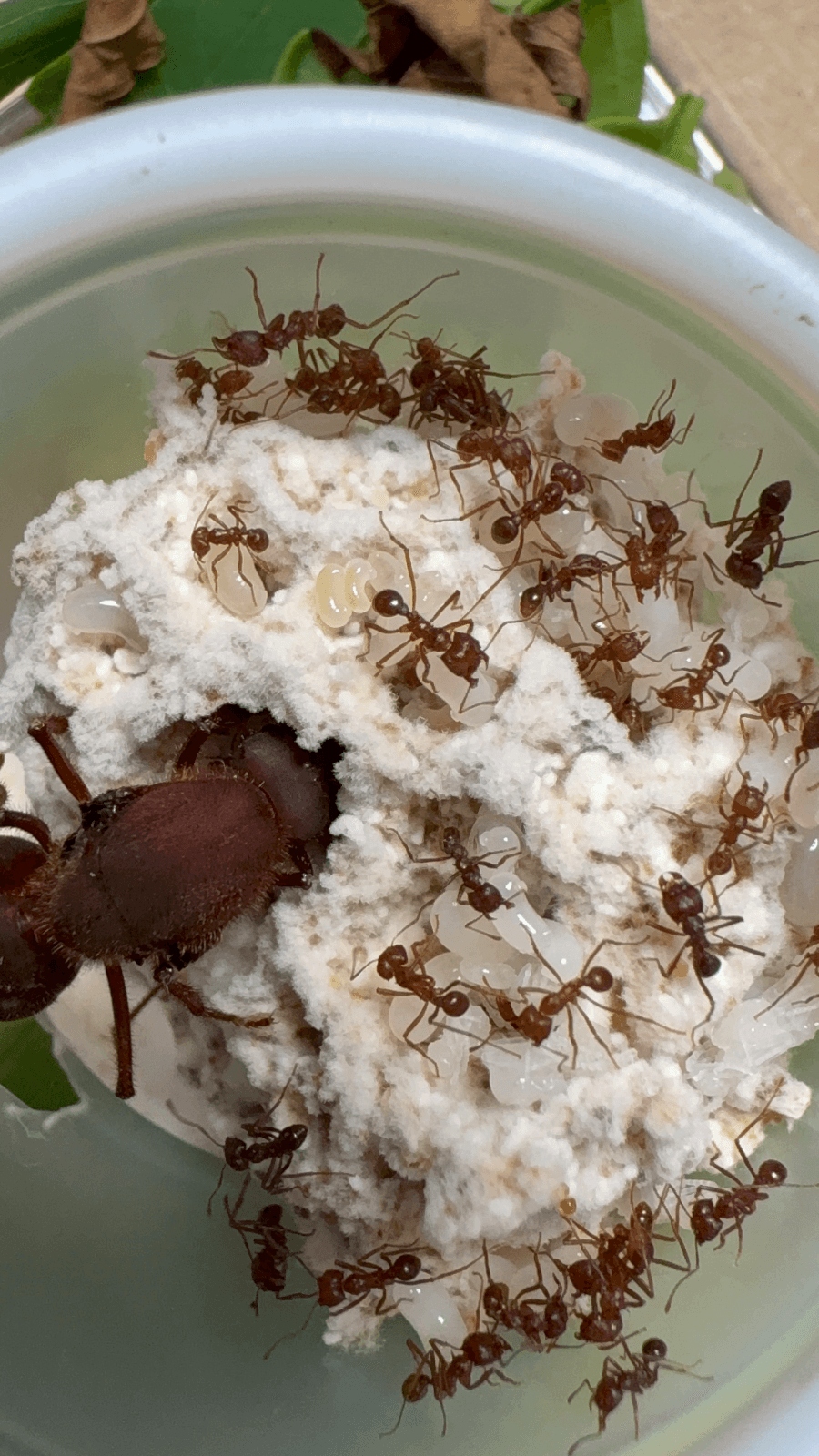
 Live photo
Species & care sheets
Chicatana Leafcutter Ant
Atta mexicana · มดตัดใบไม้เม็กซิกัน
Overview
Temperature
23–27°C
Humidity
65–80%
Diet
Fungus
Nest type
plastic / Acrylic / glass
Growth
Fast
Colony size
10,000–20,000 ตัว
- Difficulty — ต้องดูแลเพาะเลี้ยงเชื้อราที่เป็นอาหารหลัก มีรังขนาดใหญ่มาก และต้องการการควบคุมความชื้นและสภาพแวดล้อมที่เข้มงวด
- Colony size — รังที่เจริญเติบโตเต็มที่อาจมีประชากรสูงถึง 5,000,000 - 8,000,000 ตัว
- How often it is found — มดที่มีข้อมูลบันทึกพบมากที่สุดในกลุ่ม เจอได้บ่อยตามธรรมชาติ — มีวางขายในตลาดนักเลี้ยงมดต่างประเทศ (มีสต๊อกจริง) · Records in Thailand 0 · Records worldwide 9,083 · Hobbyist market: Sold abroad
Derived from record counts in global databases (GBIF · AntWeb · iNaturalist), not from how common the ant is in Thailand. — ควรตรวจสอบ — AntWiki ระบุพิสัยกระจายเฉพาะ Nearctic, Neotropical เท่านั้น ไม่มี Indomalaya จึงมีความเป็นไปได้ว่าไม่ใช่ชนิดที่พบในไทยจริง
What it eats
Size
Body length by caste, and the ants drawn to scale on a credit card
Actual size against a credit card
Ants are drawn to scale on a standard card (85.6 × 54 mm) — hold a real card against the screen and move the slider until the card matches, and the ants are then life-size.
~7.5 mm
~15 mm
~30 mm
Behaviour & care
Defences
AggressiveAttacks when disturbed — handle with care.
Colony profile
Queens
Single queen (monogyne)
Founding
Claustral
Diapause
Not required
Growth
Fast
In depth
The Chicatana Leafcutter Ant (Atta mexicana), known in Thai as "มดตัดใบไม้เม็กซิกัน," practices one of the most sophisticated forms of "farming" in the insect world. It doesn't eat the leaves it cuts at all — it uses them as fertilizer to grow a fungus, which is what the colony actually eats. In a sense, these ants were farming fungus long before humans invented agriculture.
Appearance
Queens are large, around 30 mm, dark brown, with a dense covering of fine hairs and a wide abdomen. Workers show dramatic size polymorphism, from tiny 2 mm minors up to major workers (soldiers) reaching 12–18 mm, with large heads and powerful mandibles used to defend the nest and cut through tougher plant material that smaller workers can't manage.
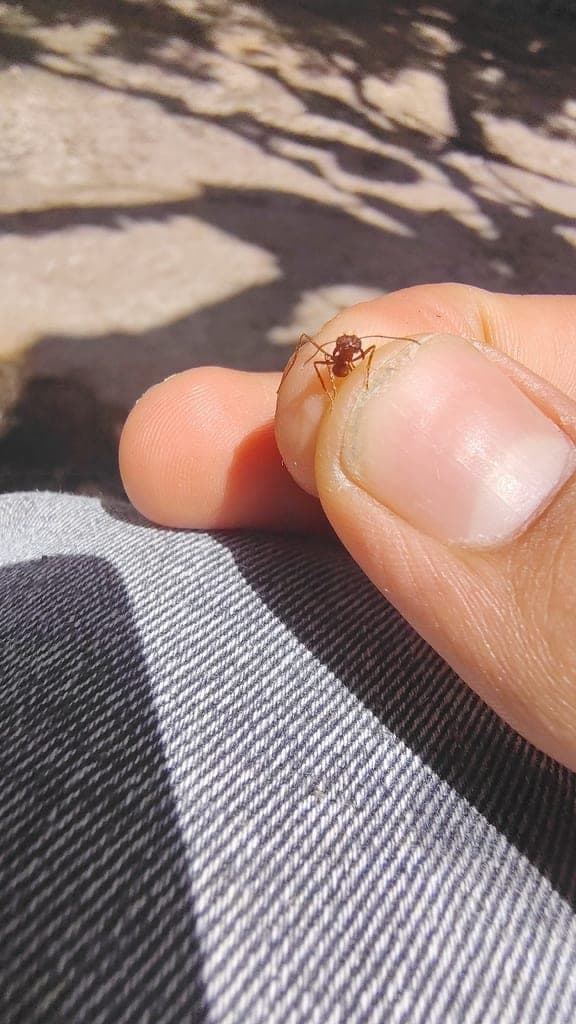
Photo © cardenalito_mosquerito · CC BY-NC
Where They're Found
Native to Mexico and Central America, found widely across Mexico, Guatemala, Honduras, and El Salvador, extending north into southern Arizona in the US. It thrives across a wide range of environments — tropical forest, pine-oak woodland, gallery forest, and even semi-arid areas as long as there's vegetation to cut. It has no native range in Thailand.
This is one of the hardest ants to keep, because you're caring for two living things at once — the ants and the fungus they depend on for food — and it demands specialized equipment and tightly controlled conditions. The colony size figure given here (10,000–20,000 workers) reflects what keepers have actually recorded in captivity; the hundred-thousand or million-worker figures often quoted describe fully mature wild colonies that took years to reach that scale, not what you'd see in a kept colony. Definitely not a beginner species.
Good to Know
In Mexico, this ant is called "chicatana" and is a well-known traditional food. Winged females (alates) that emerge from the nest at the start of the rainy season are traditionally toasted with salt, lime, and hot sauce, or used in tacos and salsa de chicatanas, a dish rooted in Mixtec, Maya, and Zoque culinary traditions. Colonies fly out to mate right at the start of the rainy season, once the soil turns moist — a natural signal local communities use to know when to gather them.
This is one of the hardest ants to keep, because you're caring for two living things at once — the ants and the fungus they depend on for food — and it demands specialized equipment and tightly controlled conditions. The colony size figure given here (10,000–20,000 workers) reflects what keepers have actually recorded in captivity; the hundred-thousand or million-worker figures often quoted describe fully mature wild colonies that took years to reach that scale, not what you'd see in a kept colony. Definitely not a beginner species.
Good to Know
In Mexico, this ant is called "chicatana" and is a well-known traditional food. Winged females (alates) that emerge from the nest at the start of the rainy season are traditionally toasted with salt, lime, and hot sauce, or used in tacos and salsa de chicatanas, a dish rooted in Mixtec, Maya, and Zoque culinary traditions. Colonies fly out to mate right at the start of the rainy season, once the soil turns moist — a natural signal local communities use to know when to gather them.
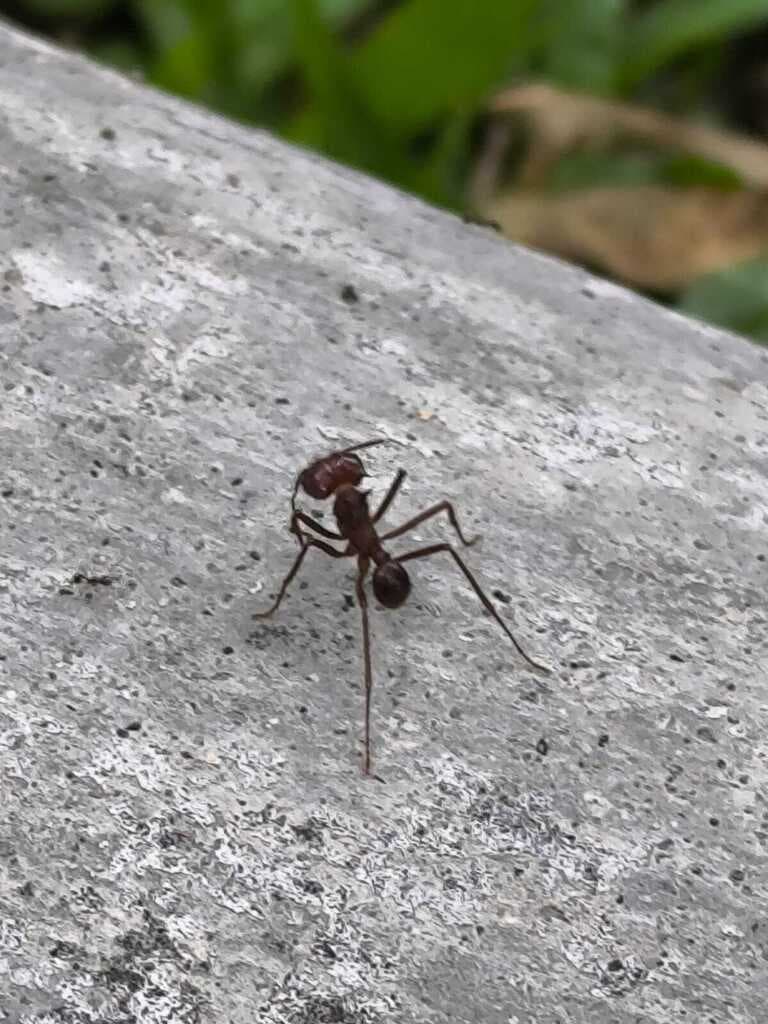
Behavior: Farming Fungus Underground
Atta mexicana never eats the leaves it cuts. Instead, the leaves become fertilizer for growing the fungus Leucoagaricus gongylophorus, which the colony eats as its actual food source.
Workers cut fresh leaves into small pieces, carry them back to the nest, chew them into a pulp mixed with saliva and fecal fluid, and use that as growing medium in underground fungus chambers. The whole colony then eats only what the fungus produces — never the leaves directly. These ants also have metapleural glands that produce antimicrobial secretions, which they use to keep the fungus garden clean and free from invasive, harmful molds — a remarkably sophisticated agricultural and hygiene system.
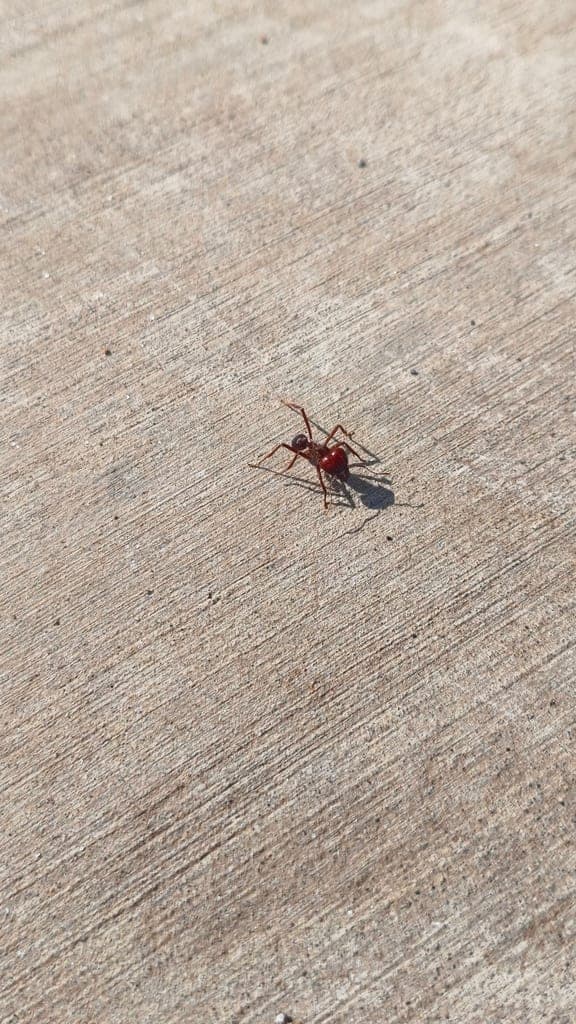
Photo © XIMENA ZAVALA ZAVALA · CC BY-NC
Keeping Them in Captivity
Requires a setup with precise, stable temperature control around 23–27°C with minimal fluctuation, and humidity of roughly 65–80% in the fungus chamber, along with good ventilation to prevent contamination by unwanted molds. Their "diet" consists of fresh leaves, flower petals, and some fruit such as apple, orange peel, and oats — but all of this is growing medium for the fungus, not food the ants eat directly. If the fungus garden dies or becomes contaminated, the entire colony is at risk of starving.
Gallery
Photo © cardenalito_mosquerito · CC BY-NC
Photo © XIMENA ZAVALA ZAVALA · CC BY-NC
Photo © valguayaba · CC BY-NC
Photo © sofia_enrigue · CC BY-NC
Live photographs are by iNaturalist observers under CC BY-NC — every one carries its credit.
Sources
The Thai text is written from the facts in these sources, not copied from them. · Data confidence: สูง
This page is husbandry information only — live ants aren't sold on the site, for the animals' safety in transit.