
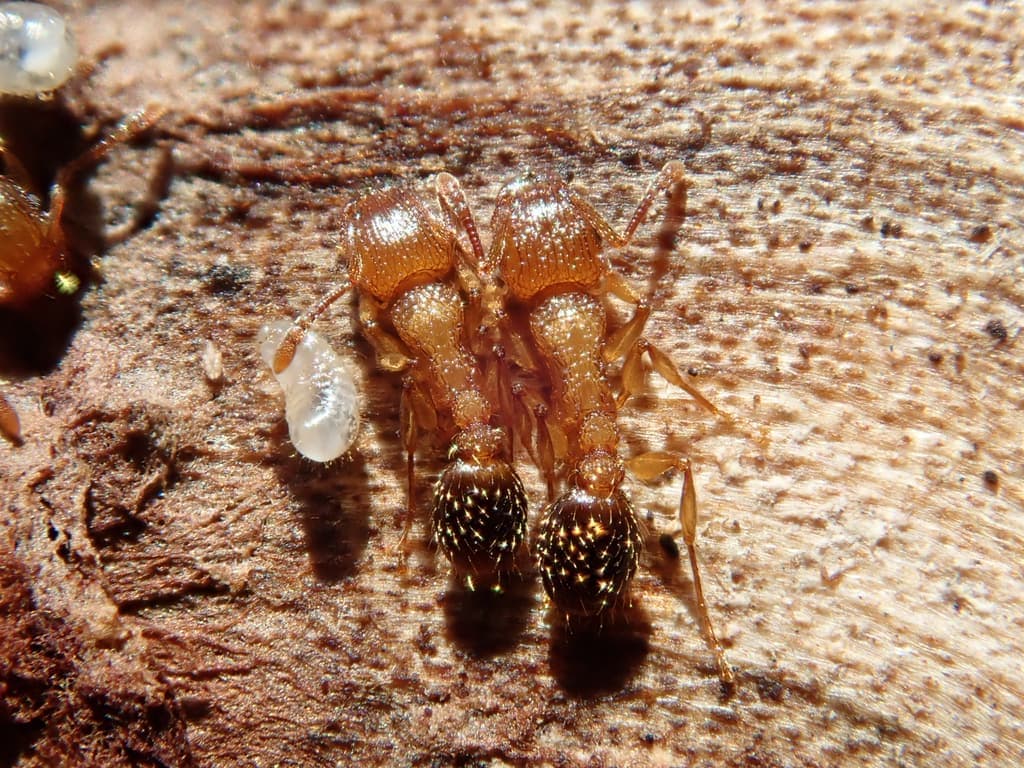
 Live photo
Species & care sheets
Guinea Ant
Tetramorium bicarinatum · มดริ้วหน้าสัน
Photo © 大澤風季 ohsawa_Fuki · CC BY
One of the easiest ants to keep: a small reddish-brown ant that grows fast, is very hardy, and lives in multi-queen colonies. A top pick for anyone keeping ants for the first time.
Overview
Temperature
25–30°C
Humidity
50–70%
Diet
Sugar · Insects
Nest type
Acrylic / Ytong / 3D printed / Test tube
Growth
Fast
Colony size
500–2,000 ตัว
- Difficulty — เป็นมดที่ปรับตัวง่ายมาก เติบโตไว ขยายพันธุ์ในรังได้เอง ไม่เลือกอาหาร เหมาะสำหรับผู้เริ่มต้นอย่างยิ่ง
- Colony size — สามารถขยายขนาดรังได้อย่างไม่จำกัดเนื่องจากการผสมพันธุ์กันเองภายในรัง (Inbreeding)
- How often it is found — มดที่มีข้อมูลบันทึกพบมากที่สุดในกลุ่ม เจอได้บ่อยตามธรรมชาติ — มีบันทึกยืนยันพบในไทยโดยตรงด้วย; มีวางขายในตลาดนักเลี้ยงมดต่างประเทศ (มีสต๊อกจริง) · Records in Thailand 3 · Records worldwide 5,216 · Hobbyist market: Sold abroad
Derived from record counts in global databases (GBIF · AntWeb · iNaturalist), not from how common the ant is in Thailand. — น่าเชื่อถือสูง — มีบันทึกพิกัด/ตัวอย่างในไทยจริง (GBIF/AntWeb)
What it eats
Size
Body length by caste, and the ants drawn to scale on a credit card
Actual size against a credit card
Ants are drawn to scale on a standard card (85.6 × 54 mm) — hold a real card against the screen and move the slider until the card matches, and the ants are then life-size.
~3.8 mm
~5 mm
Behaviour & care
Defences
AggressiveAttacks when disturbed — handle with care.
Colony profile
Queens
Several queens (polygyne)
Founding
Claustral
Diapause
Not required
Growth
Fast
In depth
The Guinea Ant (Tetramorium bicarinatum) is a small reddish-brown ant that's extremely popular among beginner ant keepers worldwide, thanks to how easy it is to keep, how hardy it is, and how much faster it grows than most other species.
Appearance
Workers are small, about 2.5–3 mm long, with a reddish-brown body. Two raised ridges on the head give the species its name ("bicarinatum" means two-keeled). The overall body is fairly robust and glossy.
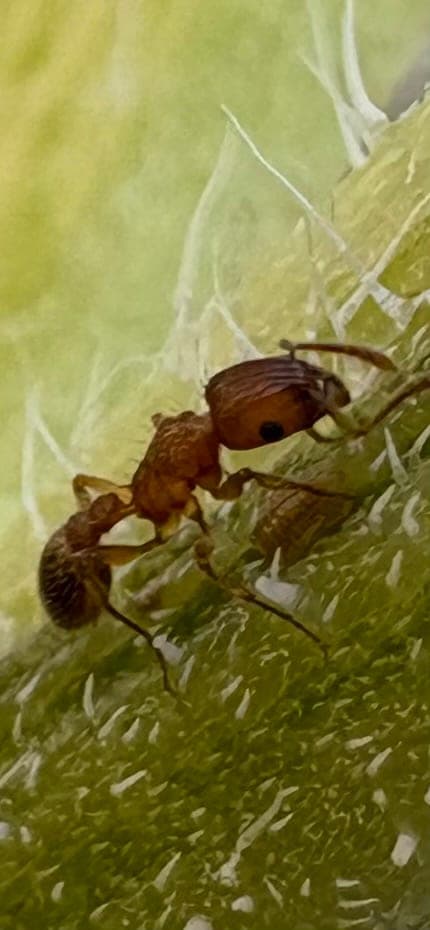
Photo © gracedwelle · CC BY-NC
Where They're Found
Found throughout tropical regions worldwide. It typically lives under rocks, logs, or in garden and agricultural soil, and is sometimes found in greenhouses in temperate climates.
Notable Behavior: A Voracious Forager
The Guinea ant is a voracious eater and an active forager, with a multi-queen social structure that lets colonies expand rapidly. It's classified as a "tramp ant" species — one that adapts and spreads easily across different environments.
It's a generalist feeder, taking both sugary liquids and insects. Workers cooperate efficiently and defend the nest well despite their small size. This species doesn't require hibernation.
This is one of the easiest ants to keep, making it an excellent choice for a first colony. The colony size listed (500–2,000 workers) reflects a typical size in captivity, though wild supercolonies can grow considerably larger.
Good to Know
The Guinea ant is one of the species most commonly recommended by ant keepers worldwide as a first species, since it has almost no special care requirements. Ant shops in Thailand and abroad alike routinely stock it as a beginner-friendly option.
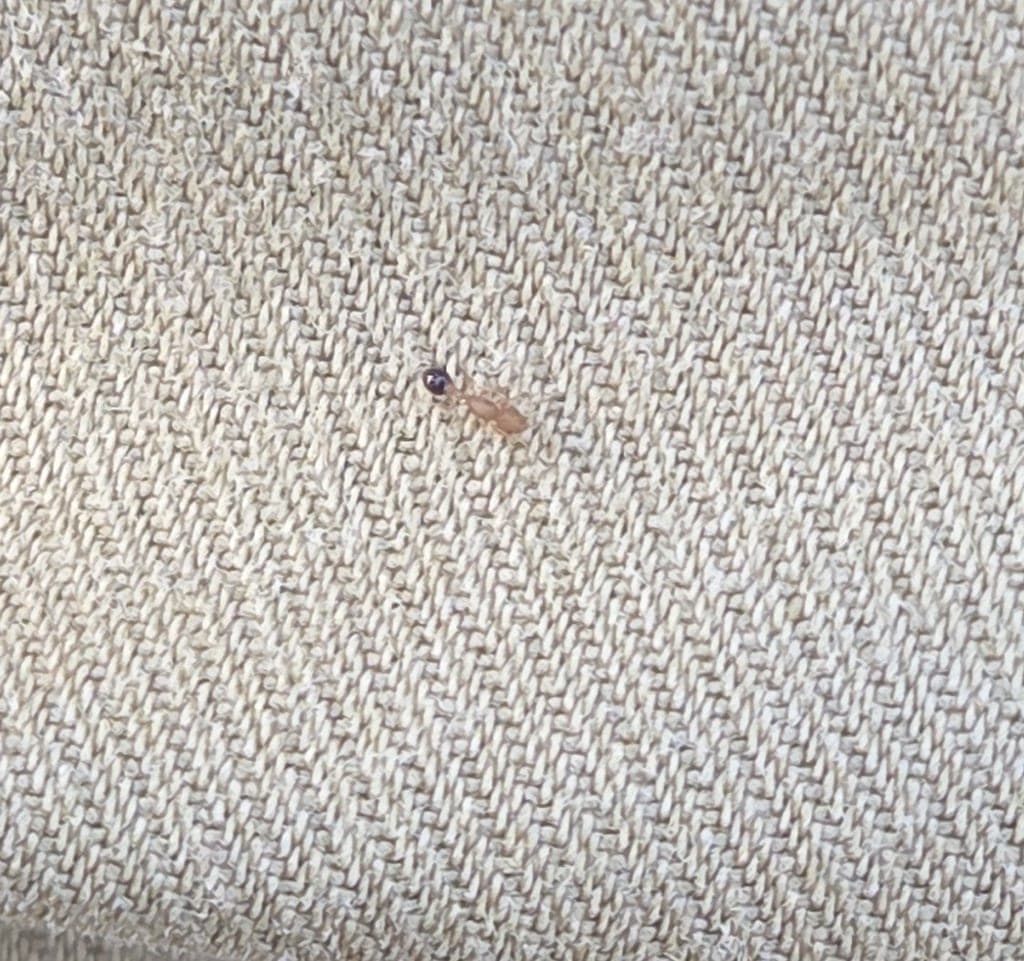
Keeping Them in Captivity
The ideal temperature range is 25–30°C — it doesn't tolerate cold well. Moderate humidity of 50–70% is recommended. Feed with sugar water alongside small insects; this is a voracious eater that grows notably faster than many other ant species.
Gallery
Photo © 大澤風季 ohsawa_Fuki · CC BY
Photo © gracedwelle · CC BY-NC
Photo © Hiroya Kidoguchi · CC BY-NC
Photo © Hiroya Kidoguchi · CC BY-NC
Photo © Hiroya Kidoguchi · CC BY-NC
Photo © Blake Brodie · CC BY-NC
Live photographs are by iNaturalist observers under CC BY-NC — every one carries its credit.
Sources
The Thai text is written from the facts in these sources, not copied from them. · Data confidence: สูง
This page is husbandry information only — live ants aren't sold on the site, for the animals' safety in transit.