
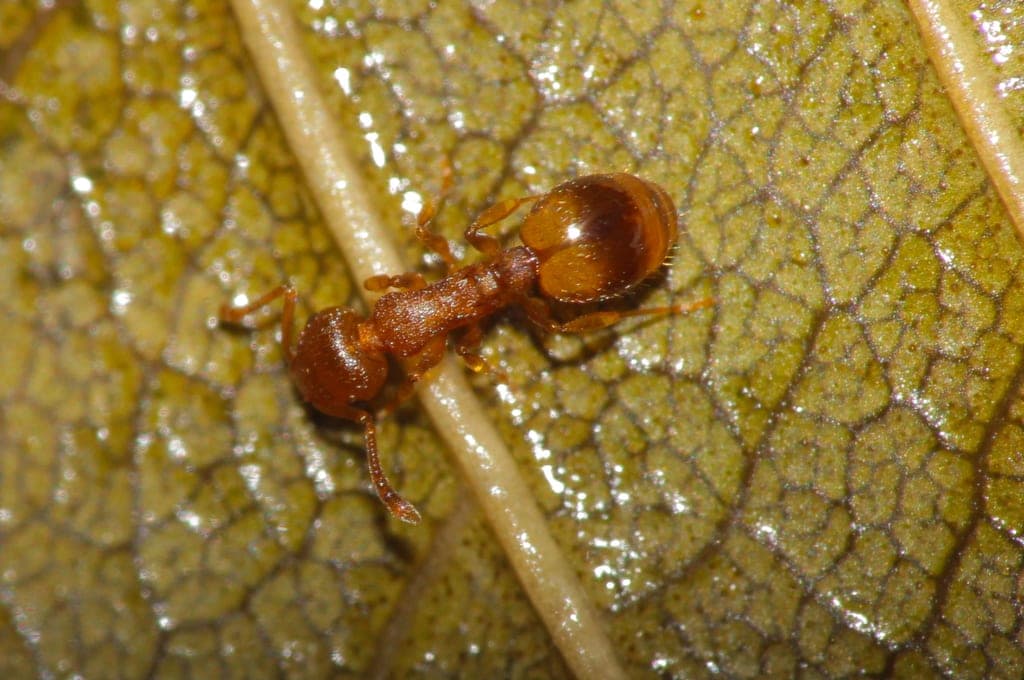
 Live photo
Species & care sheets
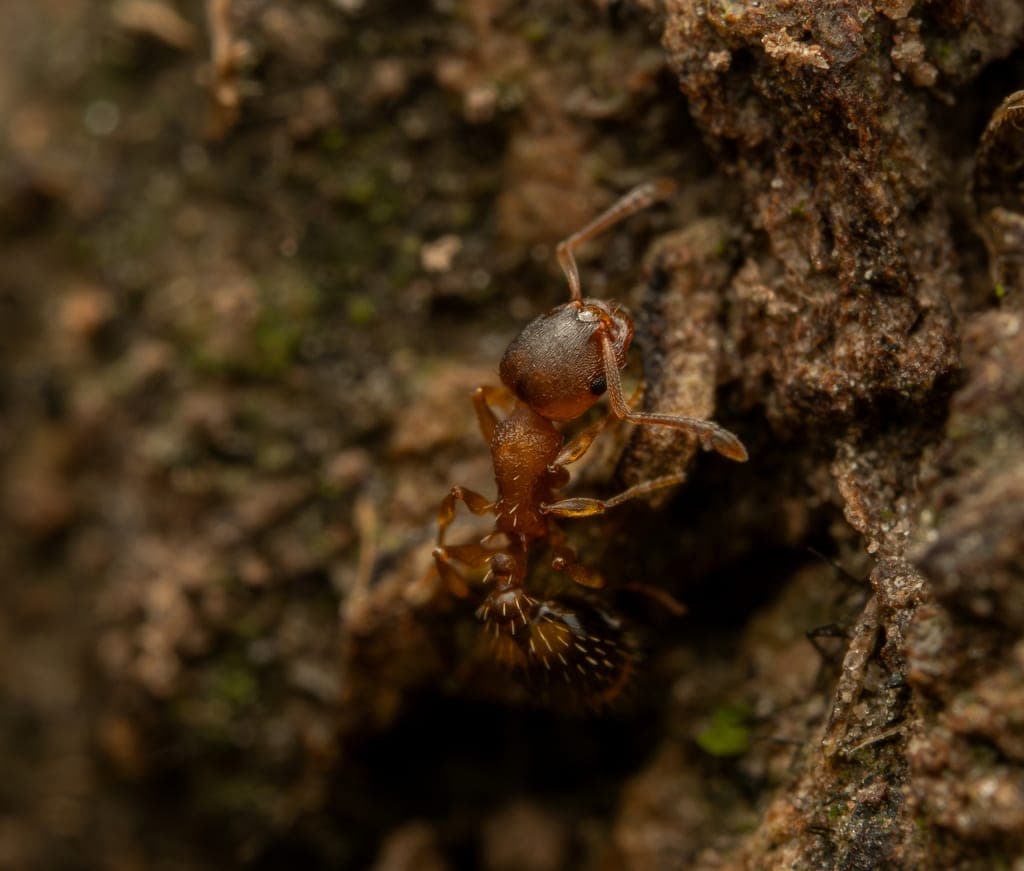
European Acorn Ant
Temnothorax nylanderi · มดโอ๊กยุโรป
Photo © András Zámbó · CC BY-NC
A tiny European ant that nests inside fallen acorns or hollow twigs. Exceptionally peaceful and avoids conflict with other ants. Needs annual winter hibernation.
อยู่ในสกุลย่อย Temnothorax
Overview
Temperature
22-26°C (พักตัวหนาว 7-11°C ปลายต.ค.-มี.ค.)
Humidity
60-70%
Diet
Sugar · Insects
Nest type
acorn / Wood / Acrylic / 3d-printed / Ytong
Growth
Slow
Colony size
50-150 ตัว
- Difficulty — เลี้ยงง่ายมาก ขนาดรังเล็ก ใช้พื้นที่น้อย ไม่ก้าวร้าว และอดทนสูง
- Colony size — จำกัดโดยธรรมชาติ รังขนาดใหญ่เต็มที่มักมีมดงานไม่เกิน 300 ตัว
- How often it is found — มดที่มีข้อมูลบันทึกพบมากที่สุดในกลุ่ม เจอได้บ่อยตามธรรมชาติ · Records in Thailand 0 · Records worldwide 8,217 · Hobbyist market: Not listed
Derived from record counts in global databases (GBIF · AntWeb · iNaturalist), not from how common the ant is in Thailand. — ไม่สามารถประเมินได้ — ไม่มีข้อมูลพิสัยการแพร่กระจายจาก AntWiki
What it eats
Size
Body length by caste, and the ants drawn to scale on a credit card
Actual size against a credit card
Ants are drawn to scale on a standard card (85.6 × 54 mm) — hold a real card against the screen and move the slider until the card matches, and the ants are then life-size.
~2.8 mm
~4 mm
Behaviour & care
Defences
PeacefulRarely attacks — comfortable to keep close.
Colony profile
Queens
Single queen (monogyne)
Founding
Claustral
Diapause
Required
Growth
Slow
In depth
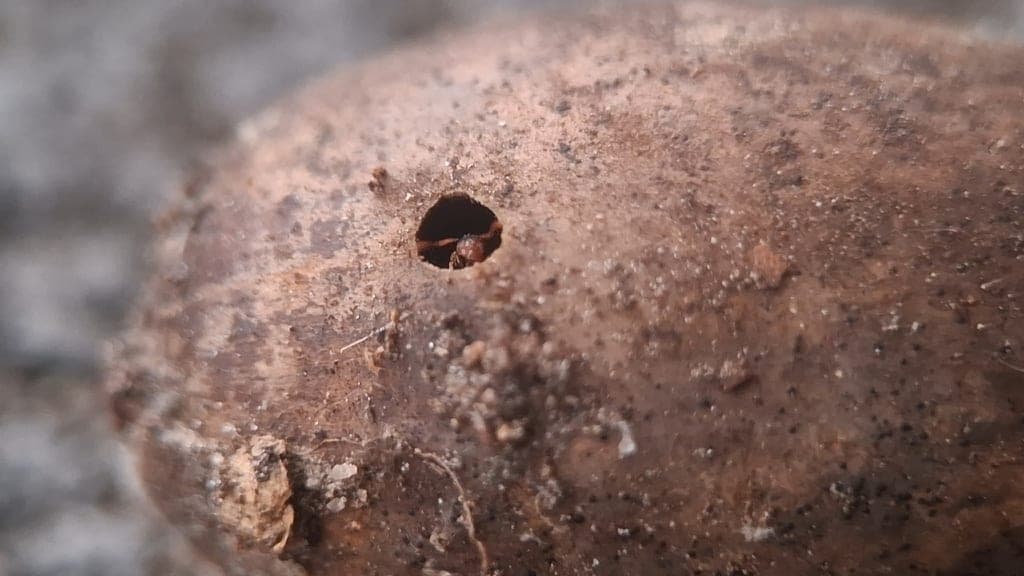
ทั้งประชากรรังของมดชนิดนี้ ทั้งนางพญา มดงาน และตัวอ่อน สามารถอาศัยอยู่ร่วมกันภายในผลโอ๊กแห้งเพียงผลเดียวได้อย่างสมบูรณ์
Appearance
Where it lives
Widespread throughout European deciduous forests, typically nesting in small natural cavities such as hollow acorns, fallen twigs, or under tree bark.
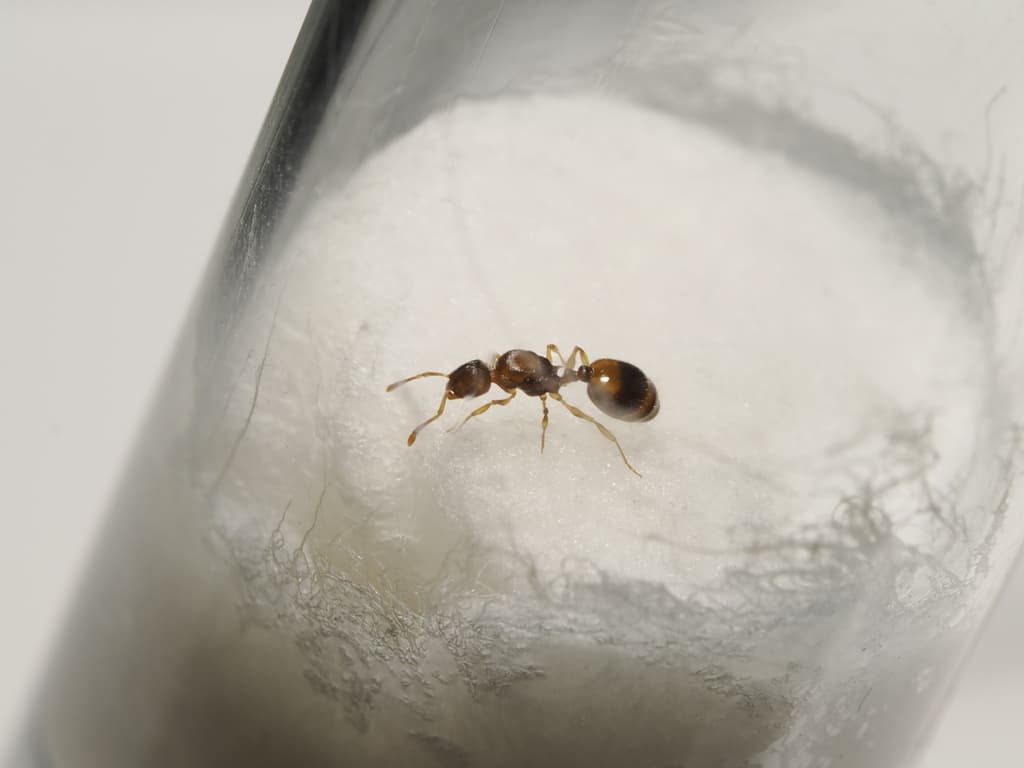
Photo © Svit_Stramšak · CC BY-NC
Behaviour
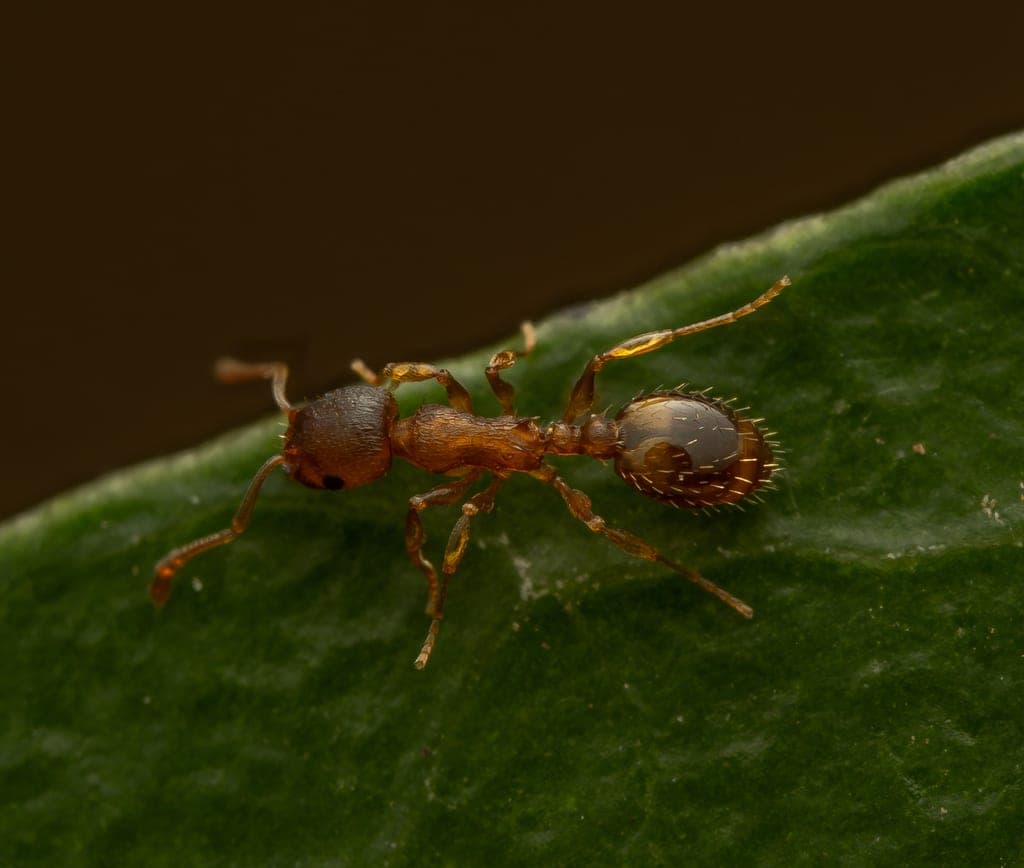
Keeping it
Extremely easy to keep, requiring very small micro-formicariums or compact 3D/acrylic setups. They feed on liquid sugars and small feeder insects, but require a winter diapause (hibernation) period.
Where the difficulty is
Their minute size requires escape-proof setups with tight seams. Keepers in tropical climates must provide artificial winter cooling for successful long-term diapause.
Gallery
Photo © András Zámbó · CC BY-NC
Photo © Svit_Stramšak · CC BY-NC
Photo © Elias Freyhof · CC BY
Photo © Elias Freyhof · CC BY
Photo © Elias Freyhof · CC BY
Photo © Axel Gosseries · CC BY-NC
Live photographs are by iNaturalist observers under CC BY-NC — every one carries its credit.
Sources
The Thai text is written from the facts in these sources, not copied from them. · Data confidence: สูง
This page is husbandry information only — live ants aren't sold on the site, for the animals' safety in transit.