
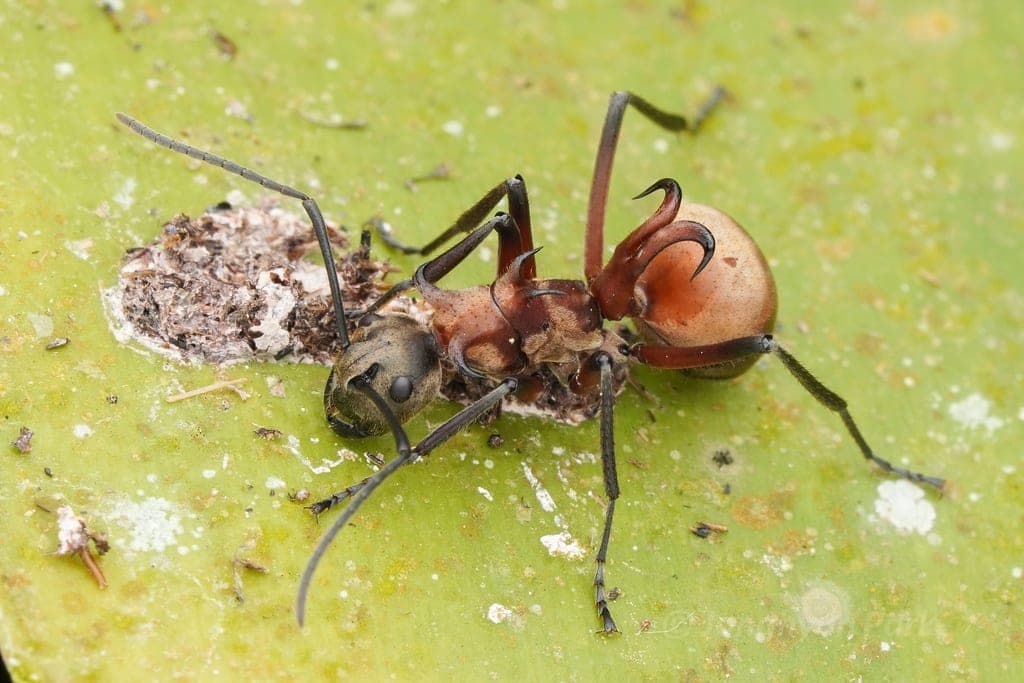
 Live photo
Species & care sheets
Fish Hook Spiny Ant
Polyrhachis bihamata · มดหนามเคียวใหญ่
Photo © Jonghyun Park · CC BY
A spiny ant with a pair of curved, fish-hook-like spines on its thorax. Glossy black, found in Southeast Asian rainforest. Best suited for keepers with prior tropical ant experience.
อยู่ในสกุลย่อย Polyrhachis (Polyrhachis) มีลักษณะเด่นคือหนามขนาดใหญ่โค้งงอคล้ายตะขอ
Overview
Temperature
20-26°C (บริเวณกิจกรรม 22-32°C)
Humidity
55-70%
Diet
Sugar · Insects
Nest type
Wood / carton/silk / Ytong
Growth
Medium
Colony size
1,000-3,000 ตัว
- Difficulty — เป็นมดสร้างรังด้วยเยื่อใยไม้/ใยไหม ต้องการความชื้นสูง และราชินีหาอาหารเองในช่วงตั้งรัง (Semi-claustral)
- Colony size — รังขนาดใหญ่อาจมีจำนวนมดงานได้หลายพันตัว
- How often it is found — มดที่มีข้อมูลบันทึกพบมากที่สุดในกลุ่ม เจอได้บ่อยตามธรรมชาติ — มีบันทึกยืนยันพบในไทยโดยตรงด้วย; เคยมีวางขายในร้านนักเลี้ยงมดต่างประเทศ (แต่ปัจจุบันหมด/ไม่พร้อมส่ง) · Records in Thailand 61 · Records worldwide 310 · Hobbyist market: Was sold, now out of stock
Derived from record counts in global databases (GBIF · AntWeb · iNaturalist), not from how common the ant is in Thailand. — น่าเชื่อถือสูง — มีบันทึกพิกัด/ตัวอย่างในไทยจริง (GBIF/AntWeb)
What it eats
Size
Body length by caste, and the ants drawn to scale on a credit card
Actual size against a credit card
Ants are drawn to scale on a standard card (85.6 × 54 mm) — hold a real card against the screen and move the slider until the card matches, and the ants are then life-size.
~11.5 mm
~15 mm
Behaviour & care
Defences
DefensiveBites or stings when disturbed — mind the nest when opening it.
Colony profile
Queens
Single queen (monogyne)
Founding
Semi-claustral
Diapause
Not required
Growth
Medium
In depth
หนามตะขอขนาดใหญ่บนหลังของมดชนิดนี้ทำหน้าที่เป็นกลไกป้องกันตัวทางกายภาพ ซึ่งช่วยป้องกันไม่ให้สัตว์ผู้ล่าขนาดเล็ก เช่น นกหรือกิ้งก่า กลืนพวกมันลงคอได้ง่าย
Appearance
Polyrhachis bihamata is a large ant with workers measuring 10-13 mm. Their bodies are covered in dense, shimmering reddish-golden pubescence, and they feature dramatic, strongly curved, hook-like thoracic spines.
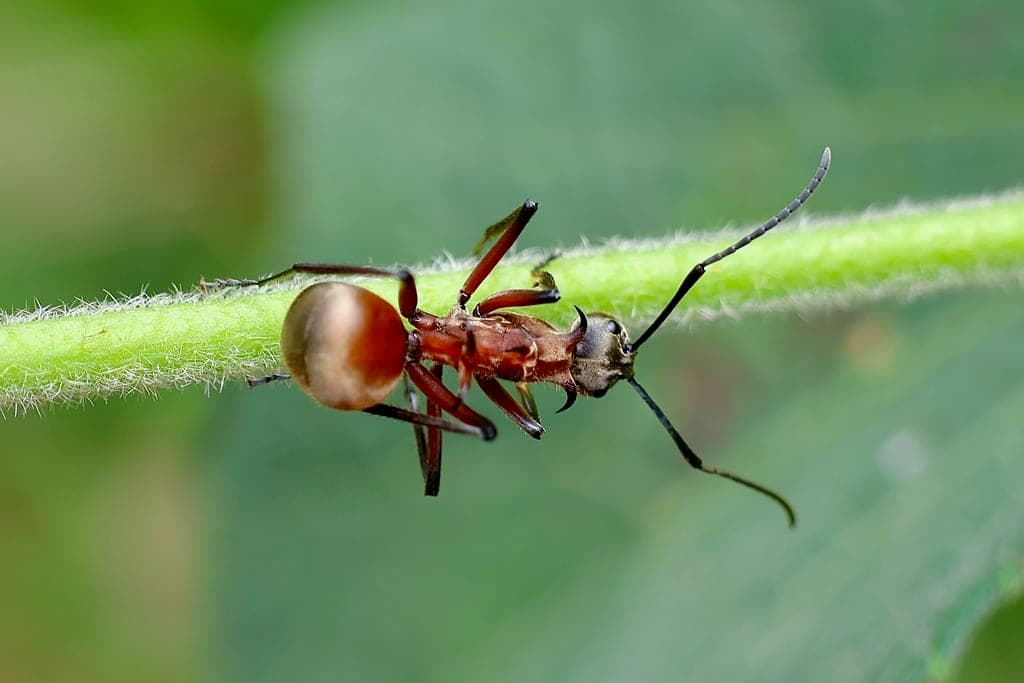
Photo © klasradberg · CC BY-NC
Where it lives
Native to the tropical rainforests of Southeast Asia, including Thailand. They are canopy-dwelling ants that build nests using carton materials combined with larval silk.
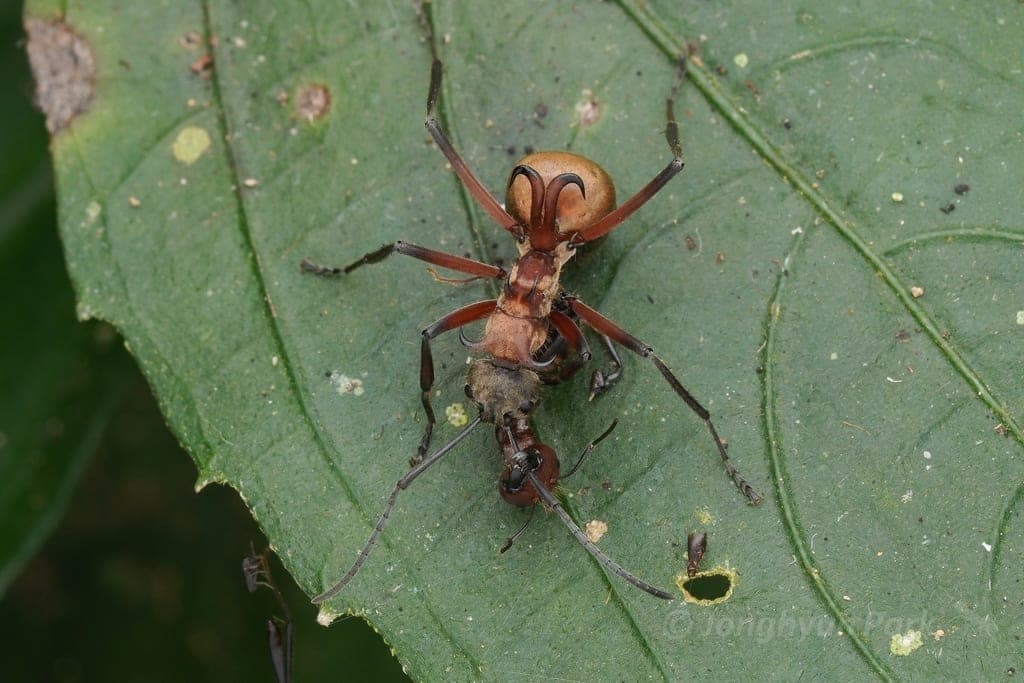
Photo © Jonghyun Park · CC BY
Behaviour
They are highly active arboreal foragers that feed on nectar, honeydew, and small insects. Workers utilize silk produced by their larvae to weave and bind plant fibers into sturdy nests.
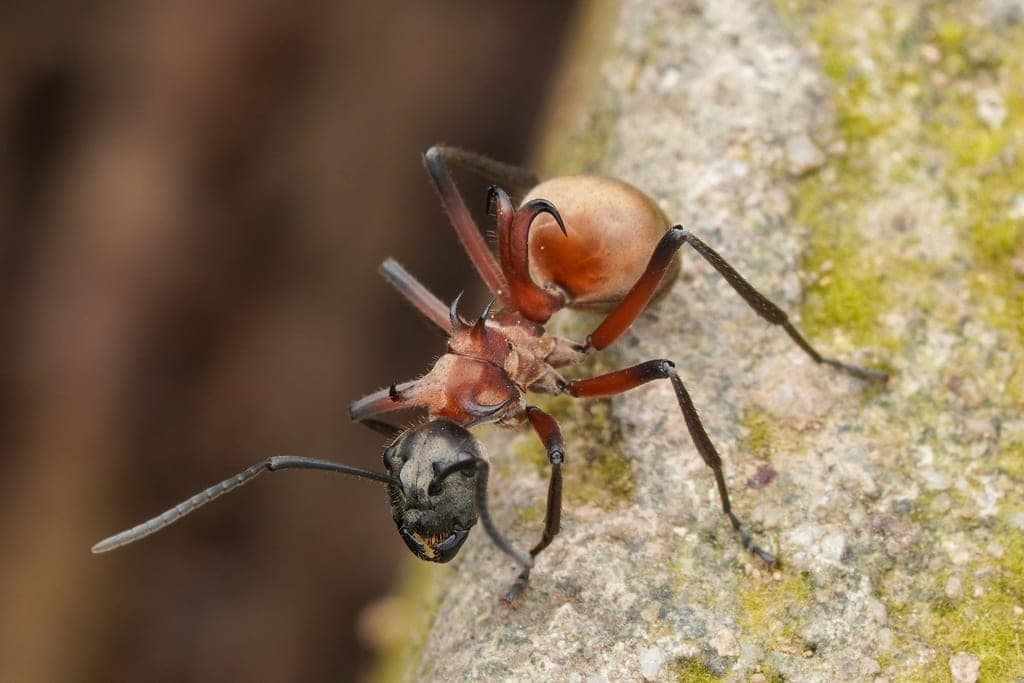
Photo © Jonghyun Park · CC BY
Keeping it
Requires an arboreal, vertical setup with high humidity (70-80%) and moderate tropical temperatures (24-28°C). Provide good ventilation along with natural wood, Ytong, or coconut-fiber nesting structures.
Where the difficulty is
Founding queens are semi-claustral and require active foraging during colony initiation, making them highly sensitive to stress. Maintaining high ambient humidity without stagnant air is critical.
Fun fact
The species name "bihamata" refers to its paired hook-like spines, making it one of the most visually iconic species within the genus Polyrhachis.
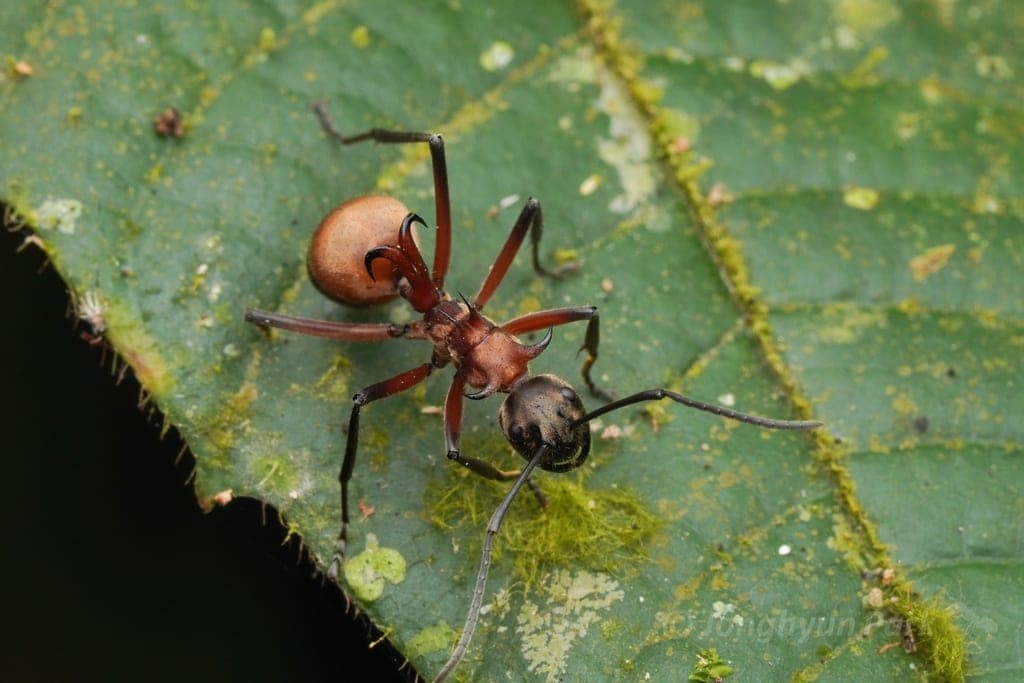
Photo © Jonghyun Park · CC BY
Gallery
Photo © Jonghyun Park · CC BY
Photo © klasradberg · CC BY-NC
Photo © Jonghyun Park · CC BY
Photo © Jonghyun Park · CC BY
Photo © Jonghyun Park · CC BY
Photo © arikkershenbaum · CC BY-NC
Live photographs are by iNaturalist observers under CC BY-NC — every one carries its credit.
Sources
The Thai text is written from the facts in these sources, not copied from them. · Data confidence: สูง
This page is husbandry information only — live ants aren't sold on the site, for the animals' safety in transit.