
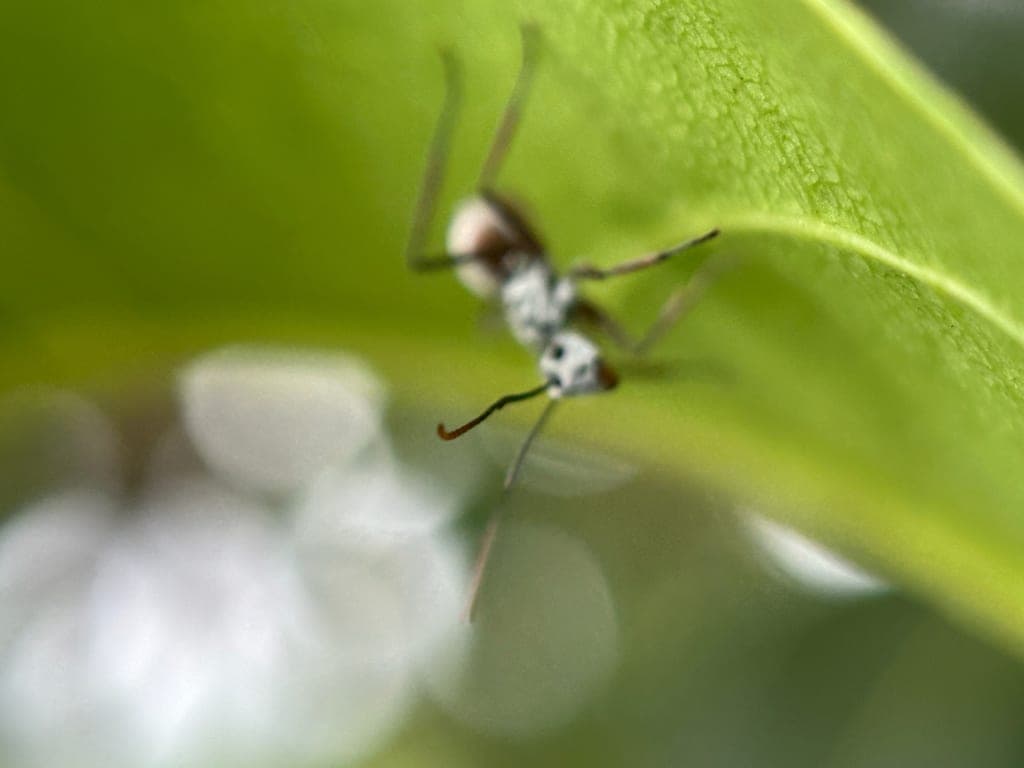
 Live photo
Species & care sheets
Fire Ox Spiny Ant
Polyrhachis bicolor · มดหนามกระทิงไฟ
A two-toned spiny ant from Borneo, dark body contrasting with reddish-brown legs and antennae. An easy-going spiny ant well-suited for beginners.
อยู่ในสกุลย่อย Myrma (subgenus Myrma)
Overview
Temperature
20-26°C (บริเวณกิจกรรม 22-32°C)
Humidity
55-70%
Diet
Sugar · Insects
Nest type
Arboreal / Ytong / Acrylic
Growth
Medium
Colony size
1,000-3,000 ตัว
- Difficulty — นางพญาเป็นแบบ Semi-claustral ที่ต้องการอาหารระหว่างสร้างรัง และต้องใช้สภาพแวดล้อมที่เหมาะสมในการทอรังด้วยเส้นใยลาวา
- Colony size — ขนาดรังในธรรมชาติต่างจากในหลอดทดลอง ขึ้นอยู่กับพื้นที่และวัสดุทำรัง
- How often it is found — มดที่มีข้อมูลบันทึกพบมากที่สุดในกลุ่ม เจอได้บ่อยตามธรรมชาติ — มีบันทึกยืนยันพบในไทยโดยตรงด้วย; เคยมีวางขายในร้านนักเลี้ยงมดต่างประเทศ (แต่ปัจจุบันหมด/ไม่พร้อมส่ง) · Records in Thailand 29 · Records worldwide 325 · Hobbyist market: Was sold, now out of stock
Derived from record counts in global databases (GBIF · AntWeb · iNaturalist), not from how common the ant is in Thailand. — น่าเชื่อถือสูง — มีบันทึกพิกัด/ตัวอย่างในไทยจริง (GBIF/AntWeb)
What it eats
Size
Body length by caste, and the ants drawn to scale on a credit card
Actual size against a credit card
Ants are drawn to scale on a standard card (85.6 × 54 mm) — hold a real card against the screen and move the slider until the card matches, and the ants are then life-size.
~7 mm
~10 mm
Behaviour & care
Defences
DefensiveBites or stings when disturbed — mind the nest when opening it.
Colony profile
Queens
Single queen (monogyne)
Founding
Semi-claustral
Diapause
Not required
Growth
Medium
In depth
มดชนิดนี้ทอรังโดยใช้น้ำลายเส้นใยจากตัวอ่อน (Larval silk) เชื่อมประสานใบไม้เข้าด้วยกันคล้ายกับมดแดง
Appearance
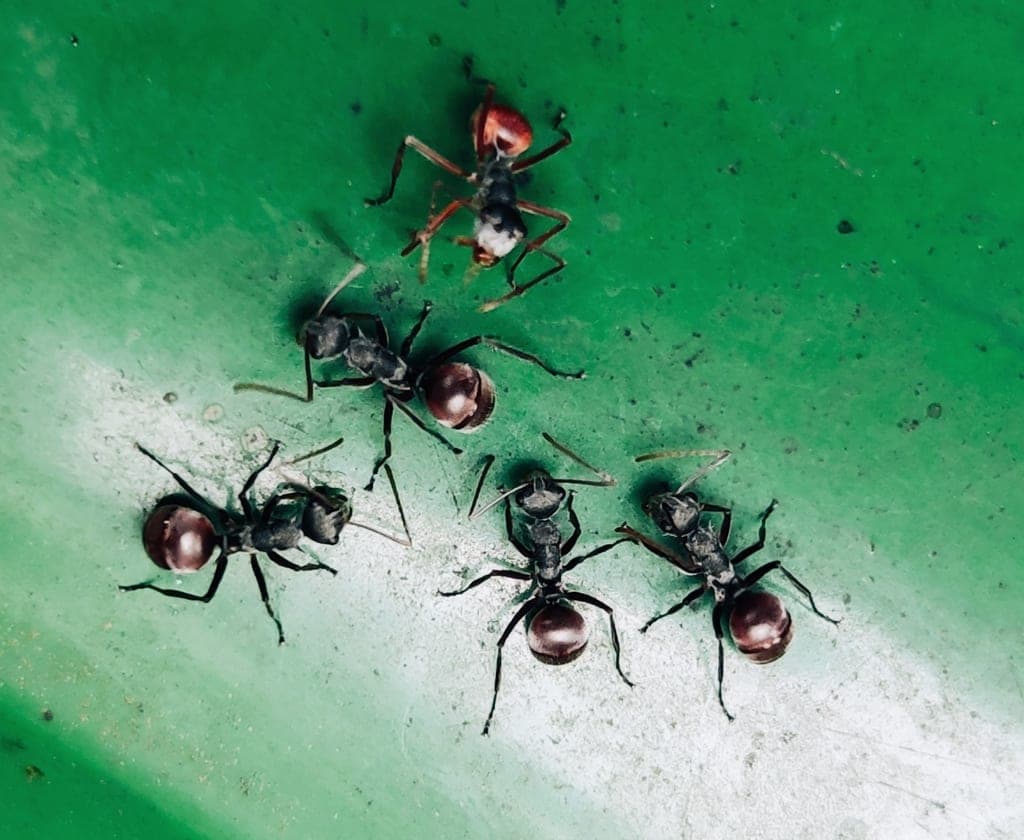
Where it lives
Widespread across Southeast Asia, including Thailand, Malaysia, Indonesia, the Philippines, and Myanmar. They inhabit forest canopies and foliage in tropical rainforests.
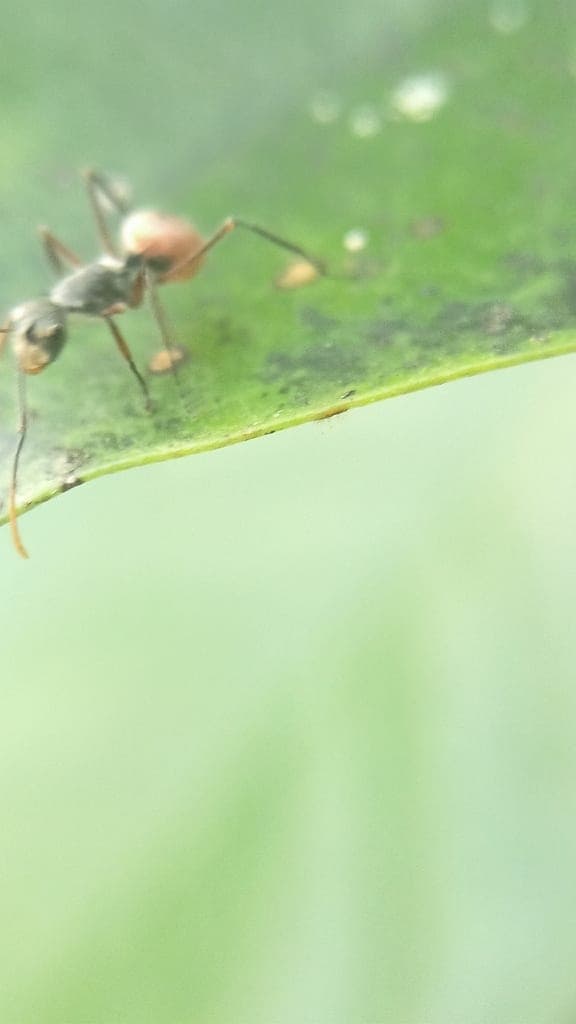
Photo © Sri Rizky Ayu · CC BY-NC
Behaviour
As true arboreal weaver ants, workers hold late-instar larvae in their mandibles and gently stimulate them to produce silk threads to bind leaves together. They are active and quick to react when their nest is disturbed.
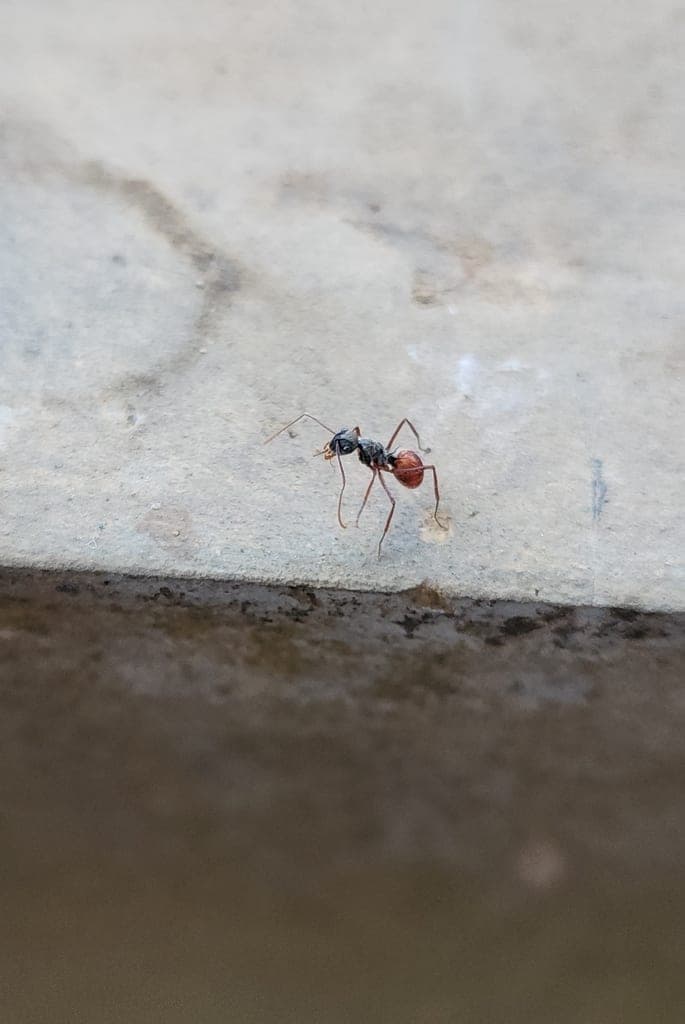
Photo © Paleoraptor_ · CC BY-NC
Keeping it
Founding queens are semi-claustral and require small feeds of protein and liquid sugars during the founding stage. Outworld setups should include vertical climbing space, twigs, cork bark, or live plants to encourage silk-nesting behavior. Maintain high humidity (60-80%).
Where the difficulty is
Founding single queens requires careful attention to feeding schedules. Providing appropriate natural materials and proper humidity is essential to stimulate larval silk nest construction in captivity.
Fun fact
The species name "bicolor" is Latin for "two-colored", referring directly to the dramatic contrast between its dark thorax and bright orange-red gaster.
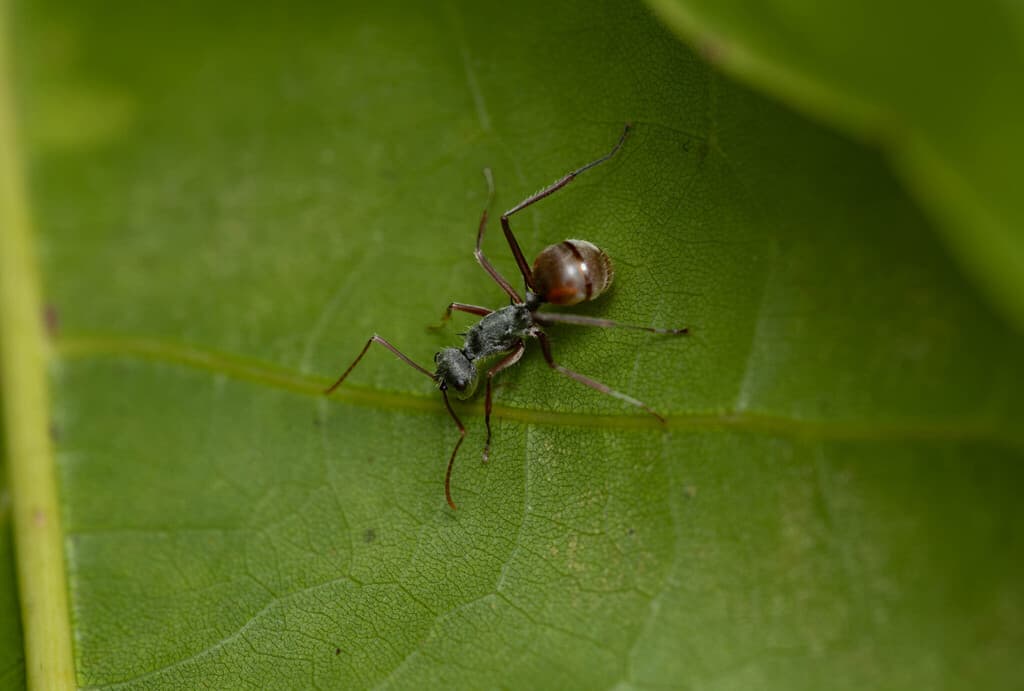
Photo © Thorny Toad Photography · CC BY-NC
Gallery
Photo © Sri Rizky Ayu · CC BY-NC
Photo © Paleoraptor_ · CC BY-NC
Photo © Thorny Toad Photography · CC BY-NC
Photo © Jonghyun Park · CC BY
Photo © Jonghyun Park · CC BY
Photo © Jonghyun Park · CC BY
Photo © The Natural Ants Keeper · CC BY-NC
Live photographs are by iNaturalist observers under CC BY-NC — every one carries its credit.
Sources
The Thai text is written from the facts in these sources, not copied from them. · Data confidence: สูง
This page is husbandry information only — live ants aren't sold on the site, for the animals' safety in transit.