
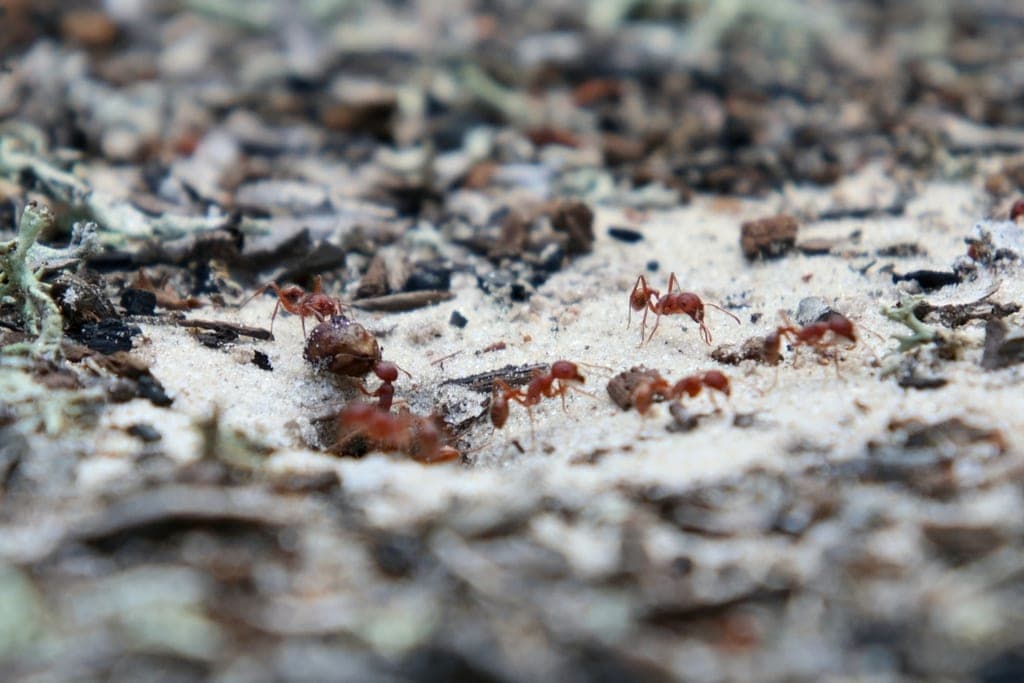
 Live photo
Species & care sheets
California Harvester Ant
Pogonomyrmex californicus · มดเก็บเมล็ดแคลิฟอร์เนีย
A reddish-orange seed harvester from the American deserts with a beard of hairs under its head for carrying seeds. Delivers a very painful sting and fiercely defends its territory.
Overview
Temperature
26-30°C
Humidity
50-60%
Diet
Sugar · Insects · Seeds
Nest type
Acrylic / 3D printed / Ytong / sand/clay
Growth
Fast
Colony size
1,000-3,000 ตัว
- Difficulty — ต้องดูแลเรื่องอาหารประเภทเมล็ดพืชอย่างเหมาะสม และมีเหล็กไนที่มีพิษรุนแรงซึ่งต้องระมัดระวังในการจัดการ
- Colony size — รังที่เจริญเติบโตเต็มที่อาจมีมดงานได้ถึง 10,000 ตัว
- How often it is found — มดที่มีข้อมูลบันทึกพบมากที่สุดในกลุ่ม เจอได้บ่อยตามธรรมชาติ — มีวางขายในตลาดนักเลี้ยงมดต่างประเทศ (มีสต๊อกจริง) · Records in Thailand 0 · Records worldwide 5,017 · Hobbyist market: Sold abroad
Derived from record counts in global databases (GBIF · AntWeb · iNaturalist), not from how common the ant is in Thailand. — ไม่สามารถประเมินได้ — ไม่มีข้อมูลพิสัยการแพร่กระจายจาก AntWiki
What it eats
Size
Body length by caste, and the ants drawn to scale on a credit card
Actual size against a credit card
Ants are drawn to scale on a standard card (85.6 × 54 mm) — hold a real card against the screen and move the slider until the card matches, and the ants are then life-size.
~7.5 mm
~11 mm
Behaviour & care
Defences
AggressiveAttacks when disturbed — handle with care.
Colony profile
Queens
Either
Founding
Claustral
Diapause
Not required
Growth
Fast
In depth
นางพญาของมดสายพันธุ์นี้มักจับคู่ร่วมกันตั้งรัง (Pleometrosis) เพื่อช่วยกันขุดรังและออกไข่ชุดแรก ซึ่งเพิ่มอัตราการรอดชีวิตของรังใหม่ได้อย่างมาก
Appearance
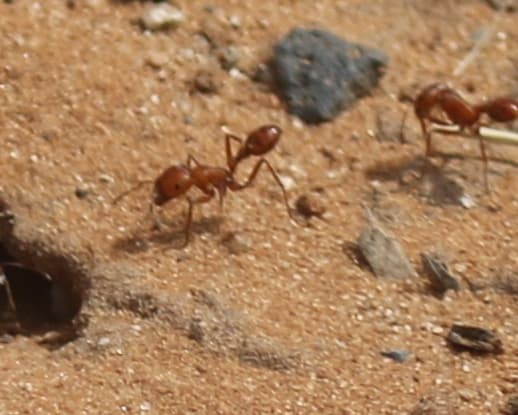
Distinctive bright orange-red coloration throughout the body. Possesses a special structure of hairs under the head (gular pecten) used for carrying sand and digging. Workers are monomorphic with powerful jaws and a potent sting.
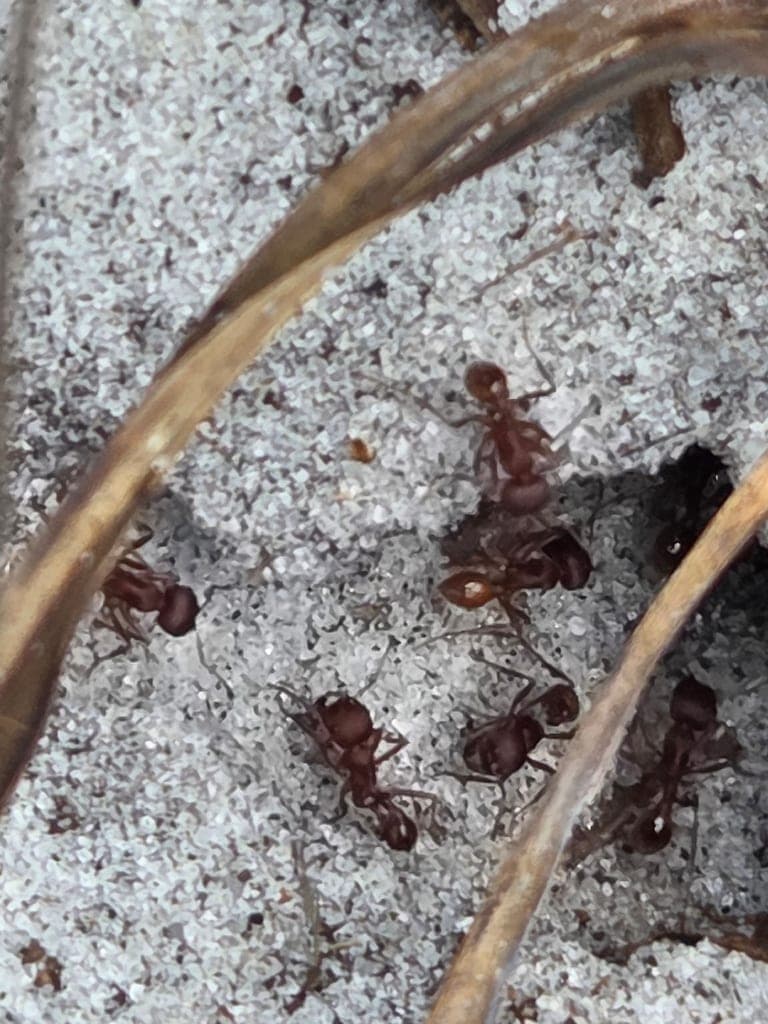
Photo © Yash Bhagwanji · CC BY-NC
Where it lives
Native to the deserts and arid regions of the southwestern United States and northern Mexico, where they build deep underground nests.
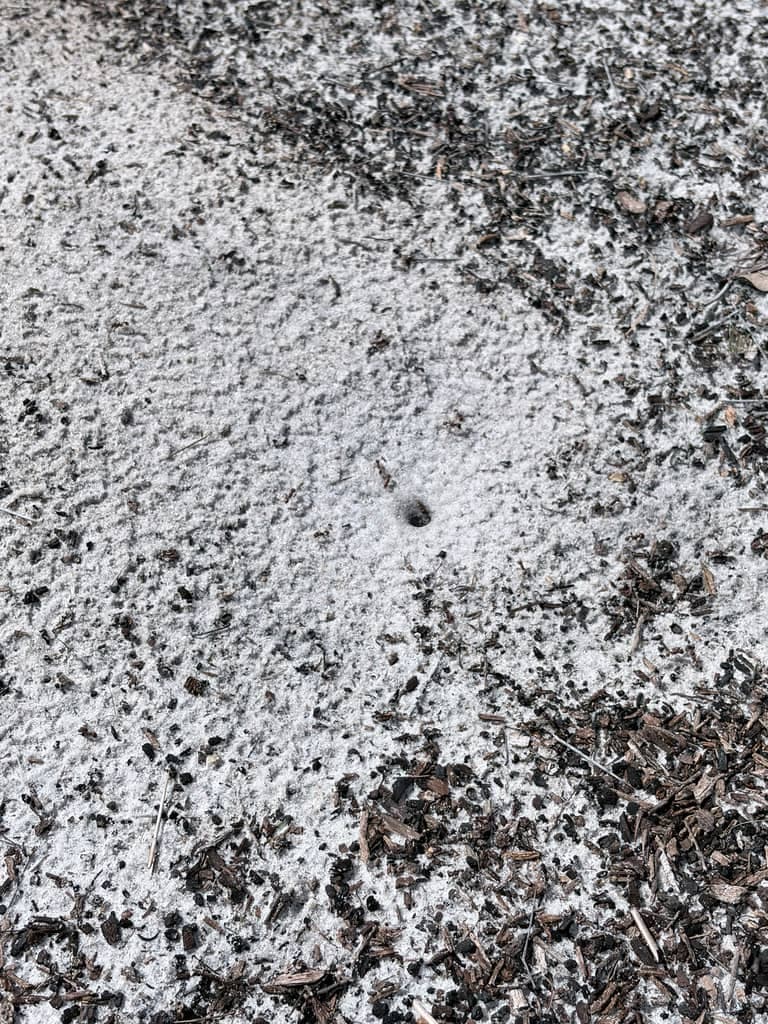
Photo © estherguntherberg · CC BY-NC
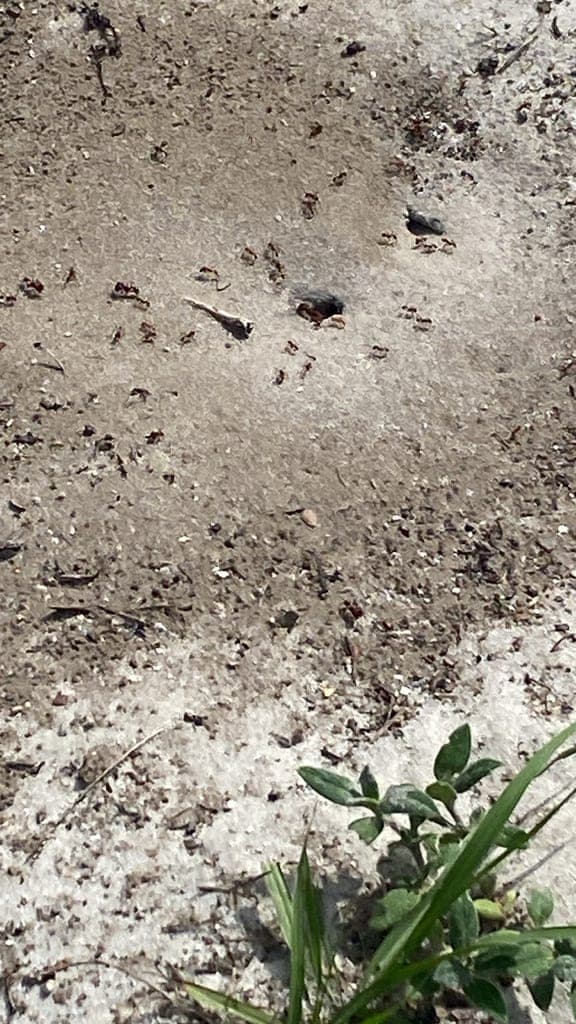
Behaviour
Keeping it
Thrives in warm, dry conditions (26-32°C and 30-50% humidity). Provide a dry granary area in the nest to prevent seeds from germinating or molding, alongside a localized moisture gradient.
Where the difficulty is
Possesses a strong sting with painful venom, requiring careful handling during escape-proof maintenance. Managing humidity in granary chambers is critical.
Gallery
Photo © Yash Bhagwanji · CC BY-NC
Photo © estherguntherberg · CC BY-NC
Photo © Gracie Catanzaro · CC BY-NC
Photo © Gracie Catanzaro · CC BY-NC
Photo © Gracie Catanzaro · CC BY-NC
Photo © David Rankin · CC BY-NC
Live photographs are by iNaturalist observers under CC BY-NC — every one carries its credit.
Sources
The Thai text is written from the facts in these sources, not copied from them. · Data confidence: สูง
This page is husbandry information only — live ants aren't sold on the site, for the animals' safety in transit.