
 Live photo
Species & care sheets
Black Crazy Ant
Paratrechina longicornis · มดดำ
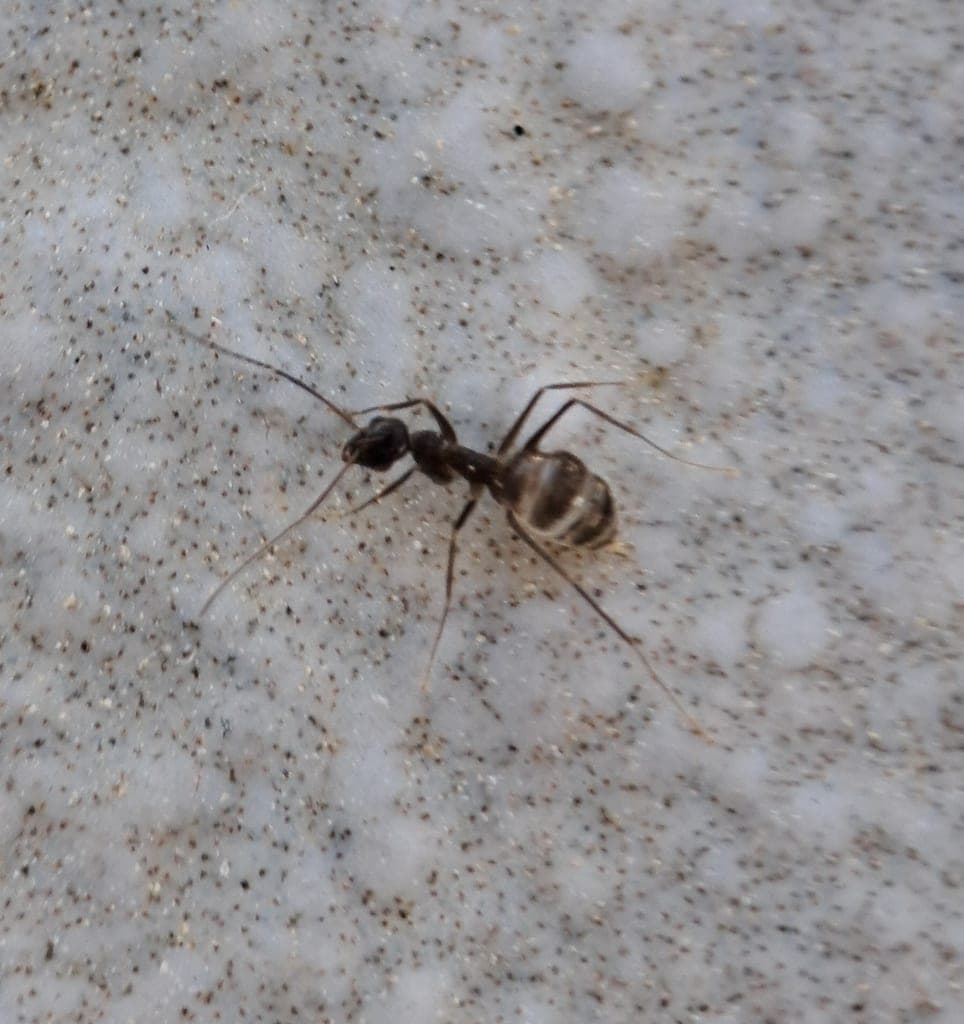
Photo © Ahmed Ismail · CC BY-NC
Small, long-legged, and always on the move, the Black Crazy Ant is one of the easiest species anyone can keep — a perfect first colony for total beginners.
Overview
Temperature
24–30°C
Humidity
50–70%
Diet
Sugar · Insects
Nest type
Test tube / Acrylic / 3D printed / Ytong
Growth
Fast
Colony size
500–2,000 ตัว
- Difficulty — ขยายพันธุ์เร็วและหลุดออกจากกล่องเลี้ยงได้ง่ายมากเนื่องจากวิ่งไวและไต่พื้นผิวได้ดี
- Colony size — รังขนาดใหญ่อาจมีมดนางพญาหลายร้อยตัวและมดงานนับแสนตัว
- How often it is found — มดที่มีข้อมูลบันทึกพบมากที่สุดในกลุ่ม เจอได้บ่อยตามธรรมชาติ — มีบันทึกยืนยันพบในไทยโดยตรงด้วย; เคยมีวางขายในร้านนักเลี้ยงมดต่างประเทศ (แต่ปัจจุบันหมด/ไม่พร้อมส่ง) · Records in Thailand 226 · Records worldwide 17,793 · Hobbyist market: Was sold, now out of stock
Derived from record counts in global databases (GBIF · AntWeb · iNaturalist), not from how common the ant is in Thailand. — น่าเชื่อถือสูง — มีบันทึกพิกัด/ตัวอย่างในไทยจริง (GBIF/AntWeb)
What it eats
Size
Body length by caste, and the ants drawn to scale on a credit card
Actual size against a credit card
Ants are drawn to scale on a standard card (85.6 × 54 mm) — hold a real card against the screen and move the slider until the card matches, and the ants are then life-size.
~2.6 mm
~4.8 mm
Behaviour & care
Defences
AggressiveAttacks when disturbed — handle with care.
Colony profile
Queens
Several queens (polygyne)
Founding
Claustral
Diapause
Not required
Growth
Fast
In depth
การสืบพันธุ์อันเป็นเอกลักษณ์ทำให้ลูกสาวได้พันธุกรรมจากแม่ และลูกชายได้พันธุกรรมจากพ่อโดยตรง โดยไม่เกิดการผสมพันธุกรรมข้ามสาย
Appearance
Workers are small (2.3-3.0 mm) with noticeably long legs and antennae compared to their body size, ranging in color from dark brown to black.
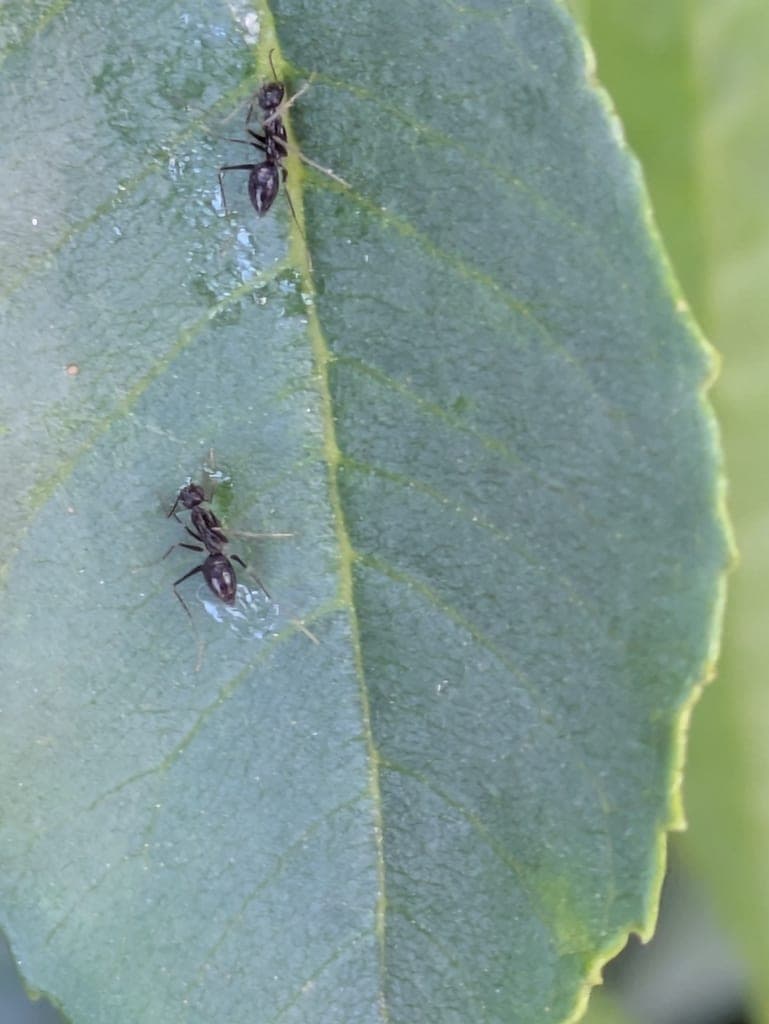
Photo © theslowloris · CC BY-NC
Where it lives
Behaviour
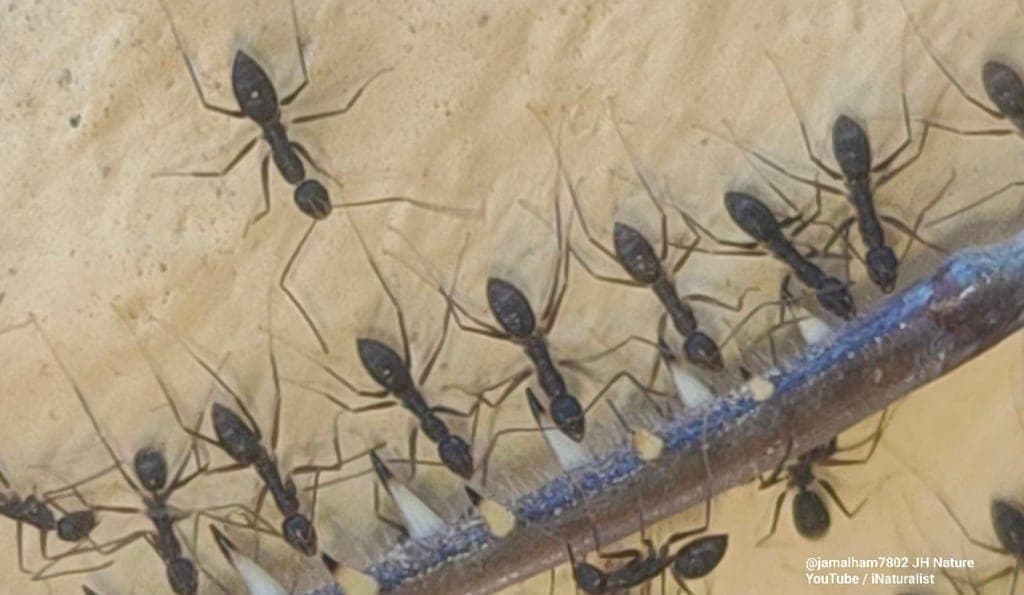
When foraging or disturbed, they run rapidly and erratically in chaotic patterns rather than in neat trails. They defend themselves using formic acid.
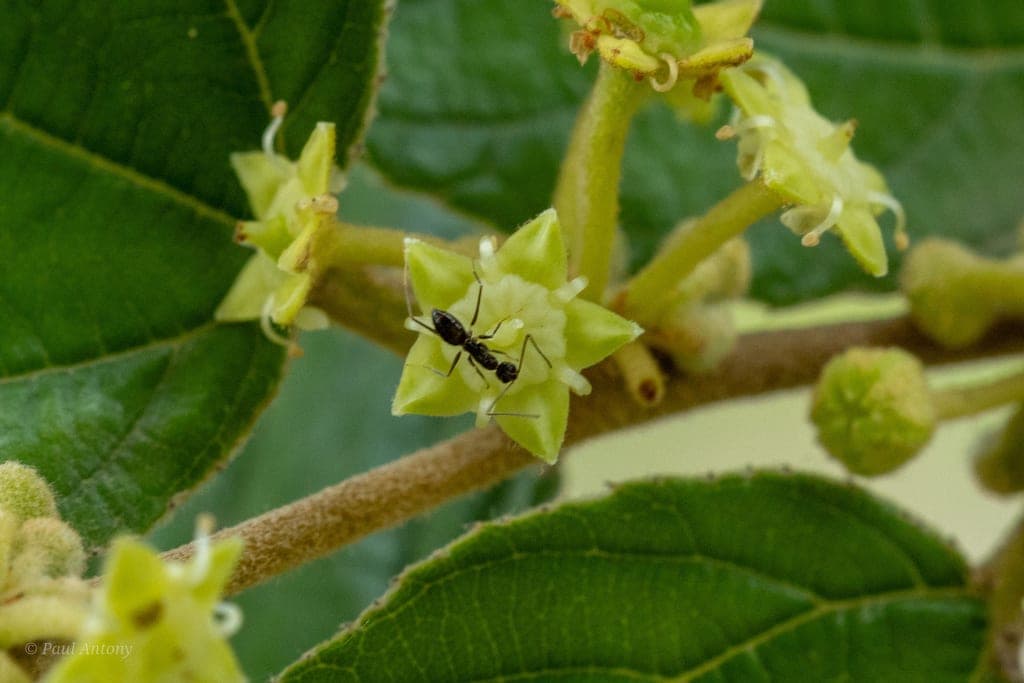
Photo © Paul Antony Mangaly · CC BY-NC
Keeping it
Unfussy diet accepting standard sugar waters and feeder insects. Can be housed in test tubes or acrylic nests with escape-proof barriers.
Where the difficulty is
Colony growth is extremely rapid. Their small size, speed, and agility make them notorious escape artists that require strict containment.
Fun fact
They feature an unusual reproductive strategy where virgin queens are genetic clones of the mother queen and males are genetic clones of the father.
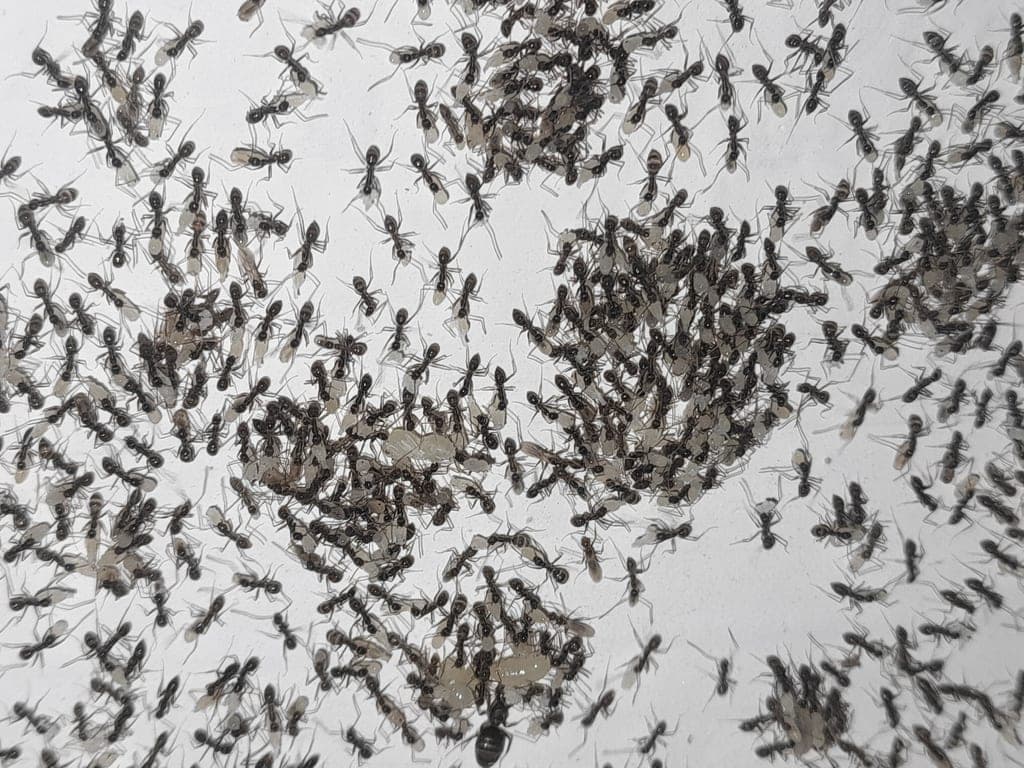
Photo © Prabhat Chakma · CC BY-NC
Gallery
Photo © Ahmed Ismail · CC BY-NC
Photo © theslowloris · CC BY-NC
Photo © Paul Antony Mangaly · CC BY-NC
Photo © Prabhat Chakma · CC BY-NC
Photo © Sheldon Logan · CC BY-NC
Live photographs are by iNaturalist observers under CC BY-NC — every one carries its credit.
Sources
The Thai text is written from the facts in these sources, not copied from them. · Data confidence: สูง
This page is husbandry information only — live ants aren't sold on the site, for the animals' safety in transit.