
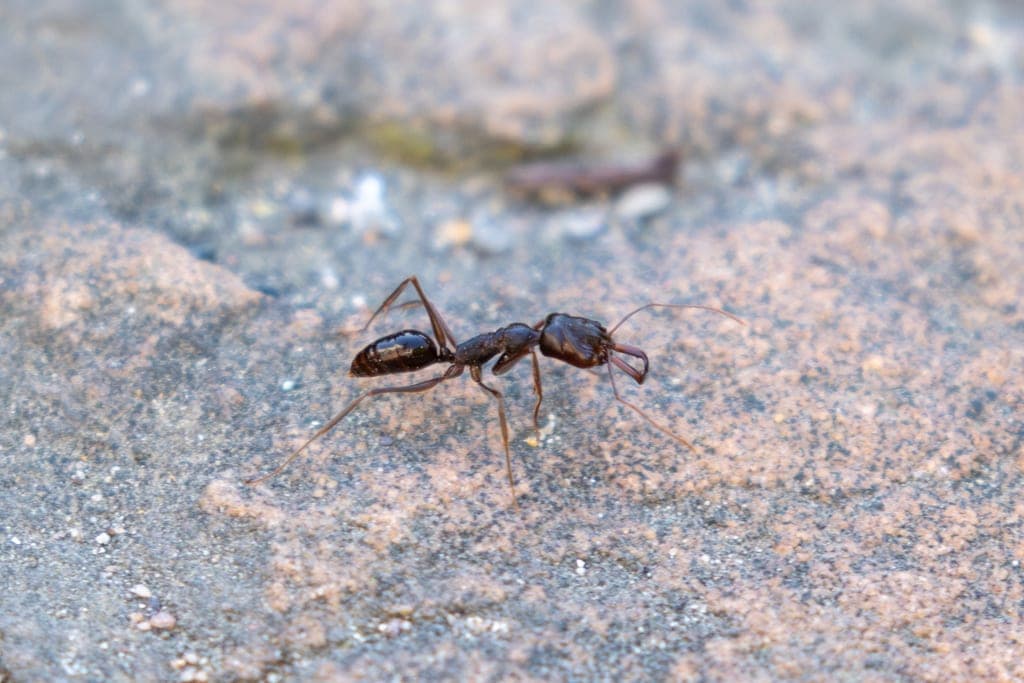
 Live photo
Species & care sheets
Mountain Trap-Jaw Ant
Odontomachus monticola · มดกระโดดเขาสูง
A matte-black trap-jaw ant from Asia's mountains with one of the fastest strikes in the animal kingdom, used both to hunt and to catapult itself away from danger. For expert keepers only.
Overview
Temperature
รัง 21-25°C / บริเวณหากิน 22-26°C
Humidity
รัง 70-85% / บริเวณหากิน 60-75%
Diet
Sugar · Insects
Nest type
natural dirt / Ytong / acrylic with substrate
Growth
Medium
Colony size
100-300 ตัว
- Difficulty — นางราชินีเป็นแบบ Semi-claustral ที่ต้องการอาหารระหว่างตั้งรัง และต้องการความชื้นสูงสม่ำเสมอ
- Colony size — รังขนาดใหญ่เต็มที่มักมีประชากรไม่เกินหลักพันตัว
- How often it is found — มีข้อมูลบันทึกพบค่อนข้างมาก เจอได้ไม่ยากนัก — เคยมีวางขายในร้านนักเลี้ยงมดต่างประเทศ (แต่ปัจจุบันหมด/ไม่พร้อมส่ง) · Records in Thailand 2 · Records worldwide 768 · Hobbyist market: Was sold, now out of stock
Derived from record counts in global databases (GBIF · AntWeb · iNaturalist), not from how common the ant is in Thailand. — น่าเชื่อถือสูง — มีบันทึกพิกัด/ตัวอย่างในไทยจริง (GBIF/AntWeb)
What it eats
Size
Body length by caste, and the ants drawn to scale on a credit card
Actual size against a credit card
Ants are drawn to scale on a standard card (85.6 × 54 mm) — hold a real card against the screen and move the slider until the card matches, and the ants are then life-size.
~12.5 mm
~15 mm
Behaviour & care
Defences
AggressiveAttacks when disturbed — handle with care.
Colony profile
Queens
Single queen (monogyne)
Founding
Semi-claustral
Diapause
Not required
Growth
Medium
In depth
กลไกกรามของมดในสกุล Odontomachus นับเป็นหนึ่งในการเคลื่อนไหวของสัตว์ที่เร็วที่สุดในโลก ใช้ทั้งในการล่าเหยื่อและการดีดตัวหลบหนีภัย
Appearance
Large ants featuring iconic trap-jaws that lock open at 180 degrees and snap shut at extreme speeds. They have a slender dark brown to black body equipped with a functional sting.
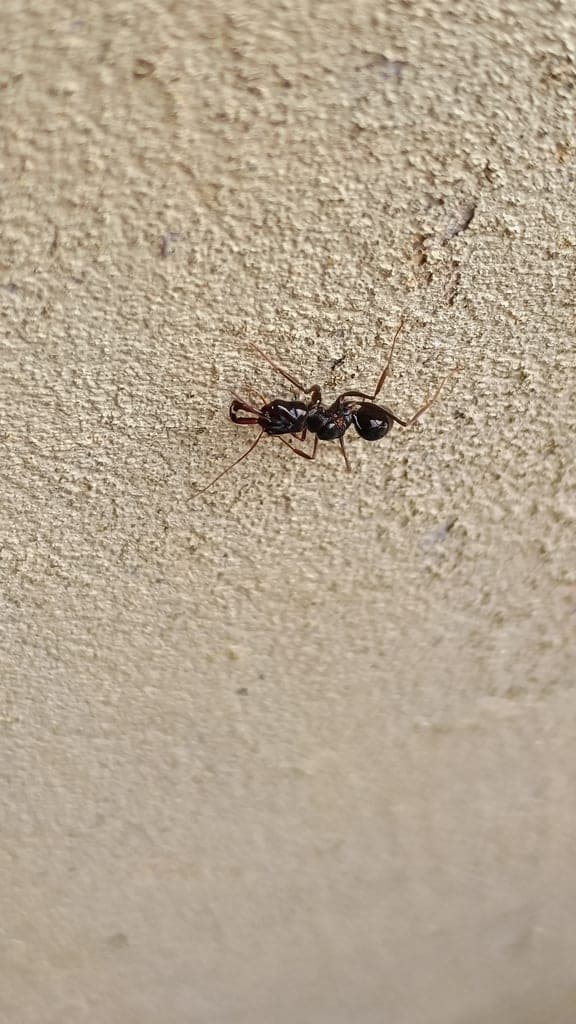
Photo © Mantre Passah · CC BY-NC
Where it lives
Behaviour
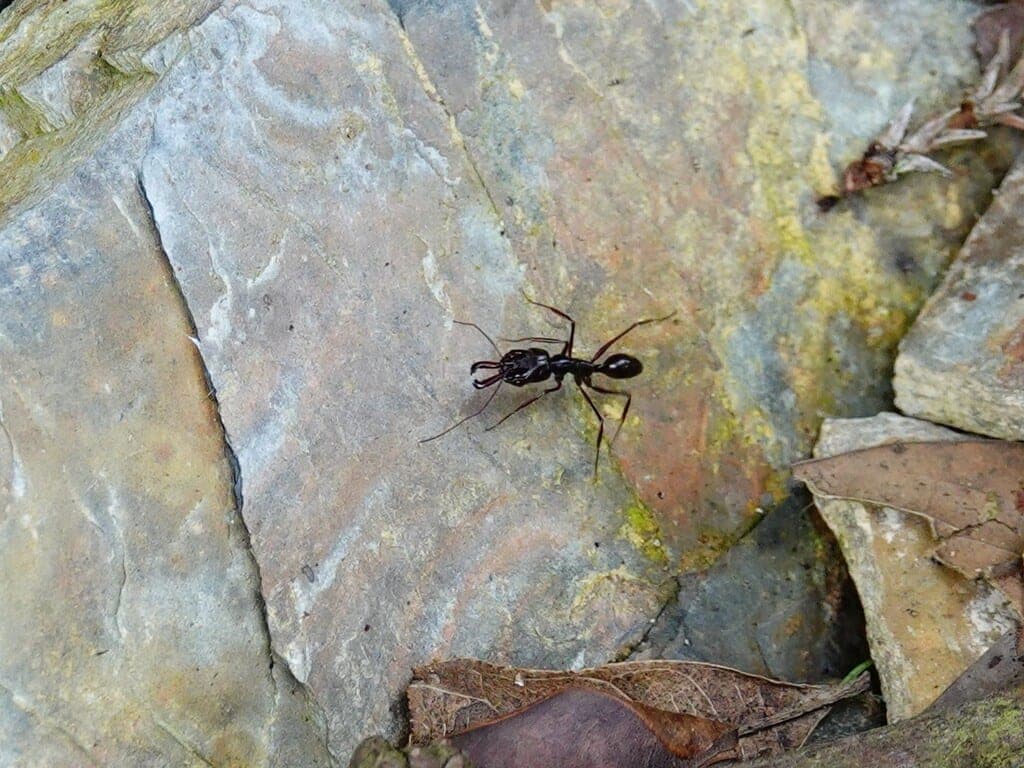
Active ground foragers and aggressive predators. When sensitive trigger hairs inside their mandibles are touched, their jaws snap shut instantly. They can also strike the ground with their mandibles to fling themselves backward out of harm's way.
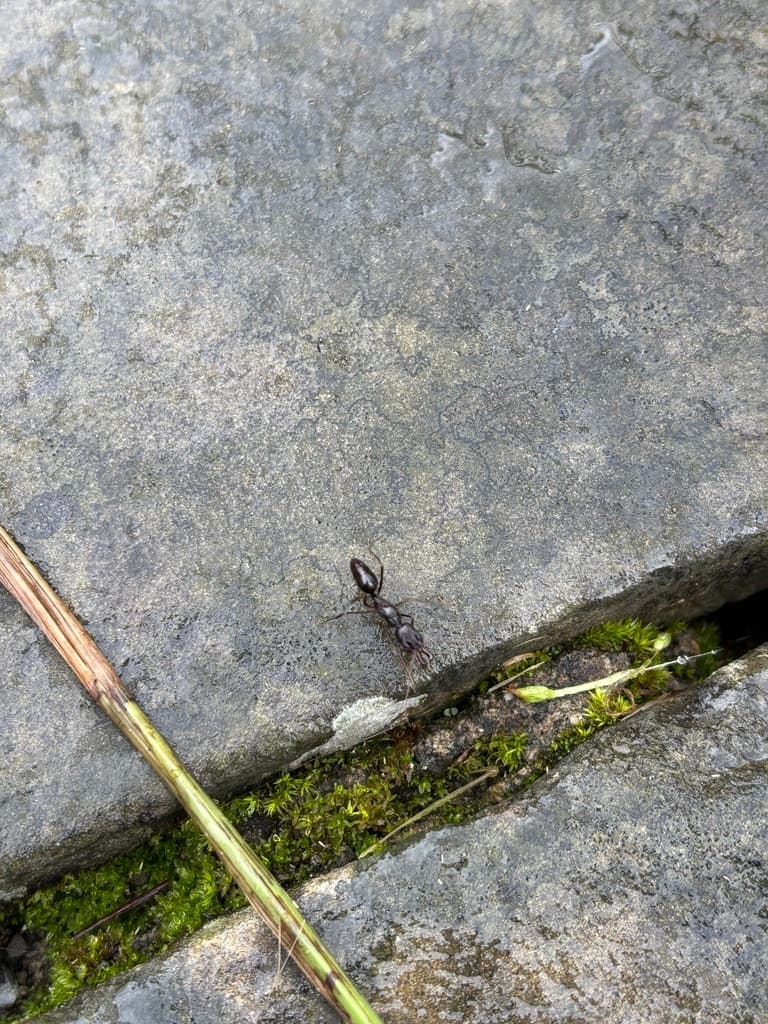
Photo © smallpotato · CC BY-NC
Keeping it
Queens found semi-claustrally, requiring small insects and liquid sweets during the founding stage. High humidity (70-90%) and a suitable substrate are essential to help larvae spin cocoons properly.
Where the difficulty is
Founding queens are prone to stress and require consistent feeding and humidity. Their painful sting requires careful handling during enclosure maintenance.
Fun fact
The species name "monticola" comes from Latin meaning "mountain-dweller," reflecting its preference for elevated and forested habitats.
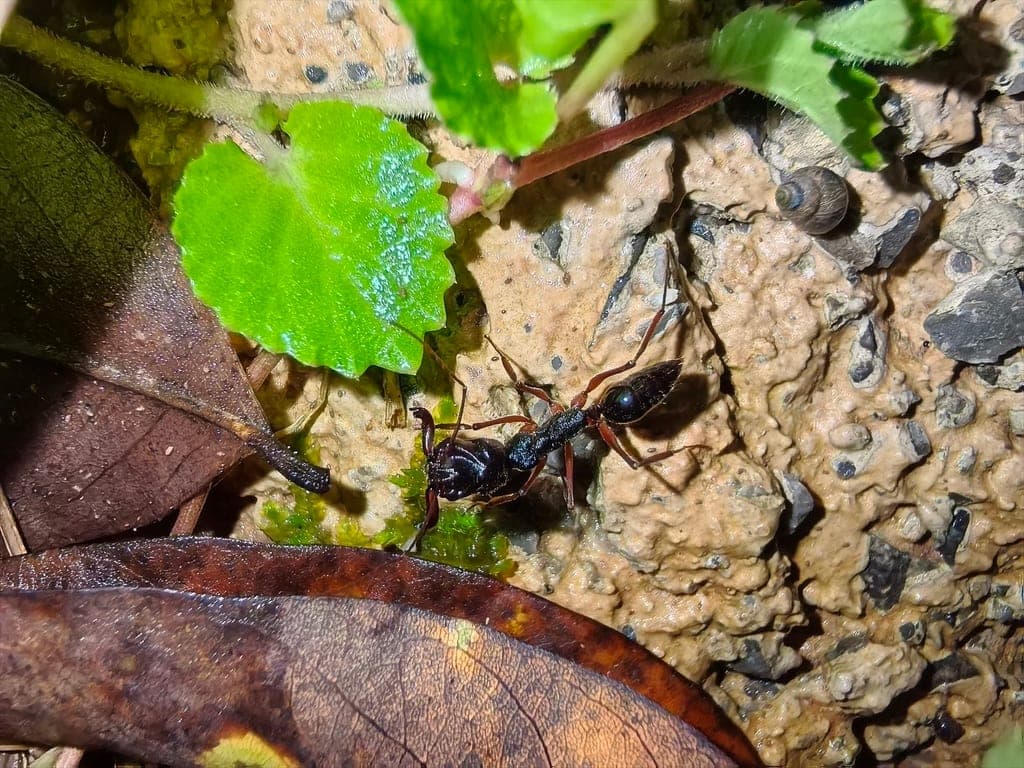
Photo © Albert Jacobson · CC BY-NC
Gallery
Live photographs are by iNaturalist observers under CC BY-NC — every one carries its credit.
Sources
The Thai text is written from the facts in these sources, not copied from them. · Data confidence: สูง
This page is husbandry information only — live ants aren't sold on the site, for the animals' safety in transit.