
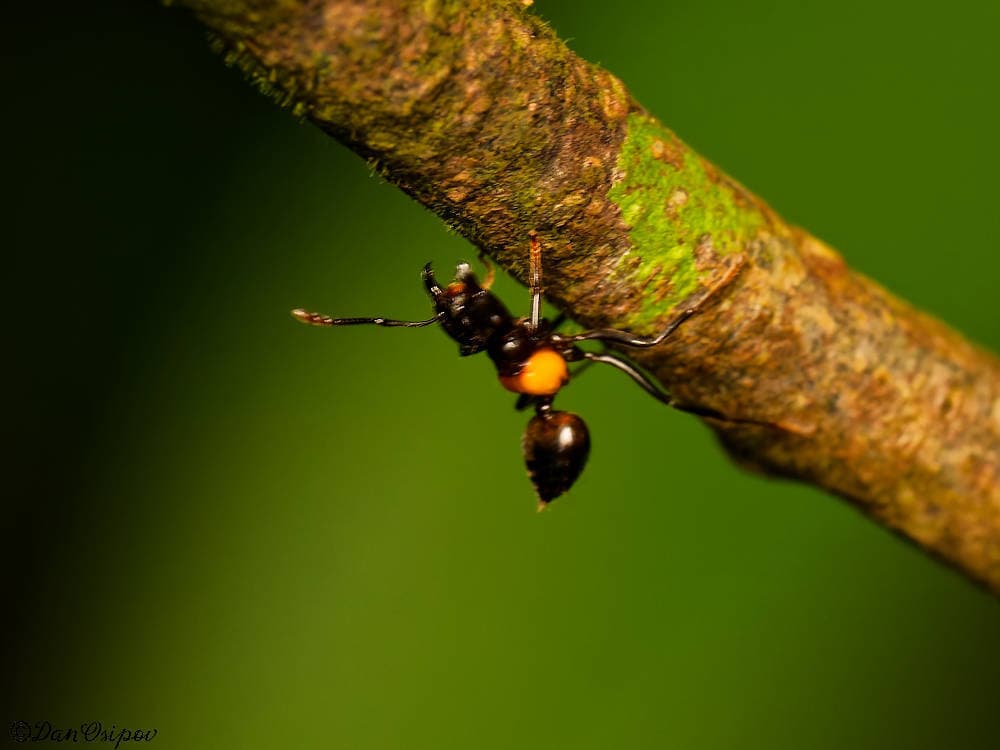
 Live photo
Species & care sheets
Yellow Inflated Acrobat Ant
Crematogaster inflata · มดฮี้โป่งเหลือง
Photo © Dan Osipov · CC BY
A bicolored yellow and reddish-brown acrobat ant with a distinctively inflated gaster. Bold toward larger ants, found across Southeast Asia including Thailand.
อยู่ในสกุลย่อย Physocrema
Overview
Temperature
26-28°C
Humidity
60-80%
Diet
Sugar · Insects
Nest type
Wood / cork / Acrylic / Ytong
Growth
Medium
Colony size
1,000-3,000 ตัว
- Difficulty — ต้องการความชื้นและการระบายอากาศที่เหมาะสม รวมทั้งต้องจัดการสารเคมีเหนียวที่มดปล่อยออกมาเมื่อตกใจ
- Colony size — รังธรรมชาติขนาดใหญ่อาจมีประชากรถึงหลักหมื่นตัว
- How often it is found — มีข้อมูลบันทึกพบค่อนข้างน้อย ไม่ใช่มดที่เจอกันบ่อยๆ — มีบันทึกยืนยันพบในไทยโดยตรงด้วย · Records in Thailand 3 · Records worldwide 113 · Hobbyist market: Not listed
Derived from record counts in global databases (GBIF · AntWeb · iNaturalist), not from how common the ant is in Thailand. — น่าเชื่อถือสูง — มีบันทึกพิกัด/ตัวอย่างในไทยจริง (GBIF/AntWeb)
What it eats
Size
Body length by caste, and the ants drawn to scale on a credit card
Actual size against a credit card
Ants are drawn to scale on a standard card (85.6 × 54 mm) — hold a real card against the screen and move the slider until the card matches, and the ants are then life-size.
~4.8 mm
~9 mm
Behaviour & care
Defences
AggressiveAttacks when disturbed — handle with care.
Colony profile
Queens
Single queen (monogyne)
Founding
Claustral
Diapause
Not required
Growth
Medium
In depth
สารเคมีสีขาวคล้ายกาวที่ขับออกมาจากส่วนอกมีกลิ่นฉุนและเหนียวหนืด สามารถหยุดการโจมตีของมดสายพันธุ์อื่นได้อย่างชะงัก
Appearance
Crematogaster inflata is instantly recognizable by its enormously swollen, bright yellow propodeal area contrasting against a jet-black body, housing oversized metapleural glands.
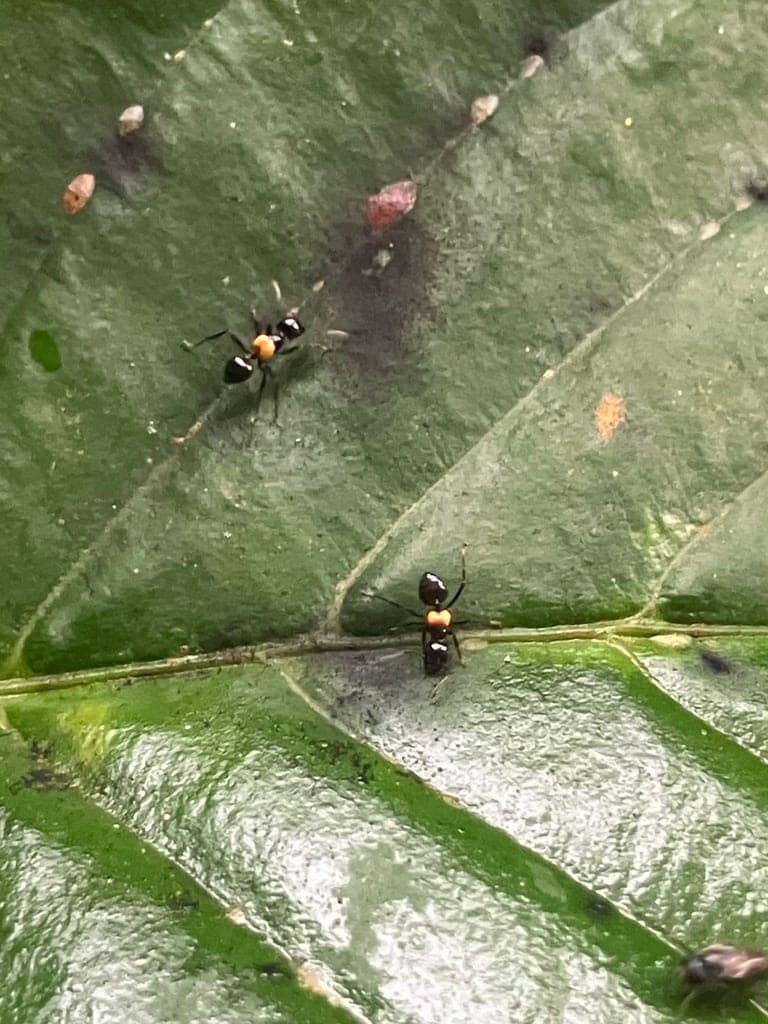
Photo © MPP Wildlife · CC BY-NC
Where it lives
Native to tropical rainforests across Southeast Asia, including Thailand, Malaysia, Indonesia, and Singapore, where they build arboreal nests high in the canopy.
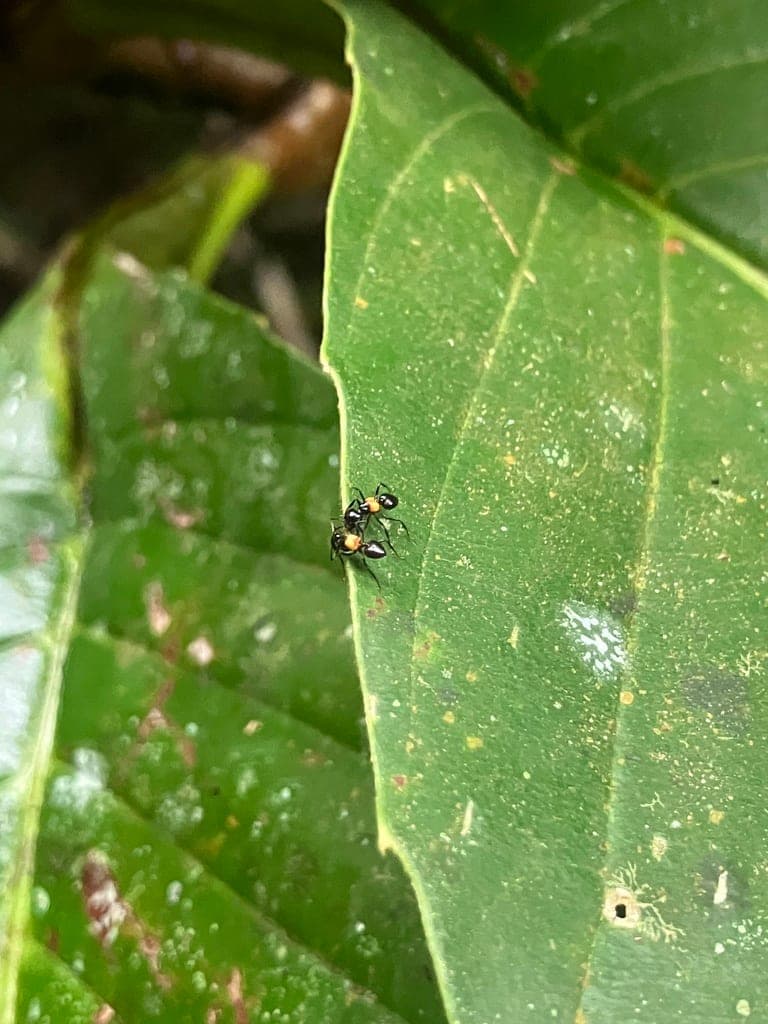
Photo © MPP Wildlife · CC BY-NC
Behaviour
Highly aggressive arboreal foragers that recruit workers rapidly. When threatened, they raise their heart-shaped gaster and extrude a milky, sticky defensive liquid from their chest glands.
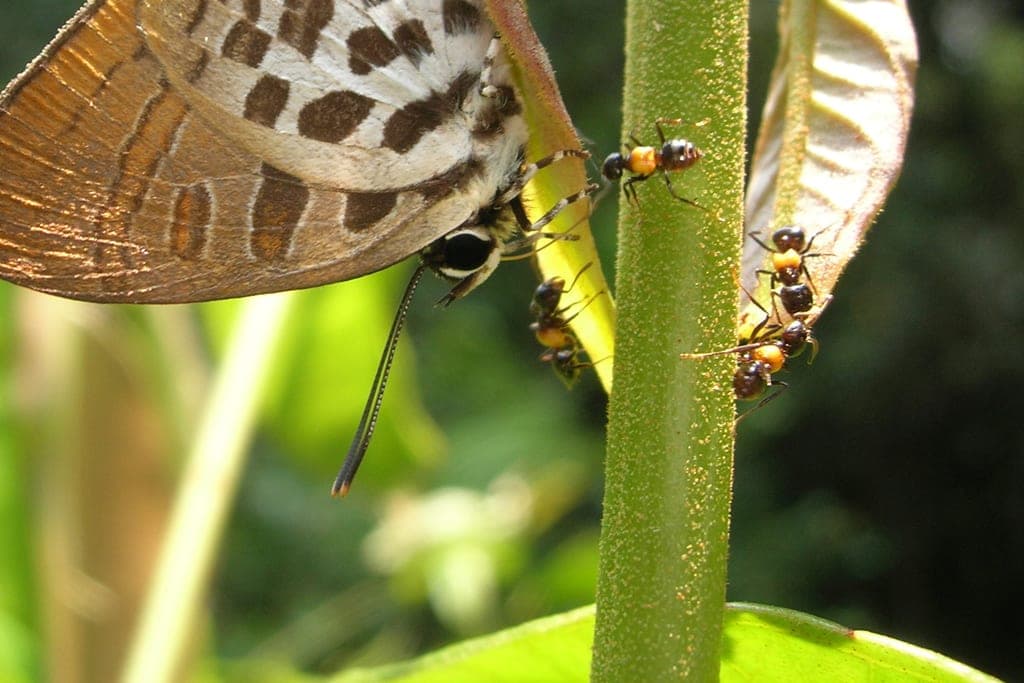
Photo © Dirk Mezger · CC BY-NC
Keeping it
Best kept in nests with good ventilation while maintaining 60-80% humidity at 25-29°C. Diet consists of sugars and small protein sources. A spacious outworld is recommended.
Where the difficulty is
Managing ventilation is crucial; in closed environments without adequate airflow, their own defensive chemical secretions can build up and harm the colony.
Fun fact
The specific epithet "inflata" is Latin for "swollen" or "inflated," referring to the ant's strikingly enlarged thoracic glands.
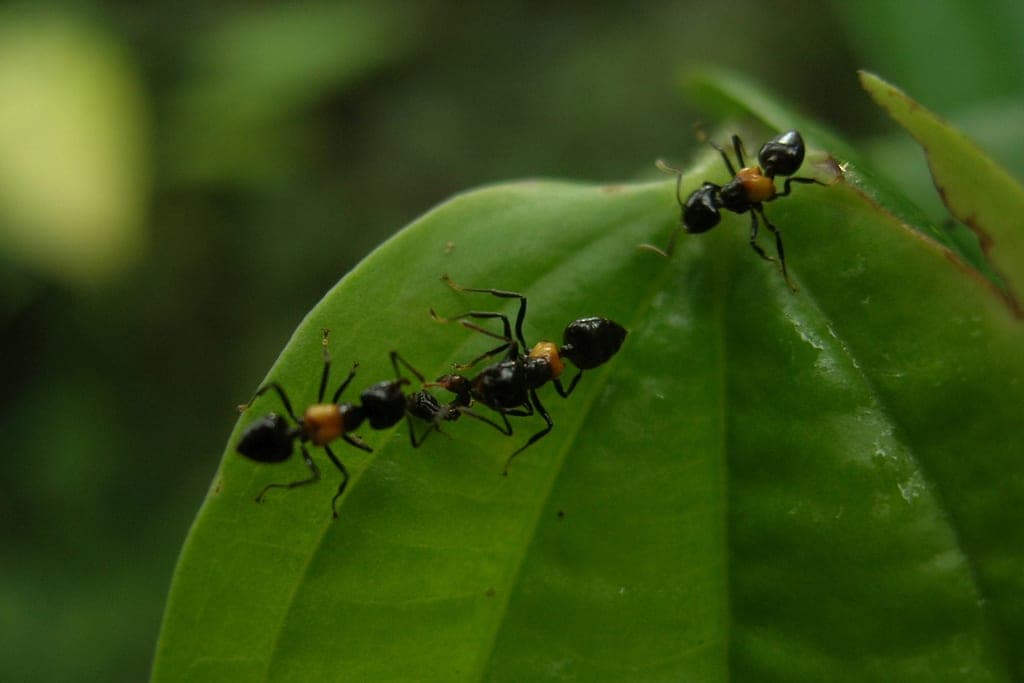
Photo © Dirk Mezger · CC BY-NC
Gallery
Photo © Dan Osipov · CC BY
Photo © MPP Wildlife · CC BY-NC
Photo © MPP Wildlife · CC BY-NC
Photo © Dirk Mezger · CC BY-NC
Photo © Dirk Mezger · CC BY-NC
Photo © Foo Chuan Wei · CC BY-NC
Live photographs are by iNaturalist observers under CC BY-NC — every one carries its credit.
Sources
The Thai text is written from the facts in these sources, not copied from them. · Data confidence: สูง
This page is husbandry information only — live ants aren't sold on the site, for the animals' safety in transit.