
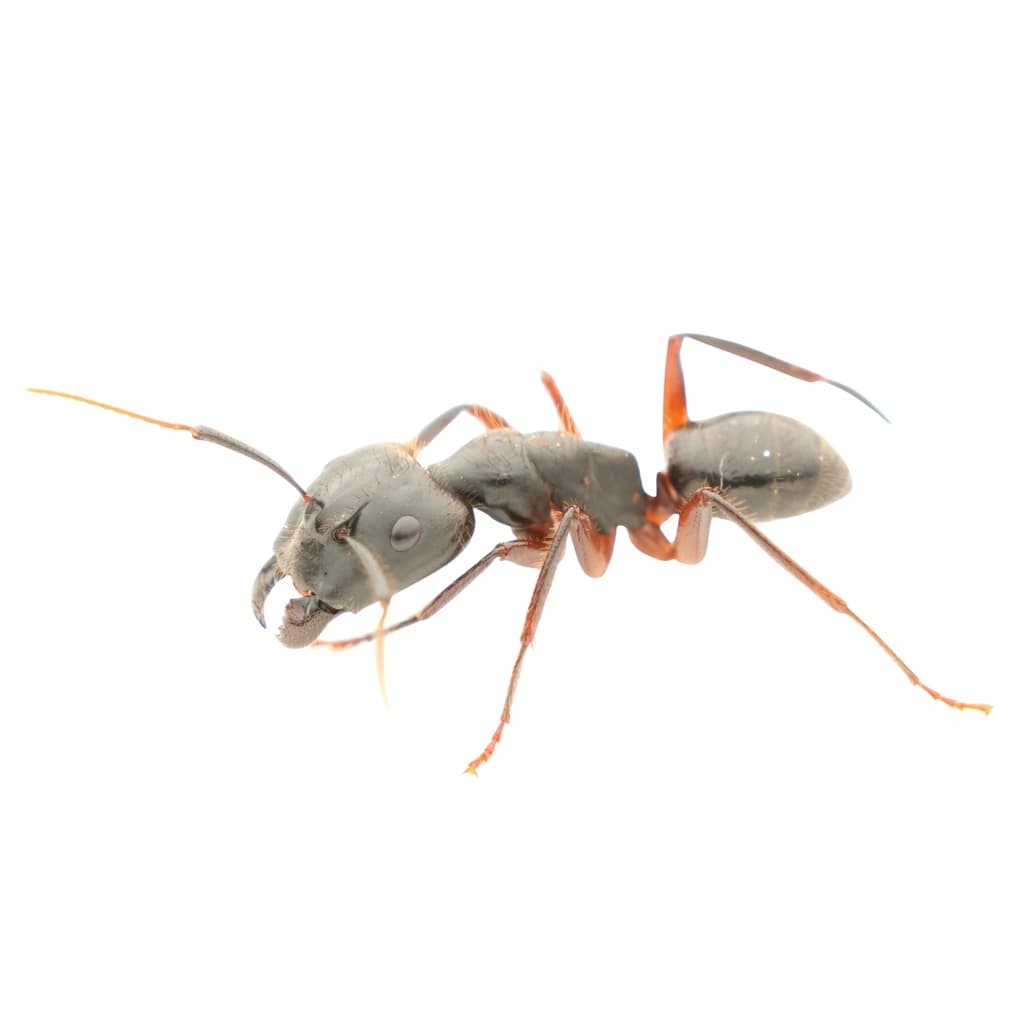
 Live photo
Species & care sheets
Hairy-legged Carpenter Ant
Camponotus rufifemur · มดตะลานขาขน
Photo © Santiago Monroy · CC BY-NC
A Javan carpenter ant with reddish-brown legs contrasting against a dark body. Nocturnal and calm-tempered, it's a popular pick in the ant-keeping market for its striking coloration.
อยู่ในสกุลย่อย Tanaemyrmex
Overview
Temperature
24-28°C
Humidity
50-70%
Diet
Sugar · Insects
Nest type
Ytong / Acrylic / Wood
Growth
Medium
Colony size
1,000-3,000 ตัว
- Difficulty — เป็นมดขนาดใหญ่ที่อดทน เลี้ยงง่าย แต่ต้องใช้เวลาเติบโตและต้องการพื้นที่ขนาดใหญ่เมื่อรังขยาย
- Colony size — รังที่เจริญเติบโตเต็มที่อาจมีประชากรถึงประมาณ 5,000 ตัว
- How often it is found — มีข้อมูลบันทึกพบค่อนข้างน้อย ไม่ใช่มดที่เจอกันบ่อยๆ — มีวางขายในตลาดนักเลี้ยงมดต่างประเทศ (มีสต๊อกจริง) · Records in Thailand 2 · Records worldwide 47 · Hobbyist market: Sold abroad
Derived from record counts in global databases (GBIF · AntWeb · iNaturalist), not from how common the ant is in Thailand. — น่าเชื่อถือสูง — มีบันทึกพิกัด/ตัวอย่างในไทยจริง (GBIF/AntWeb)
What it eats
Size
Body length by caste, and the ants drawn to scale on a credit card
Actual size against a credit card
Ants are drawn to scale on a standard card (85.6 × 54 mm) — hold a real card against the screen and move the slider until the card matches, and the ants are then life-size.
~8 mm
~13 mm
~16.5 mm
Behaviour & care
Defences
DefensiveBites or stings when disturbed — mind the nest when opening it.
Colony profile
Queens
Single queen (monogyne)
Founding
Claustral
Diapause
Not required
Growth
Medium
In depth
โคนขาสีแดงส้มสะดุดตาเป็นที่มาของชื่อสายพันธุ์ 'rufifemur' ซึ่งช่วยให้จำแนกออกจากมดตะลานชนิดอื่นได้ง่าย
Appearance
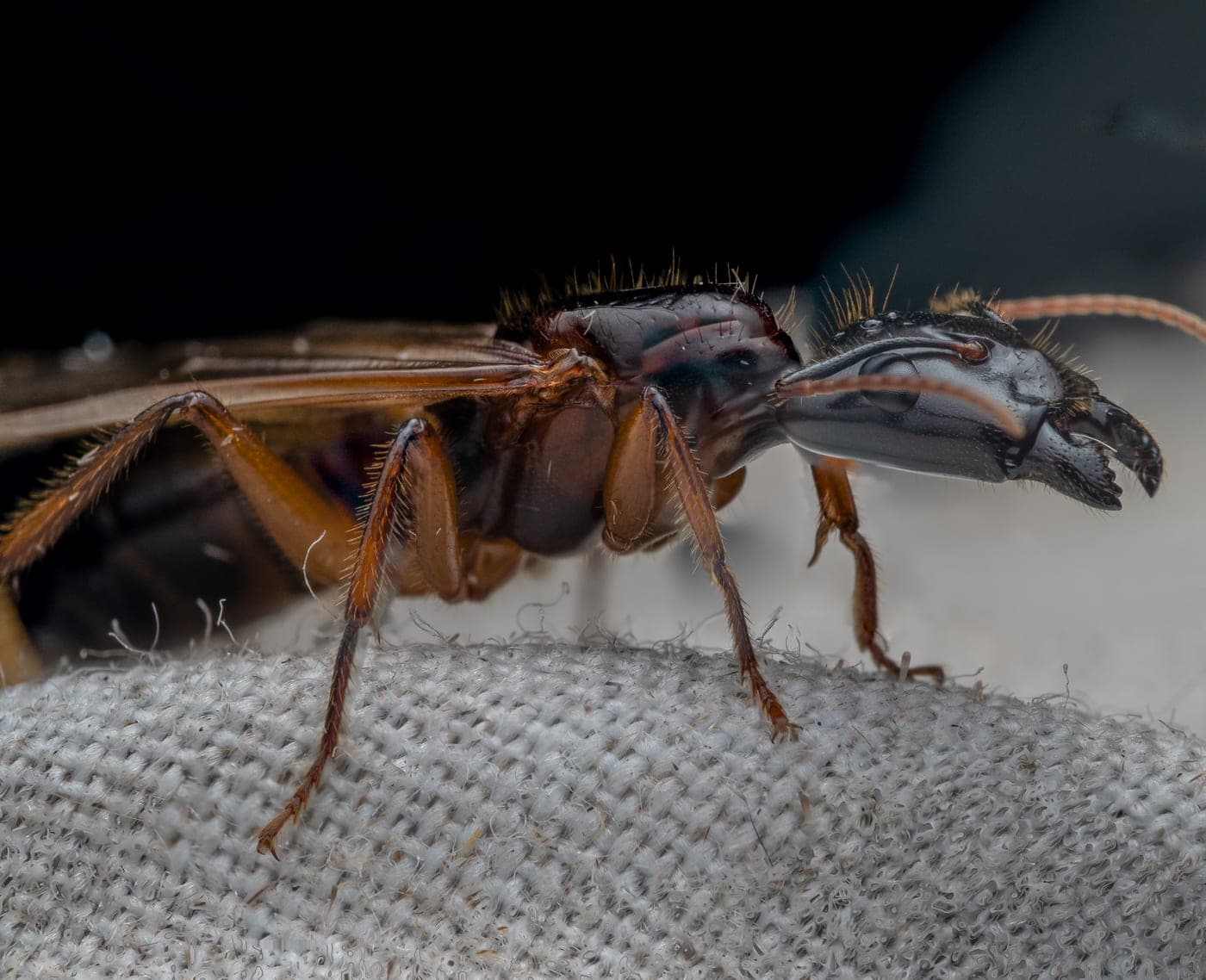
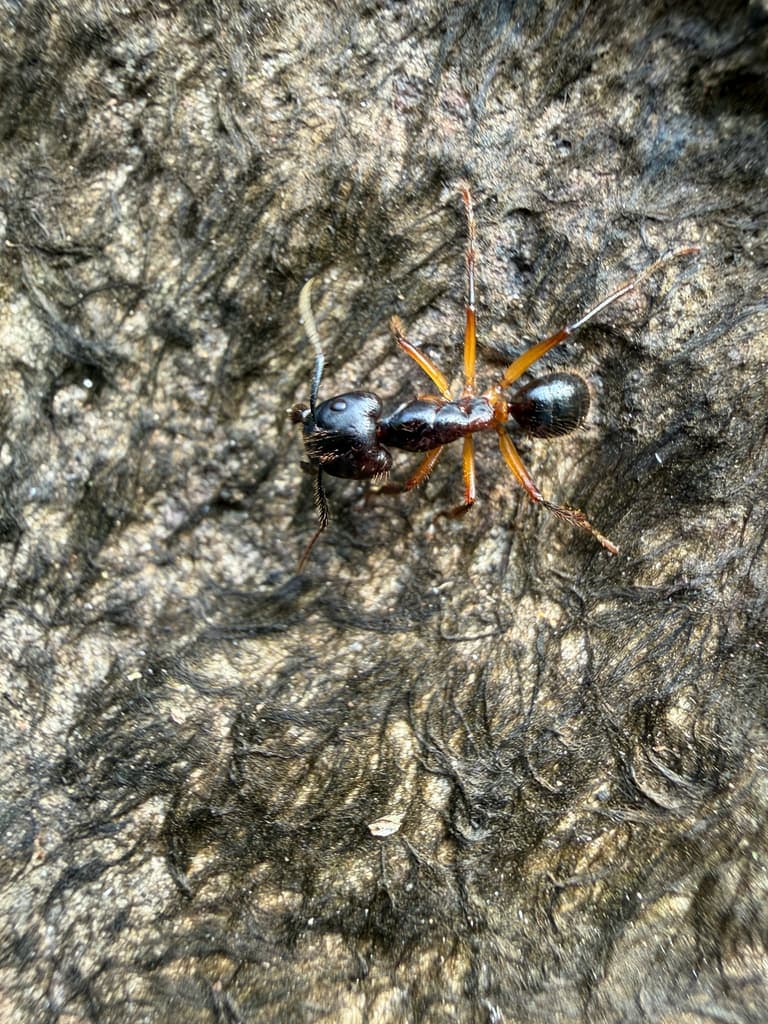
A large polymorphic carpenter ant species. Major workers possess distinct heart-shaped heads and powerful mandibles. Their most striking feature is the bright reddish-orange femurs that contrast sharply with their dark brown to black bodies.
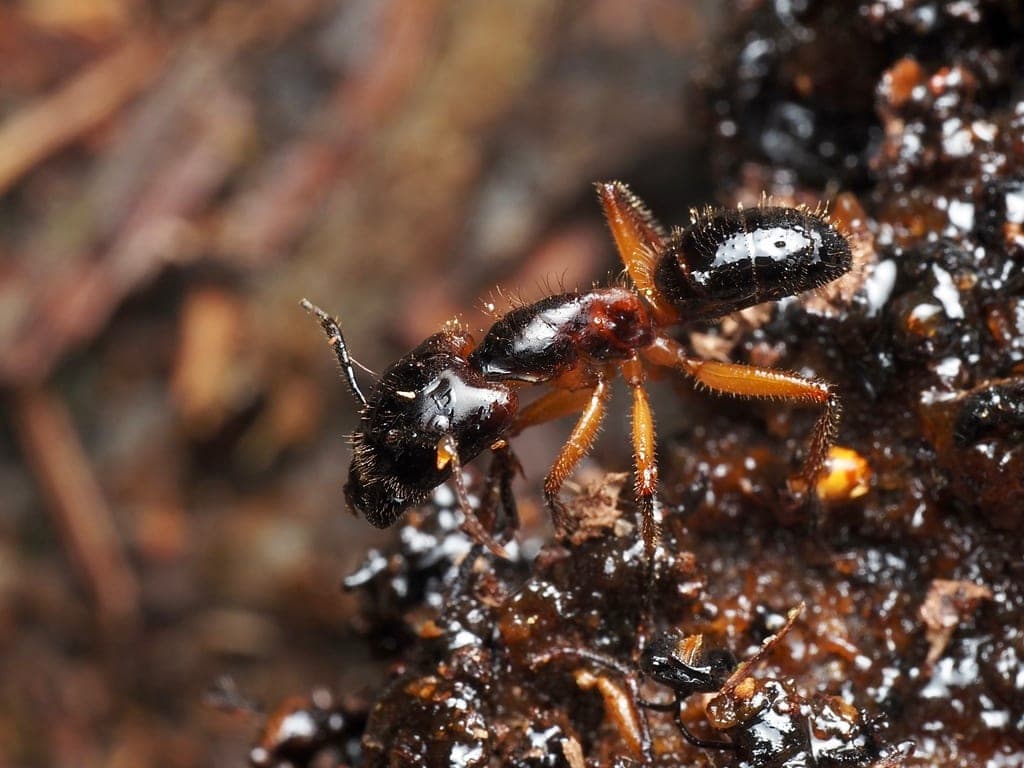
Photo © thirty_legs · CC BY-NC
Where it lives
Behaviour
Keeping it
Can be housed in Ytong, acrylic, or wooden nests. Maintain temperature at 24-28°C and humidity at 60-80%. Diet should consist of sugary liquids paired with insect proteins such as crickets or mealworms.
Where the difficulty is
The founding stage is relatively slow and requires patience. As the colony grows large, they need a spacious outworld and secure anti-escape barriers.
Fun fact
The species name 'rufifemur' comes from Latin, combining 'rufi' (red) and 'femur' (thigh/femur), literally translating to 'red-thighed'.
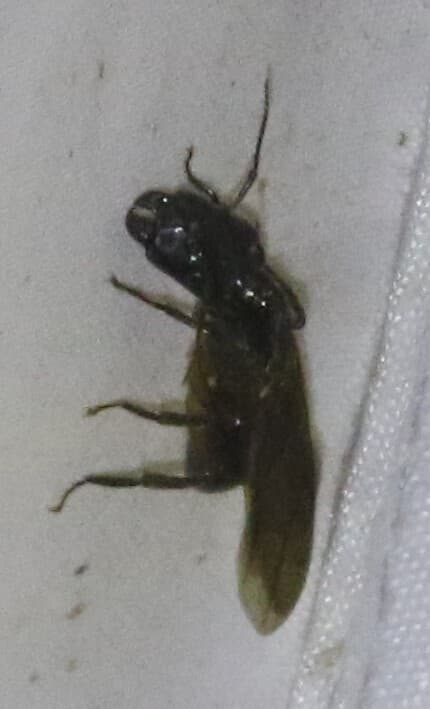
Photo © Jackson Frost · CC BY-NC
Gallery
Photo © Santiago Monroy · CC BY-NC
Photo © thirty_legs · CC BY-NC
Photo © Jackson Frost · CC BY-NC
Photo © Jonghyun Park · CC BY
Photo © Jonghyun Park · CC BY
Live photographs are by iNaturalist observers under CC BY-NC — every one carries its credit.
Sources
The Thai text is written from the facts in these sources, not copied from them. · Data confidence: ปานกลาง
This page is husbandry information only — live ants aren't sold on the site, for the animals' safety in transit.