
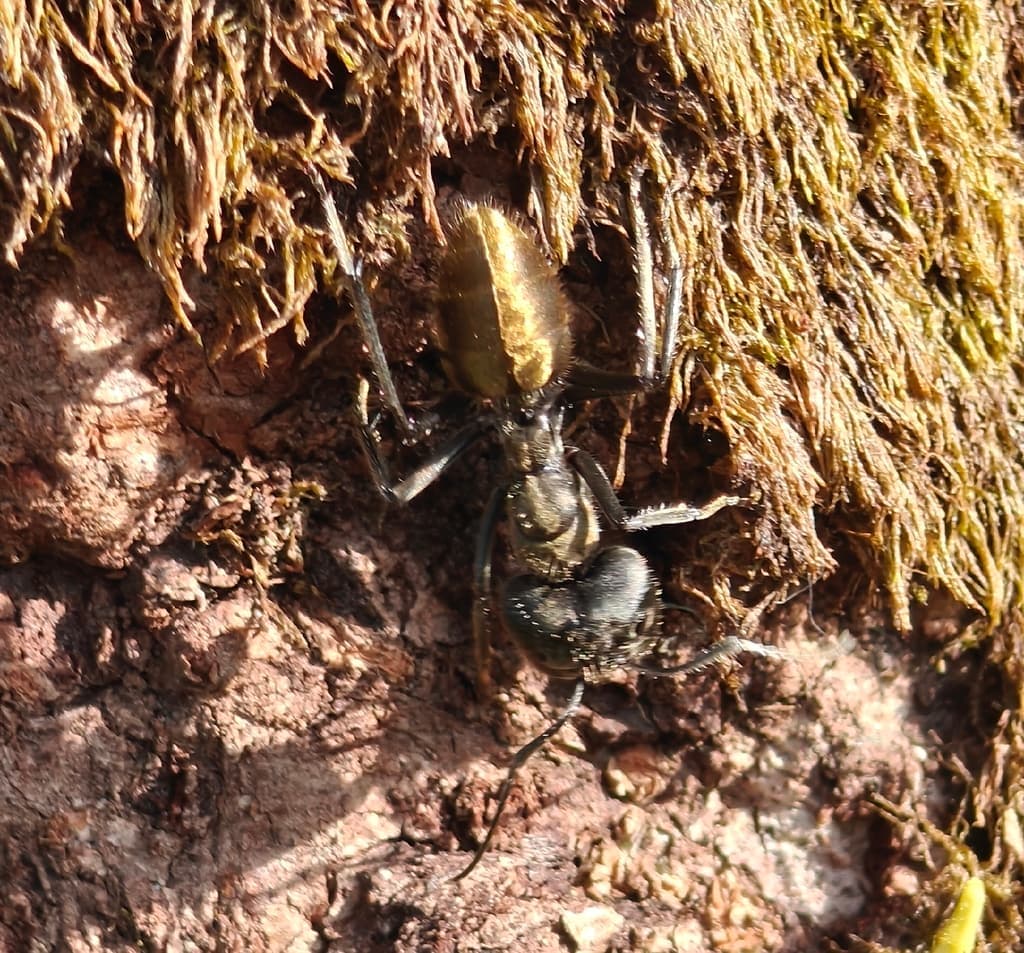
 Live photo
Species & care sheets
Monster Head Carpenter Ant
Camponotus auriventris · มดตะลานพม่า
Photo © Ashwin Viswanathan · CC BY
Nicknamed the "Monster Head" carpenter ant abroad for its oversized soldier heads, which defend the nest with striking efficiency.
อยู่ในสกุลย่อย Myrmosericus หรือ Myrmepomis ตามลักษณะขนบนท้องที่หนาแน่น
Overview
Temperature
24–28°C
Humidity
60–75%
Diet
Sugar · Insects
Nest type
Ytong / Acrylic / 3D printed / Wood
Growth
Medium
Colony size
500–1,500 ตัว
- Difficulty — เลี้ยงค่อนข้างง่ายเหมือนมดตะลานเขตร้อนทั่วไป แต่ต้องการพื้นที่และอาหารโปรตีนสม่ำเสมอเมื่อรังขยายใหญ่
- Colony size — รังที่โตเต็มที่อาจมีขนาดหลายพันตัว ขึ้นอยู่กับพื้นที่และปริมาณอาหาร
- How often it is found — มีข้อมูลบันทึกพบอยู่ในระดับกลางๆ ต้องตั้งใจมองหาสักหน่อย — มีบันทึกยืนยันพบในไทยโดยตรงด้วย; เคยมีวางขายในร้านนักเลี้ยงมดต่างประเทศ (แต่ปัจจุบันหมด/ไม่พร้อมส่ง) · Records in Thailand 11 · Records worldwide 49 · Hobbyist market: Was sold, now out of stock
Derived from record counts in global databases (GBIF · AntWeb · iNaturalist), not from how common the ant is in Thailand. — น่าเชื่อถือสูง — มีบันทึกพิกัด/ตัวอย่างในไทยจริง (GBIF/AntWeb)
What it eats
Size
Body length by caste, and the ants drawn to scale on a credit card
Actual size against a credit card
Ants are drawn to scale on a standard card (85.6 × 54 mm) — hold a real card against the screen and move the slider until the card matches, and the ants are then life-size.
~7 mm
~11.5 mm
~14 mm
Behaviour & care
Defences
DefensiveBites or stings when disturbed — mind the nest when opening it.
Colony profile
Queens
Single queen (monogyne)
Founding
Claustral
Diapause
Not required
Growth
Medium
In depth
The Monster Head Carpenter Ant (Camponotus auriventris) is a carpenter ant known for its dramatically oversized head, which has earned it the nickname "Monster Head" in the international ant-keeping hobby. It's a favorite among collectors for its unusual look.
Appearance
Its standout feature is the major worker's head, which is disproportionately large relative to its body — used both as a defensive weapon and to crush large food items. The body is dark brown to black.
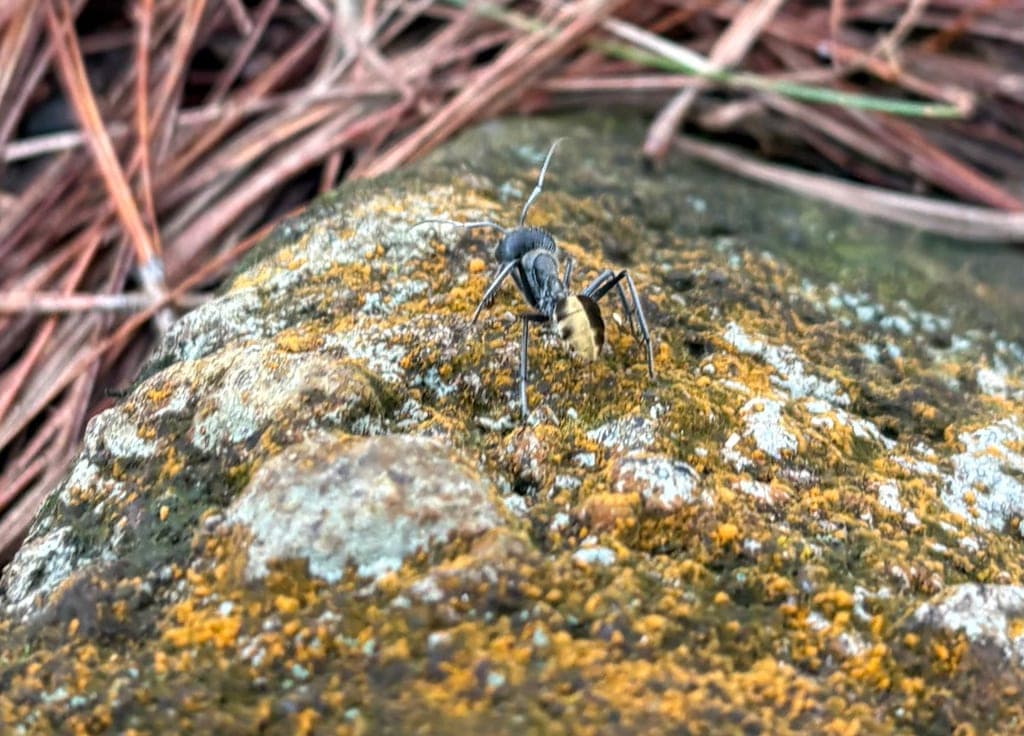
Photo © dmitriitarasov · CC BY-NC
Where They're Found
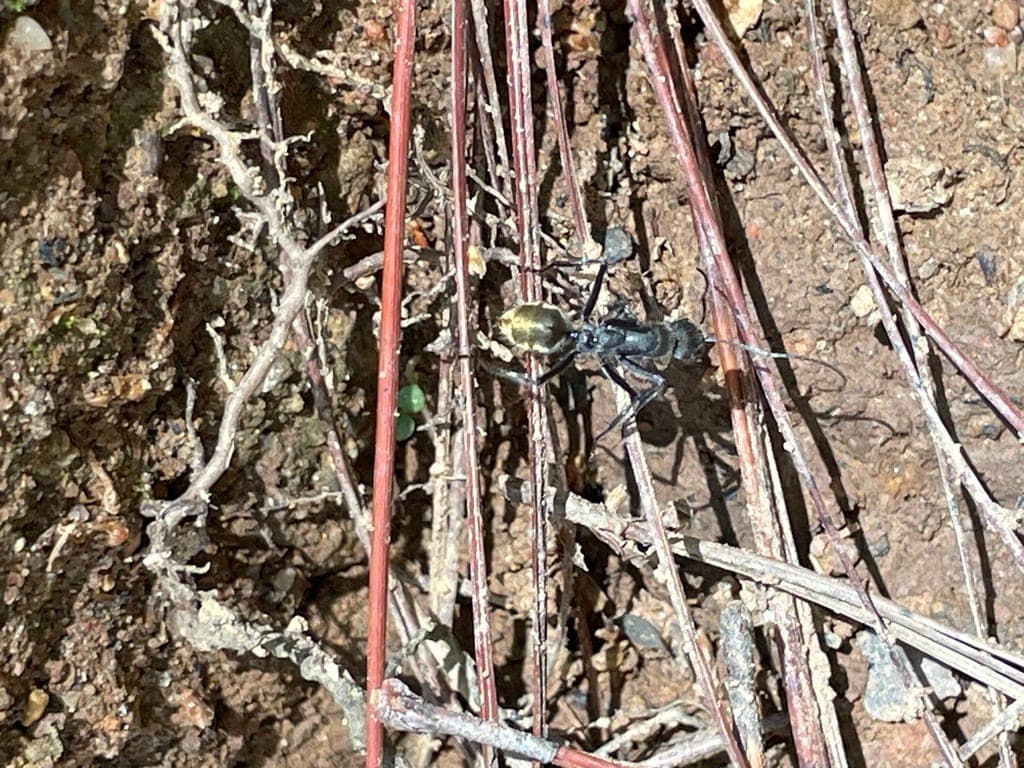
Found in Southeast Asia around Myanmar and neighboring countries, including Thailand. It lives in humid rainforest, nesting in rotting wood or fallen logs with high moisture content.
Notable Behavior: Big-Headed Guardians of the Nest
Major workers of this species have exceptionally large heads, which they use to block the nest entrance and defend against intruders with remarkable effectiveness — a defense style reminiscent of the head-plugging behavior seen in the related genus Colobopsis, though this pattern also appears within Camponotus itself.
It's a generalist feeder, taking both sugary liquids and insects. Smaller workers handle foraging and brood care, while the big-headed majors focus mainly on nest defense.
This is a moderate species overall — not as difficult to keep as its intimidating appearance suggests. The colony size listed (500–1,500 workers) reflects a typical size for a mature colony.
Good to Know
The Monster Head Carpenter Ant is one of the most visually distinctive carpenter ants in the hobby, and the oversized heads of its soldier caste make it highly sought after by rare-species collectors worldwide.
Keeping Them in Captivity
The ideal temperature range is 24–28°C, with fairly high humidity of 60–75%. Feed with honey or sugar water alongside small-to-medium insects for protein.
Gallery
Photo © Ashwin Viswanathan · CC BY
Photo © dmitriitarasov · CC BY-NC
Photo © Albert Beleev · CC BY-NC
Photo © Maxim Nuraliev · CC BY-NC
Photo © Keith Martin-Smith · CC BY
Live photographs are by iNaturalist observers under CC BY-NC — every one carries its credit.
Sources
The Thai text is written from the facts in these sources, not copied from them. · Data confidence: สูง
This page is husbandry information only — live ants aren't sold on the site, for the animals' safety in transit.